

Beijing Summit Signals High-Stakes Phase in US-China Power Rivalry
U.S. President Donald Trump is preparing for a pivotal diplomatic visit to Beijing, where he is expected to pursue a major economic and geopolitical understanding with Chinese President Xi Jinping. The meeting comes at a moment of shifting global influence, with analysts in China closely assessing what they see as a relative weakening of American global dominance, while Washington seeks to reaffirm its strategic leverage in Asia.
The summit is being widely viewed as one of the most consequential engagements between the two leaders in recent years, taking place amid ongoing tensions over trade, technology restrictions, military competition, and broader questions about the global balance of power.
Trade Pressure and Economic Realignment at the Core
At the center of the discussions is expected to be a renewed push for trade stability between the world’s two largest economies. Bilateral trade has shown signs of strain in recent years, with declining imports and exports reflecting shifting supply chains and growing economic diversification away from direct dependence. Recent data indicates that although trade volumes fluctuate, structural decoupling has not fully materialized, as both economies remain deeply interlinked through manufacturing inputs and critical resources.
Washington is expected to press for expanded access to Chinese markets, particularly in agriculture, aviation, and industrial goods. In return, Beijing is likely to seek relief from export restrictions and greater certainty in U.S. trade policy, especially concerning advanced technology and critical minerals.
A potential framework for structured trade coordination has also been discussed, including proposals for a more institutionalized mechanism to manage trade imbalances and reduce reliance on unilateral tariff actions.
Technology, Security, and Strategic Competition
Beyond trade, technology rivalry remains a defining feature of the relationship. Artificial intelligence, semiconductor supply chains, and digital infrastructure are expected to feature prominently in discussions, with both sides seeking to secure long-term technological advantage.
Washington continues to express concern over China’s rapid advancements in emerging technologies, while Beijing views U.S. export controls as an attempt to constrain its economic modernization.
Security concerns are also likely to shape the agenda, particularly regarding Taiwan and broader Indo-Pacific stability. While neither side is expected to reach breakthroughs on these issues, both leaders are anticipated to emphasize crisis management and communication channels to avoid escalation. 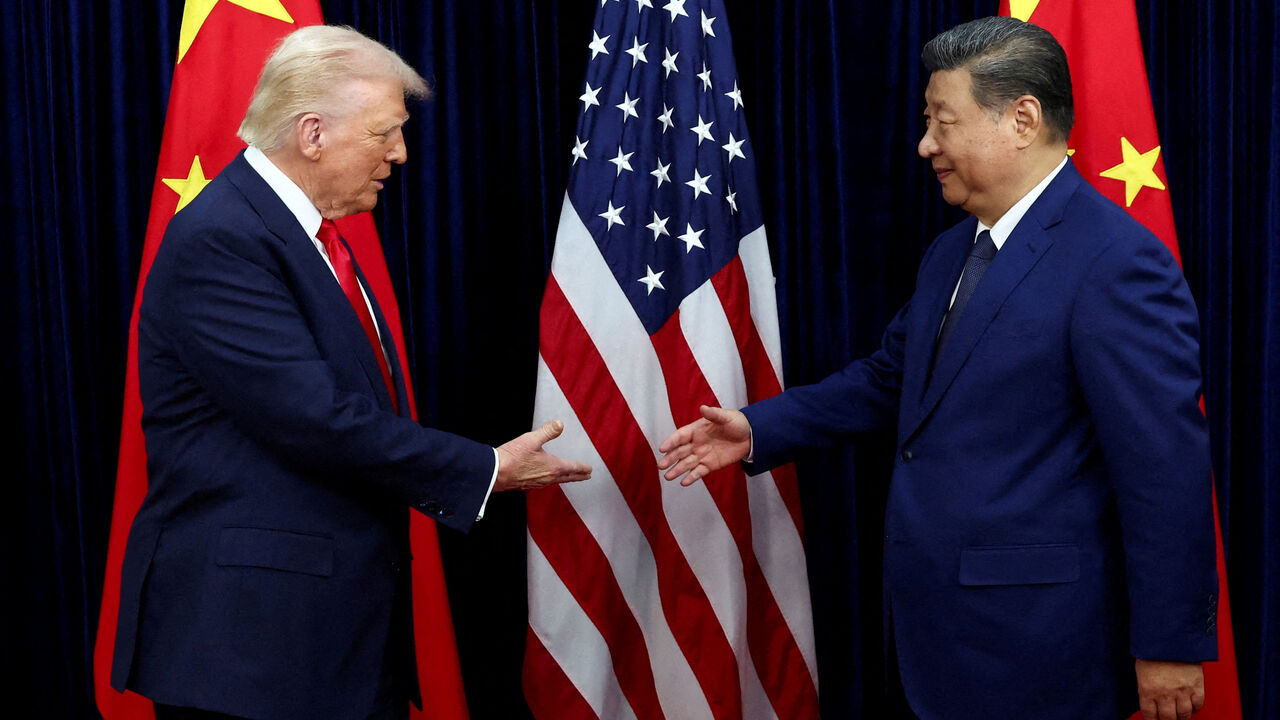
China’s View of Global Power Shift
The diplomatic engagement comes amid a broader narrative within Chinese strategic circles that the global order is undergoing significant realignment. Some Chinese analysts interpret current geopolitical developments as evidence of a gradual redistribution of global influence, with the United States facing increased internal political and economic pressures alongside external strategic challenges.
This perception has contributed to Beijing’s growing confidence in shaping alternative global partnerships and expanding its influence across Asia, Africa, and parts of the developing world.
However, Chinese policy observers also acknowledge that the United States remains a central global power with unmatched military reach, financial influence, and alliance networks—suggesting that competition, rather than replacement, defines the current phase of the rivalry.
Diplomacy Amid Global Flashpoints
The summit is also unfolding against the backdrop of multiple international crises, including tensions in the Middle East and uncertainty in global energy markets. Both Washington and Beijing have strategic interests in maintaining stability in key maritime routes and energy corridors, making cooperation in select areas a potential outcome despite broader competition.
Additionally, discussions may touch on nuclear risk reduction and communication mechanisms aimed at preventing misunderstandings in a rapidly evolving security environment.
Outlook: Managed Competition Over Confrontation
While expectations for major breakthroughs remain limited, the meeting is being framed as an attempt to stabilize an increasingly complex relationship rather than resolve its underlying strategic rivalry.
Both sides appear focused on preventing escalation while extracting tactical gains—Washington through economic leverage and alliance coordination, and Beijing through trade resilience and expanding global partnerships.
The outcome of the Beijing talks is likely to shape not only the next phase of U.S.-China relations but also the broader structure of global economic and geopolitical competition in the years ahead.