
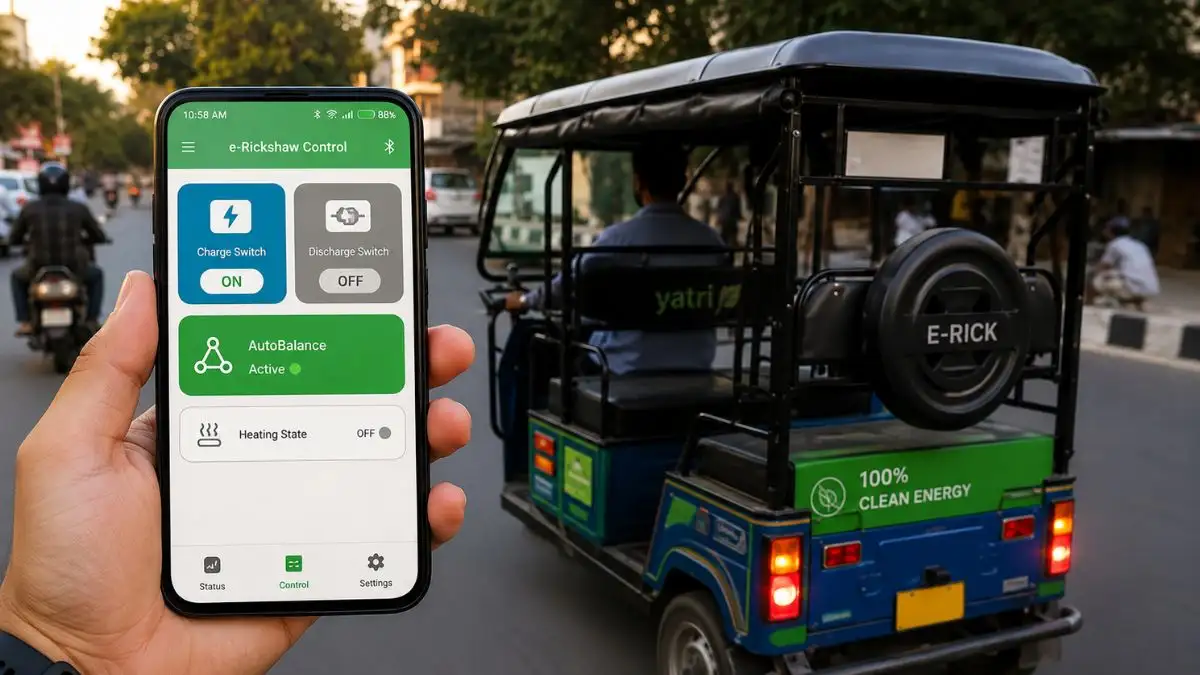
A growing controversy surrounding battery management applications has sparked concern across India’s rapidly expanding electric mobility sector after reports emerged that thousands of electric rickshaws (e-rickshaws) could be remotely immobilized using smartphone-based battery management systems. The issue has raised serious questions about digital dependence, cybersecurity, consumer rights, and the increasing control manufacturers and service providers hold over connected electric vehicles.
The controversy gained widespread attention after several videos circulated on social media showing e-rickshaws unexpectedly stopping in the middle of operations. Drivers claimed their vehicles had been remotely disabled after battery-related applications connected to their smartphones either malfunctioned, lost connectivity, or were deliberately used to deactivate the battery systems.
As electric vehicles become increasingly dependent on software-driven battery management technologies, experts say the incident highlights an emerging challenge in India’s transition toward smart mobility. Modern lithium-ion battery packs often incorporate Battery Management Systems (BMS) that monitor battery health, charging cycles, temperature, voltage, and overall performance. Many of these systems are integrated with mobile applications that allow users, manufacturers, financiers, or service providers to monitor batteries remotely.
However, the same digital connectivity that offers convenience has now become the center of a heated debate after multiple users alleged that battery access was being restricted remotely, effectively rendering their e-rickshaws unusable.
For thousands of drivers who rely on e-rickshaws as their primary source of income, even a temporary shutdown can translate into significant financial losses. Several operators reported that they were unable to continue passenger services after their battery systems became inactive despite the batteries appearing to have sufficient charge.
Many drivers expressed frustration over receiving little or no warning before their vehicles stopped functioning. In some reported cases, the vehicles allegedly resumed operation only after specific conditions were met, including payments, software verification, or remote authorization through the battery management platform. 
Industry observers note that while remote battery management has legitimate uses—including theft prevention, battery safety monitoring, warranty protection, and preventing misuse—it also introduces the possibility of excessive control over vehicle owners. If safeguards are not implemented properly, remotely disabling batteries could potentially affect livelihoods and public safety.
Cybersecurity specialists believe the incident also demonstrates the growing importance of securing connected electric vehicle infrastructure. As EV batteries increasingly rely on cloud-based monitoring systems and smartphone connectivity, vulnerabilities related to unauthorized access, software bugs, server failures, or communication breakdowns become more significant.
Experts warn that battery management platforms should include stronger security protocols, transparent user agreements, and emergency override mechanisms to ensure that vehicles cannot be disabled without appropriate safeguards.
The incident has further intensified discussions about digital ownership. Consumer rights advocates argue that once customers purchase an electric vehicle or battery system, they should retain sufficient operational control rather than being entirely dependent on remote software permissions.
Legal experts say regulators may eventually need to establish clear rules governing remote access capabilities, data privacy, software control, and consumer protection in connected electric vehicles. Similar debates have already emerged globally in industries where manufacturers retain software-based control over products after sale.
India’s electric mobility market has experienced remarkable growth over the past few years, particularly in the e-rickshaw segment. Affordable operating costs, government incentives, and rising fuel prices have encouraged large-scale adoption across urban and semi-urban areas. As a result, millions of commuters depend on e-rickshaws every day, while countless drivers rely on them for daily earnings.
Battery leasing models have also become increasingly common. Under these arrangements, batteries remain under the ownership of leasing companies while drivers pay regular subscription or rental charges. Such business models frequently use connected battery management applications to monitor usage, maintenance, and payment compliance.
Supporters of remote battery management argue that these systems improve battery lifespan, reduce misuse, enable predictive maintenance, and help prevent theft or unauthorized modifications. They contend that remote controls are necessary for maintaining safety standards in advanced lithium-ion battery technologies.
However, critics insist that operational control should never compromise a driver’s ability to earn a livelihood without fair notice or transparent procedures. They believe any remote deactivation should occur only under clearly defined legal and contractual circumstances, accompanied by adequate consumer protections.
The viral videos have fueled widespread discussions across social media platforms, where users questioned whether smartphone applications should possess the authority to effectively turn vehicles into “kill switches.” The phrase has since become a symbol of growing public concern over software-controlled mobility systems.
Technology analysts believe the episode may encourage policymakers to introduce stronger regulatory standards for connected battery ecosystems, including mandatory disclosure of remote control capabilities, consumer consent requirements, and standardized emergency operating procedures.
As India’s electric transportation ecosystem continues to evolve, balancing innovation with consumer rights, cybersecurity, and operational reliability is likely to become an increasingly important policy priority. The incident serves as a reminder that while digital connectivity offers significant technological advantages, it must be accompanied by accountability, transparency, and safeguards that protect both users and public trust.