

Tamil Nadu Chief Minister C. Joseph Vijay’s government has completed its first 100 days in office, marking an unusual political experiment in a state known for its deeply established administrative systems and long-standing political traditions. The milestone has prompted a closer examination of whether the new administration is beginning to establish a distinct model of governance or is still adapting to the demands of running a complex state machinery.
The first 100 days have been characterised by high visibility, political energy and a willingness to challenge some established administrative practices. At the same time, the government’s limited experience in governance has emerged as both a potential weakness and, in some areas, an unexpected advantage.
Vijay and several members of his political team entered government without the institutional experience accumulated by the major parties that have traditionally governed Tamil Nadu. Ministers and legislators had to quickly familiarise themselves with departmental procedures, policy files, administrative reviews and the functioning of the state Secretariat.
This lack of experience initially created an obvious learning curve. However, officials have also suggested that the new political leadership arrived without many of the established networks and political habits associated with previous administrations.
Lack of political experience becomes both strength and weakness
One of the most notable developments during the first three months has been the administration’s approach to corruption.
Senior officials have indicated that visible instances of corruption appear to have declined in several parts of the government. The change has been attributed partly to the absence of established political networks through which officials and politicians traditionally interacted over postings, contracts and administrative decisions.
Some officials are reportedly more cautious about demanding or accepting money because the new political leadership has not yet developed the same entrenched mechanisms that existed under older political establishments.
Certain sensitive administrative postings have also increasingly been directed towards counselling and online systems. The objective is to reduce opportunities for political influence in transfers and postings, particularly in departments where lucrative positions have historically attracted political and bureaucratic competition.
However, officials caution that it is too early to determine whether this reduction in corruption will become a permanent feature of the administration. The government will ultimately have to demonstrate that transparency is institutionalised rather than simply a consequence of political inexperience.
The administration has also created channels for citizens to report corruption. Yet monitoring corruption across a government employing roughly 10 lakh people remains a major institutional challenge. A complaint mechanism alone cannot replace a strong vigilance system, independent oversight and consistent enforcement.
Bureaucracy remains the experienced hand
While the political leadership is new, Tamil Nadu’s bureaucracy is not.
The state has a sophisticated administrative structure, with senior civil servants possessing years of experience in managing departments, implementing welfare schemes and responding to political directions. This has given officials a considerable advantage during the early months of the Vijay government.
The imbalance in institutional experience has created a situation in which bureaucrats often understand the functioning of government more thoroughly than the ministers overseeing them.
That creates both opportunities and risks.
Experienced officials can help a new political leadership navigate complex administrative decisions. But excessive dependence on the bureaucracy could also make it difficult for the elected government to impose a distinctive political vision.
Vijay’s unfamiliarity with established administrative habits has nevertheless led him to question some practices that previous governments may have accepted as routine.
One example has been his approach to disputes that might otherwise quickly move into litigation. Rather than treating court proceedings as the immediate solution to every disagreement, Vijay has shown interest in direct political or administrative discussions.
His proposal for direct talks with Karnataka over the Cauvery issue reflected this approach, although the initiative did not produce the desired outcome.
From surprise inspections to institutional reform
Vijay’s style of governance has also placed considerable emphasis on direct visibility.
His surprise visits to public institutions, including a Dalit hostel in Chennai and a government hospital, have generated attention. Such visits allow a Chief Minister to immediately identify problems, summon officials and issue instructions.
But the larger question is whether these interventions lead to lasting institutional improvements.
A surprise inspection can expose poor conditions in a particular hostel. The more important administrative response, however, would be to determine whether similar problems exist in hostels across the state and establish systems capable of detecting them without requiring the Chief Minister to personally visit each facility.
The same principle applies to hospitals.
A visit to a hospital can highlight shortages of beds, staff or other resources. Effective governance requires those observations to be converted into statewide data, monitoring mechanisms and measurable standards.
The long-term test for the Vijay government will therefore be whether it can move from personality-driven inspections to institutional monitoring.
A government cannot remain dependent on the Chief Minister personally discovering every failure. Its administrative systems must eventually be capable of identifying problems before they become crises.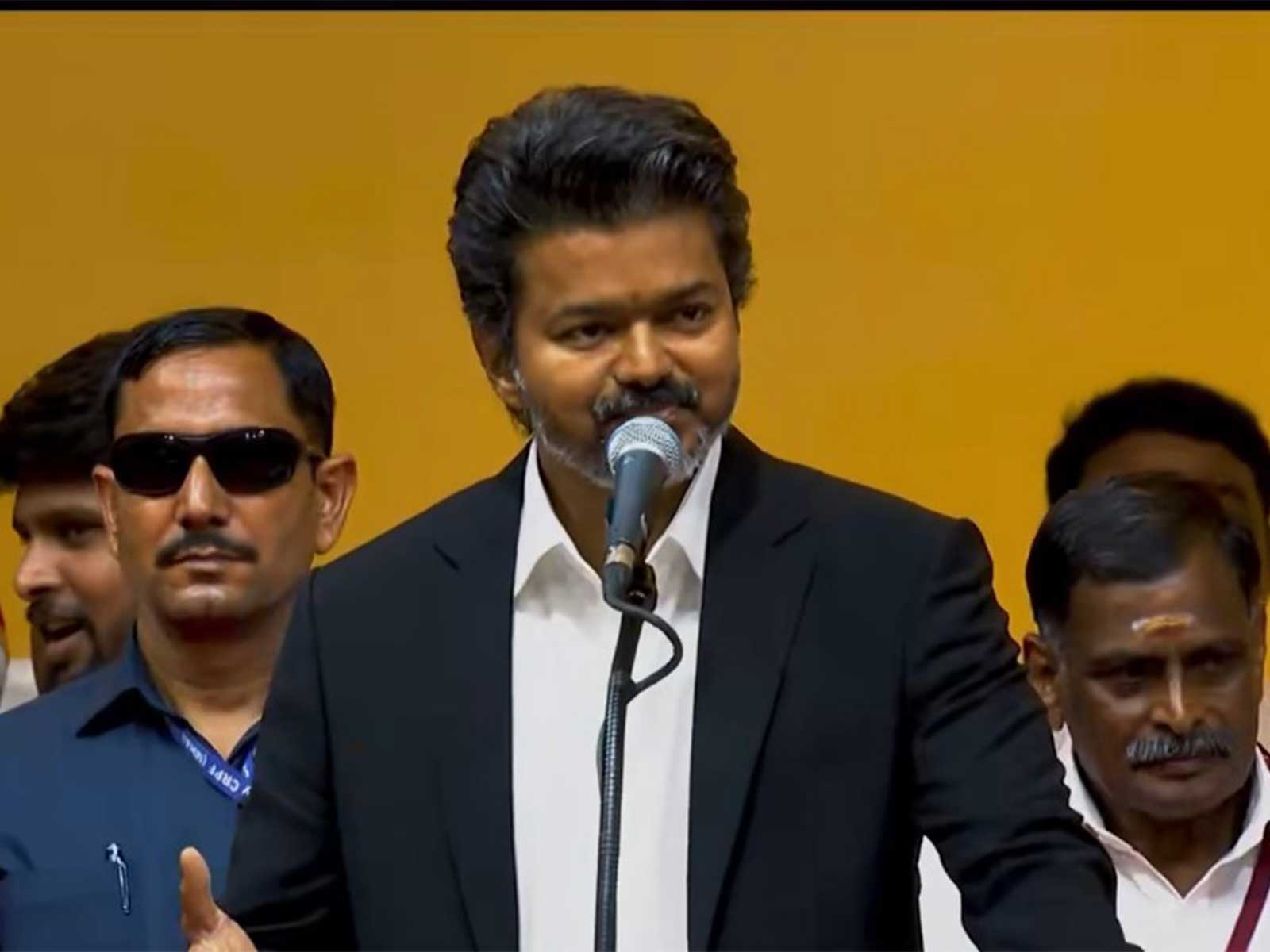
Greater visibility in the Assembly
The administration has also increased the visibility of legislative proceedings.
Live broadcasting of Assembly proceedings, including Question Hour and debates, gives citizens greater access to political discussions that were previously often encountered through selected reports, edited clips or newspaper coverage.
The change could have consequences for both the ruling party and the Opposition.
With Vijay already possessing a large public following, increased access to Assembly proceedings could encourage more people to follow legislative politics directly. Opposition parties could also face greater scrutiny over walkouts, protests and participation in debates because citizens can observe proceedings more closely.
Greater visibility, however, comes with greater political risk.
Vijay’s political identity was built largely outside conventional government. Unlike leaders who have spent years in administration, he does not have a long record of governing decisions against which his current performance can be compared.
That gives his government a certain political advantage. But it also means that failures can carry greater consequences.
The central promise of Vijay’s political movement was that it would offer an alternative to established political culture. Any major corruption allegation, administrative failure or governance controversy could therefore have a disproportionate impact on public confidence.
Welfare measures and investment push
The government has also sought to demonstrate that its first 100 days have produced concrete policy outcomes.
Among the measures highlighted by the administration are initiatives related to electricity concessions, women’s safety, anti-narcotics enforcement, welfare support and agricultural relief.
The government has also announced the closure of 717 TASMAC outlets located near educational institutions and places of worship. The move has been presented as part of a broader effort to address social concerns surrounding alcohol availability.
Agriculture has emerged as another important area, with crop-loan relief forming part of the government’s welfare agenda.
The administration has additionally pointed to its investment efforts. During its first 100 days, the government has announced investment commitments exceeding ₹1 lakh crore, reflecting an attempt to combine welfare-oriented governance with economic expansion and employment generation.
The first budget of the new government has also claimed to incorporate 125 manifesto commitments, providing the administration with an early framework for measuring its performance.
Yet announcements and implementation are not the same thing.
The real test will be whether these commitments translate into measurable improvements for households, farmers, workers, students, women and businesses across Tamil Nadu.
Financial constraints could become a major challenge
The government’s promises will inevitably face the realities of public finances.
Tamil Nadu already operates a large welfare system, while expectations from the new administration remain high. Expanding welfare programmes, implementing manifesto commitments and meeting demands from government employees will require substantial fiscal resources.
The Old Pension Scheme promise is one example of the financial pressure facing the government. Employees have already begun raising questions about its implementation.
At the same time, several existing schemes continue under the new administration, with some undergoing changes in name or presentation.
This creates an important distinction between political change and administrative change.
Changing the name of a programme or introducing a new political identity does not necessarily mean that the underlying system has been transformed. Much of the state machinery, officials acknowledge, continues to operate through established procedures.
For Vijay, the challenge will be to demonstrate that his government can improve those systems rather than simply place a new political label on them.
Opposition attacks test the new political culture
The government has also faced political controversies that challenge its promise of a different style of politics.
Allegations surrounding political manoeuvring and attempts to influence legislators have created an uncomfortable situation for an administration that came to power promising to move away from traditional political practices.
The controversy is particularly significant because Tamil Nadu’s politics has historically involved intense competition between major parties.
For Vijay, the political challenge is not simply to defeat his opponents electorally. His administration must convince voters that it represents a genuine change in political conduct.
That requires transparency in decision-making, consistency in appointments, accountability within the party and clear separation between political competition and the functioning of government.
Why the 100-day milestone matters
A 100-day assessment is inherently limited.
Governments require years to implement major reforms, establish institutions and demonstrate whether policies are sustainable. Infrastructure projects, education reforms, administrative restructuring and economic policies cannot be fully judged within three months.
At the same time, the first 100 days can reveal the governing style of a new administration.
In Vijay’s case, the early period has revealed a government that is energetic and highly visible, but still learning how to operate the machinery of the state.
The administration appears to have benefited from its lack of established political networks in certain areas, particularly in perceptions surrounding corruption. It has also attempted to bring greater public visibility to government institutions and legislative proceedings.
But these early advantages may not automatically survive.
As ministers become more experienced, political relationships deepen and the administration settles into routine, the government will have to show that its initial approach was not merely a product of being new to power.
The bigger test begins now
The most important question for Vijay is no longer whether he can create excitement around a new political movement. He has already demonstrated his ability to translate political popularity into electoral and governmental power.
The next challenge is substantially different: building a government capable of functioning effectively without depending on the personal intervention of the Chief Minister.
The administration will have to strengthen monitoring systems, establish measurable performance standards, maintain fiscal discipline and ensure that welfare and development commitments reach their intended beneficiaries.
It will also need to manage its relationship with an experienced bureaucracy while ensuring that elected representatives retain control over policy priorities.
For a government built around the promise of political change, continuity may prove as important as disruption. Tamil Nadu does not need governance to begin from scratch; it needs an administration capable of identifying what works, correcting what does not and creating systems that can withstand political transitions.
After 100 days, Vijay’s government has clearly made its presence felt. It has brought a new political personality into an established administrative environment and disrupted several conventional expectations.
But the lasting measure of the administration will not be the number of announcements, inspections or visible interventions made during its first 100 days. It will be whether Tamil Nadu’s institutions become more responsive, transparent and efficient when the initial political novelty fades.
The first 100 days may have introduced Vijay to the machinery of government. The next phase will determine whether that machinery itself changes under his leadership.