
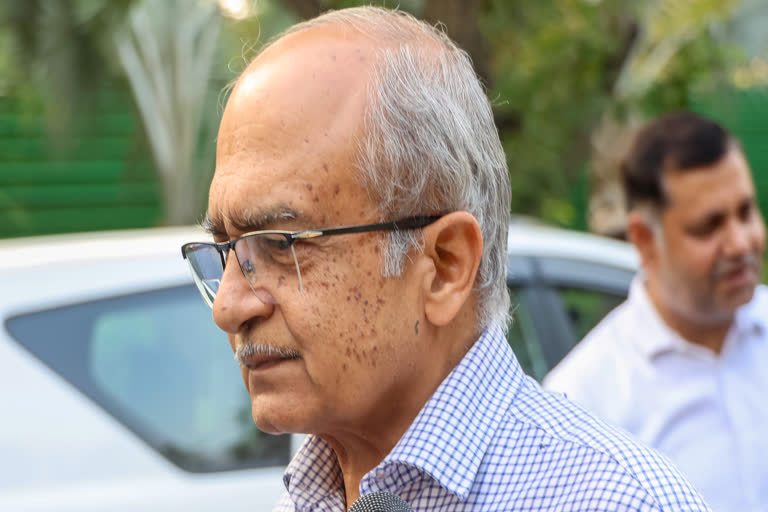
According to police officials, the FIR was registered following allegations that Bhushan shared a morphed version of a video featuring Lavrov. The manipulated footage allegedly presented remarks that could create the impression that the Russian foreign minister had made statements critical of India.
The development has brought attention to the growing problem of digitally altered videos and misleading information circulating on social media platforms, particularly when such content involves international political figures and diplomatic relations.
FIR Registered Over Alleged Circulation of Manipulated Video
The Delhi Police action concerns a video of Russian Foreign Minister Sergei Lavrov that was allegedly digitally altered before being circulated online. Police officials said that the video shared by Prashant Bhushan purportedly contained remarks hostile to India.
The allegations centre on the authenticity of the footage and whether the content accurately represented the Russian foreign minister’s actual statements. The police have taken cognisance of the matter and registered an FIR against the senior lawyer in connection with the alleged circulation of the manipulated video.
The registration of an FIR marks the beginning of a formal criminal investigation. However, the allegations against Bhushan have not been established, and further investigation would be required to determine the circumstances surrounding the video’s creation, alteration and circulation.
Why the Video Has Become a Matter of Concern
Videos featuring senior political leaders and foreign government representatives can have a considerable influence on public understanding of international developments. When such footage is digitally manipulated, it can potentially create confusion about what a leader has actually said or intended to communicate.
In this case, the video allegedly attributed statements critical of India to Sergei Lavrov, one of Russia’s most prominent diplomatic representatives. Any misleading representation of remarks by a senior foreign official can attract significant public attention, particularly because India and Russia share longstanding diplomatic, economic and strategic ties.
The authenticity of statements made by foreign ministers is especially important in the context of international relations. Misleading content involving diplomatic figures can influence public discussions, create misunderstandings and potentially affect perceptions of relations between countries.
The allegations have therefore raised questions about the responsibility of individuals sharing political content online and the importance of verifying videos before circulating them.
Prashant Bhushan Faces Police Action
Prashant Bhushan is a senior advocate who regularly appears before the Supreme Court of India and is also known for his involvement in public interest litigation and matters concerning governance, transparency and accountability.
His name has frequently featured in national political and legal discussions because of his interventions in matters involving public institutions and government policies.
The latest FIR relates specifically to the alleged sharing of a digitally manipulated video featuring the Russian foreign minister. The police action does not, by itself, establish that Bhushan knowingly circulated false material or that the allegations against him are proven.
The investigation is expected to focus on the content of the video and the circumstances in which it was shared. Establishing whether the footage was manipulated and determining the origin of the altered material would be important aspects of examining the allegations.
Growing Challenge of Deepfakes and Digital Misinformation
The incident also highlights the wider challenge posed by manipulated digital content in the age of social media. Advances in artificial intelligence and video-editing technology have made it increasingly easier to alter audio, visuals and other elements of recorded footage.
Such techniques can be used to create misleading videos that appear authentic to ordinary viewers. In some cases, manipulated footage may falsely attribute statements to political leaders, government officials, celebrities or other prominent personalities.
Deepfakes and other forms of digitally altered media have become a growing concern for law enforcement agencies, journalists and policymakers. The circulation of such material can influence public opinion, spread misinformation and complicate efforts to establish the truth during politically sensitive situations.
For journalists and social media users, verifying the original source of a video, checking its context and examining its authenticity are essential steps before sharing potentially sensitive information.
Investigation and Further Developments
The FIR registered by Delhi Police against Prashant Bhushan places the alleged circulation of the manipulated video under formal investigation. The police will need to examine the material and establish the facts surrounding its creation and distribution.
At this stage, the publicly available information confirms the registration of an FIR over the alleged sharing of the doctored footage. Further details regarding the investigation, the origin of the video and any subsequent police action remain to be established.
The case is likely to draw attention to the legal and ethical responsibilities associated with sharing digital information, particularly content involving foreign officials and sensitive diplomatic matters.
It is important to distinguish between the allegations and established facts: Bhushan has been named in an FIR over the alleged sharing of manipulated footage, but the allegations have not been proven through a judicial determination.