
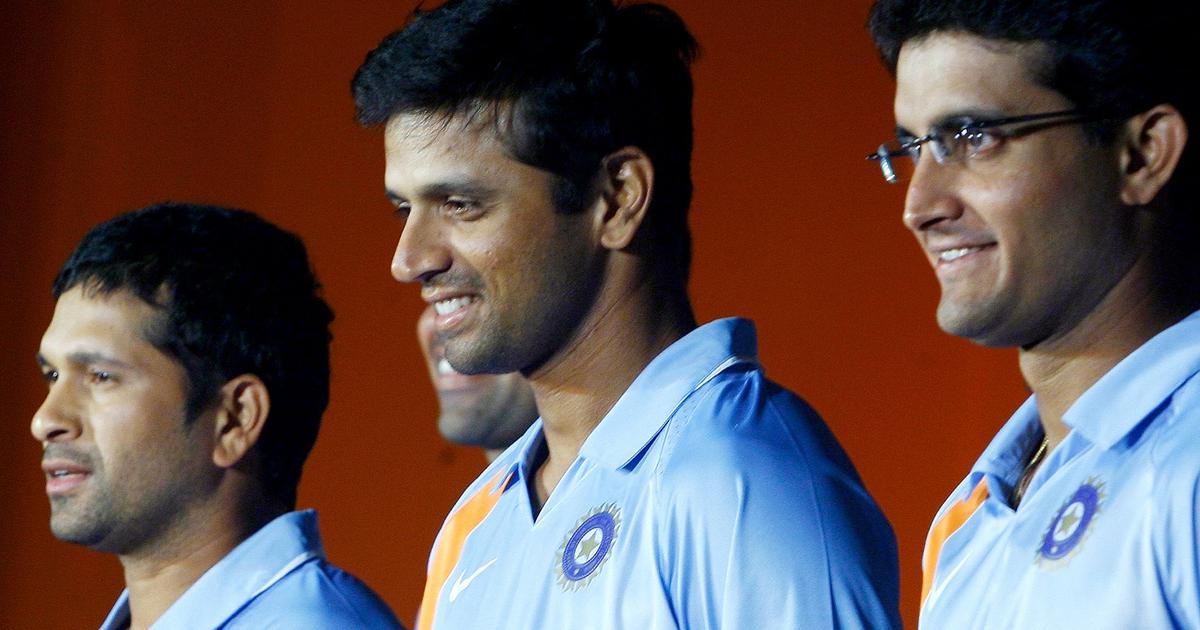
Former Indian captain Sourav Ganguly has reflected on one of the darkest chapters in Indian cricket history, revealing that he personally checked with cricket legends Sachin Tendulkar and Rahul Dravid to understand whether they had ever been approached during the turbulent match-fixing era that shook world cricket in the early 2000s.
Ganguly’s comments revisit a period when the credibility of the sport was under intense scrutiny following major revelations involving international players, bookmakers, and allegations of corruption. The controversy deeply impacted public trust in cricket and forced administrators, players, and fans to confront uncomfortable realities about the game.
Speaking about the atmosphere within the Indian dressing room during that phase, Ganguly said suspicion had spread widely across the cricketing world. According to him, the environment was so tense that even trusted players were viewed through a lens of uncertainty. He recalled directly asking Tendulkar whether he had ever been contacted by individuals linked to fixing activities. Ganguly added that he also made similar enquiries involving Dravid, emphasizing that he wanted complete clarity during a time when the sport’s integrity was under attack.
The former captain explained that rebuilding Indian cricket after the scandal was not just about winning matches but restoring faith. He highlighted that the team management worked hard to establish a culture based on professionalism, discipline, and accountability. Ganguly’s tenure as captain is often credited with ushering in a fearless and competitive Indian side, featuring emerging stars who later became pillars of international cricket. 
The match-fixing controversy of the late 1990s and early 2000s remains one of cricket’s most controversial episodes. Several international cricketers faced investigations, bans, and disciplinary action after allegations surfaced regarding manipulation of matches and illegal betting syndicates. The scandal triggered major reforms within cricket boards and international governing bodies, including stricter anti-corruption protocols and monitoring systems.
During that difficult phase, senior Indian players such as Tendulkar, Dravid, and Anil Kumble were widely regarded as symbols of professionalism and integrity. Ganguly’s latest remarks reinforce the perception that some of India’s most respected cricketers remained committed to protecting the game’s reputation despite the chaos surrounding international cricket at the time.
Ganguly further noted that the emotional burden on players during that period was immense. According to him, the dressing room environment was fragile, with cricketers constantly aware that public confidence in the sport had been severely damaged. He suggested that leadership during such times required not only tactical decisions on the field but also moral responsibility off it.
Over the years, Indian cricket gradually recovered from the damage caused by the scandal. The emergence of a new generation of players, combined with stronger governance structures and anti-corruption measures, helped restore credibility to the game. Ganguly played a significant role in that rebuilding process, both as captain and later as a cricket administrator.
The comments have once again sparked discussion among cricket fans about how deeply the fixing scandal affected the sport and how Indian cricket managed to emerge stronger from the crisis. Many observers believe the resilience shown by players during that era laid the foundation for India’s rise as a dominant force in world cricket in the years that followed.