
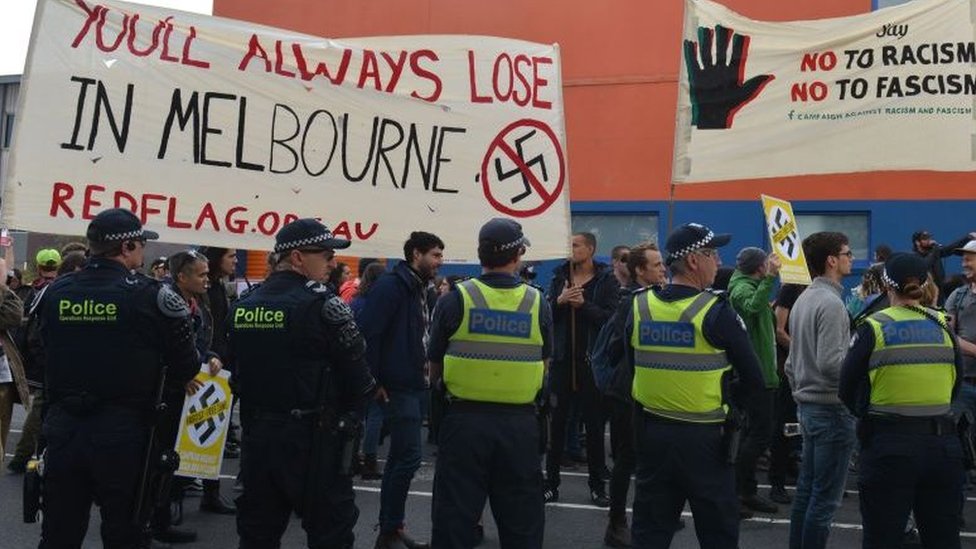
Australia has officially outlawed a neo-Nazi extremist organization under newly strengthened anti-hate legislation, marking one of the country’s most aggressive moves yet against violent extremist groups and organized hate networks. The decision reflects growing concerns among authorities about the rise of far-right radicalization, online extremist recruitment, and the increasing threat posed by ideologically motivated violent organizations.
The Australian government announced that the neo-Nazi network would now be classified as a banned terrorist-style organization under updated laws designed to criminalize extremist hate groups and prevent the spread of violent ideological propaganda. Officials said the legislation gives law enforcement agencies expanded powers to investigate, monitor, and prosecute individuals connected to organized hate movements.
The move follows months of mounting pressure from security agencies, civil rights groups, and political leaders who warned that extremist organizations were becoming more visible through public demonstrations, encrypted online platforms, and coordinated propaganda campaigns targeting minority communities.
Authorities stated that the newly banned network had promoted racist ideology, glorified political violence, and allegedly encouraged acts of intimidation against ethnic and religious communities. Security officials argued that the organization’s activities represented a serious threat to public safety and democratic values.
Under the updated law, membership in or support for the outlawed group could now lead to severe criminal penalties, including prison sentences. Displaying extremist symbols, financing hate organizations, recruiting members, or publicly promoting violent racist ideology may also attract legal action under the broadened framework. 
Government leaders defended the legislation as necessary to combat the evolving nature of extremist threats in the digital age. Officials noted that modern hate groups often operate through decentralized online communities, making them harder to track using older counterterrorism laws.
The crackdown comes amid a broader international trend in which democratic nations are tightening laws against extremist political violence and organized hate movements. Authorities across several countries have raised alarms over the resurgence of neo-Nazi ideology, particularly among younger individuals being radicalized through social media platforms and encrypted messaging applications.
Human rights advocates largely welcomed the decision, arguing that governments must take stronger action against organized hate campaigns that threaten vulnerable communities. However, some civil liberties groups cautioned that anti-extremism laws must be implemented carefully to avoid potential misuse or overreach that could impact freedom of expression.
Australian intelligence agencies have repeatedly warned in recent years that ideologically motivated violent extremism now represents one of the fastest-growing domestic security threats in the country. Investigators say extremist groups increasingly use online spaces to spread propaganda, recruit followers, and organize real-world activities.
The government emphasized that the legislation specifically targets organizations linked to violent extremism and hate-based criminal activity rather than lawful political opinions or peaceful expression. Officials said the new legal framework was developed in consultation with security experts and legal authorities to ensure constitutional protections remain intact.
Political analysts believe the decision could become a landmark moment in Australia’s evolving national security strategy, particularly as governments worldwide face growing challenges related to extremist radicalization and digitally coordinated hate movements.
The ban is expected to trigger further investigations into individuals suspected of maintaining links with extremist organizations, while authorities continue monitoring online platforms for recruitment activity and hate-related propaganda distribution.
As Australia intensifies its efforts to counter violent extremism, the government has signaled that additional measures may be introduced in the future to strengthen national security protections and combat organized hate networks operating both online and offline.