
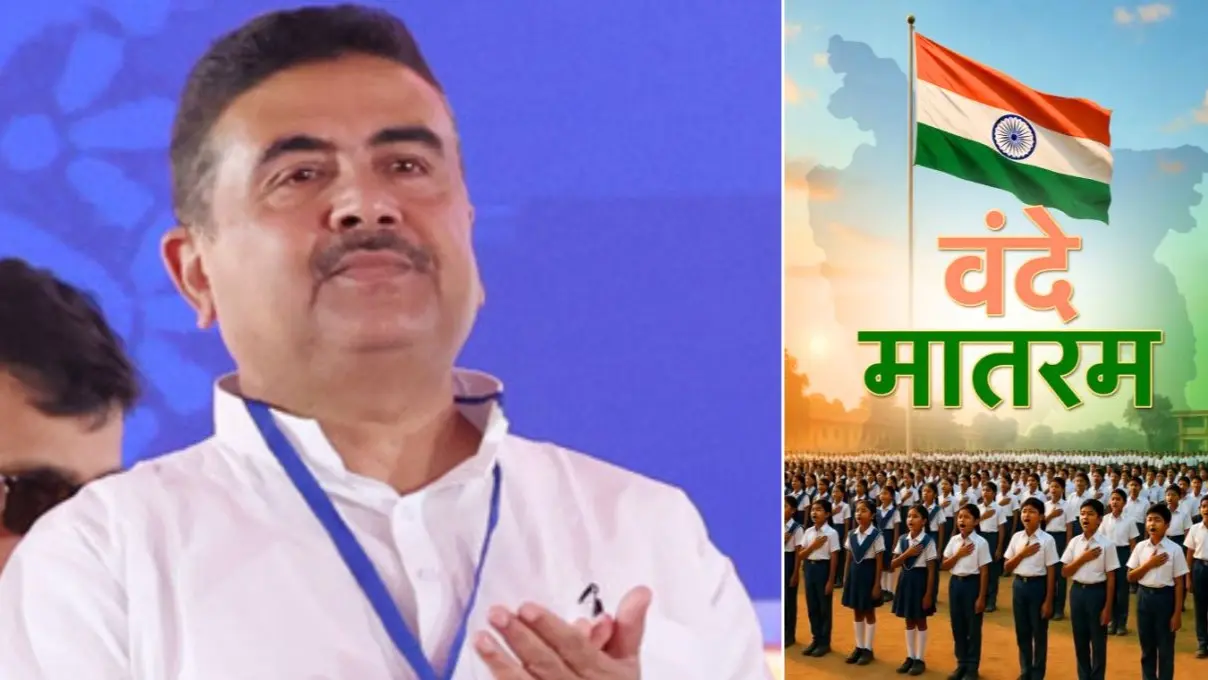
The West Bengal government has issued a directive making the singing of ‘Vande Mataram’ compulsory during morning assemblies in all state-run and state-aided schools across the state. The order, which has come into immediate effect, has sparked fresh political and cultural discussions surrounding nationalism, education, and identity in the state.
According to the official communication issued by the School Education Department, every student attending government and government-aided institutions will now be required to participate in the rendition of the national song before the commencement of daily classes. District-level education authorities have been instructed to ensure strict implementation of the directive and communicate the new guidelines to all school heads and administrators.
The decision marks a significant shift in the state’s school assembly traditions. For years, several schools in West Bengal had incorporated regional patriotic songs, including Rabindranath Tagore’s “Banglar Mati Banglar Jol,” into assembly routines. With the new directive, ‘Vande Mataram’ is expected to become a central component of daily school proceedings throughout the state. 
Government officials stated that the move is aimed at strengthening patriotic values among students and promoting respect for national symbols. Education department authorities have reportedly asked school administrations to ensure that the song is sung collectively and regularly during morning prayer sessions.
The development comes months after the Union government introduced broader guidelines concerning the rendition of ‘Vande Mataram’ during official events and ceremonies. Earlier this year, the Union Home Ministry had issued instructions regarding the singing or playing of all six stanzas of the national song during designated occasions, leading to renewed nationwide conversations over its historical significance and constitutional standing.
‘Vande Mataram,’ composed by Bankim Chandra Chattopadhyay in the late 19th century, played a prominent role during India’s freedom movement and was later accorded the status of the national song. Over the decades, the song has remained a powerful symbol of patriotism, though it has also occasionally been at the center of political and ideological debates.
Political observers believe the latest directive could become a major talking point in West Bengal’s evolving political landscape, where issues of regional identity, nationalism, and education policy continue to dominate public discourse. The order is also expected to generate discussions among educators, parents, and civil society groups regarding the role of patriotic practices in educational institutions.
While supporters of the move have welcomed the decision as an effort to instill national pride among students, critics are likely to raise questions over cultural inclusivity and the balance between national and regional traditions within school education systems.
Education officials, however, have maintained that the directive is intended to encourage unity and civic awareness among students while reinforcing awareness about India’s national heritage and freedom movement.