

A shocking family tragedy in Mumbai has taken a disturbing turn after forensic investigators confirmed that rat poison, and not contaminated watermelon alone, caused the deaths of four members of the Dokadia family in the city’s Pydhonie area. The revelation has prompted police to investigate multiple possibilities, including homicide, accidental poisoning, and even a potential suicide pact.
The incident involved Abdullah Dokadia, his wife Nasreen, and their two daughters, Ayesha and Zainab. The family fell critically ill shortly after consuming watermelon at their residence following a family dinner gathering. All four later died during treatment at a hospital.
According to the forensic science laboratory report submitted to investigators, traces of zinc phosphide — a highly toxic rodenticide commonly used in rat poison — were discovered in the bodies of all four deceased family members. The chemical was reportedly detected in several organs and biological samples, including the liver, kidneys, spleen, stomach contents, bile, and abdominal fat.
Investigators also confirmed that watermelon samples collected from the family’s home tested positive for the toxic substance. However, all other food items consumed during the dinner gathering reportedly tested negative for contamination.
The findings have significantly shifted the direction of the investigation, as authorities now attempt to determine how the poison entered the fruit and whether the contamination was intentional.
Police officials stated that the Dokadia family had hosted relatives for dinner before the incident. While several family members and guests consumed the main meal, only the four deceased reportedly ate the watermelon later in the night. 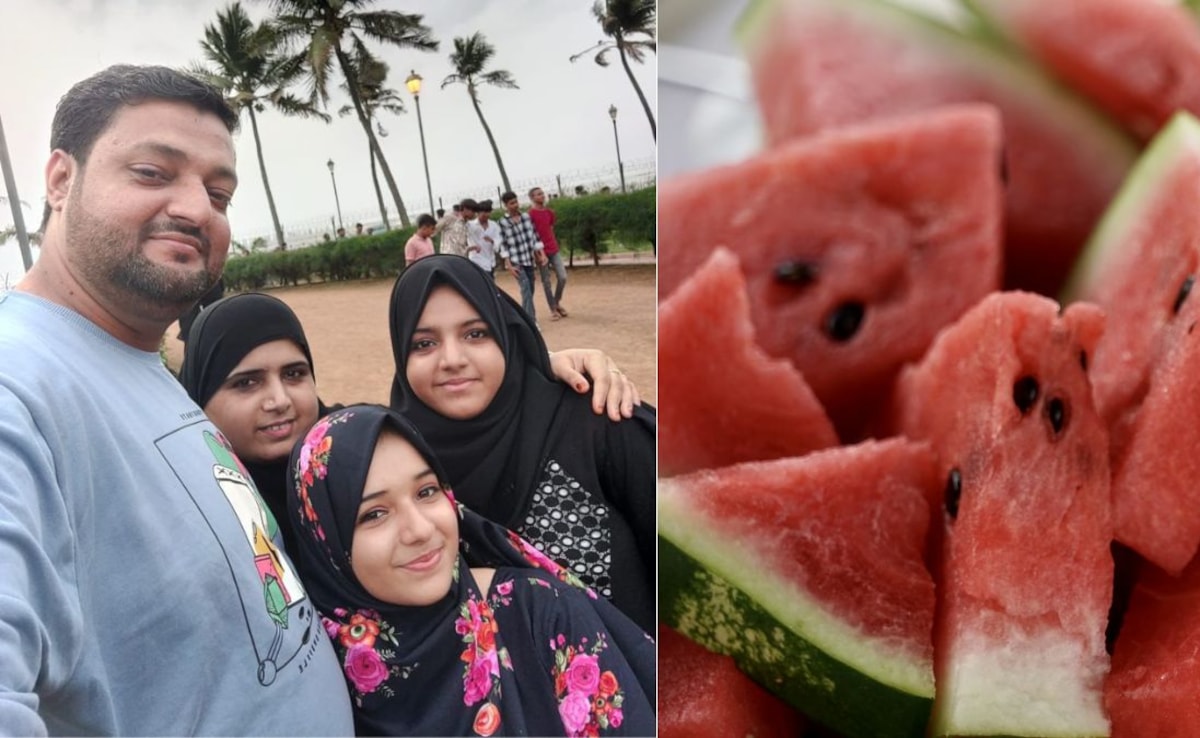
Within hours, all four began experiencing severe symptoms, including vomiting, nausea, diarrhoea, and breathing difficulties. They were rushed to the hospital, but despite medical intervention, the entire family died one after another over the following hours.
Investigators said Abdullah Dokadia, who was reportedly the last surviving family member, had briefly spoken to police officers while undergoing treatment and described the sequence of events before his condition worsened.
The case has now become one of Mumbai’s most puzzling and high-profile investigations in recent months. Police officials acknowledged that the forensic report confirms poisoning but does not yet establish whether the deaths were accidental or deliberate.
Authorities are examining all possibilities, including whether the watermelon was contaminated before reaching the family’s home or whether poison was introduced later. Investigators are also exploring whether the case could involve foul play.
Police reportedly examined the mobile phones and digital records of the deceased family members for any signs of suicidal intent or suspicious communication. Officials stated that no immediate evidence suggesting a suicide pact has been found so far.
Investigators also confirmed that no rat poison packaging or toxic substances were recovered from the family’s residence, further complicating the mystery.
The deaths had initially raised widespread concerns over possible food contamination and adulteration after reports emerged that the family had consumed watermelon shortly before falling ill. Authorities collected samples of various food items, drinking water, and kitchen ingredients from the home for testing.
However, preliminary findings from food safety officials reportedly ruled out bacterial contamination and adulteration in the other food items. The forensic report identifying zinc phosphide has now become the central focus of the investigation.
Medical and forensic experts explained that zinc phosphide is an extremely dangerous poison that reacts with stomach acids to release phosphine gas, a lethal compound that can rapidly damage vital organs and severely reduce oxygen levels in the body.
Experts noted that even a small quantity can prove fatal if consumed. Symptoms often include vomiting, abdominal pain, respiratory distress, and sudden organ failure.
Officials involved in the case stated that investigators required extensive testing to identify the toxin because the victims had vomited repeatedly before their deaths, reducing detectable traces in the body.
Residents of the Pydhonie neighbourhood have expressed shock over the deaths, with many struggling to understand how an ordinary family gathering ended in tragedy. Neighbours described the Dokadia family as well-known and socially connected within the local community.
The incident has also sparked broader public concern regarding the handling and accessibility of toxic substances such as rodenticides.
As forensic experts and investigators continue their examination, police say further conclusions will depend on additional scientific analysis and witness statements. The exact circumstances behind how the poison entered the watermelon remain unclear, leaving investigators searching for answers in a case that has deeply disturbed the city.