
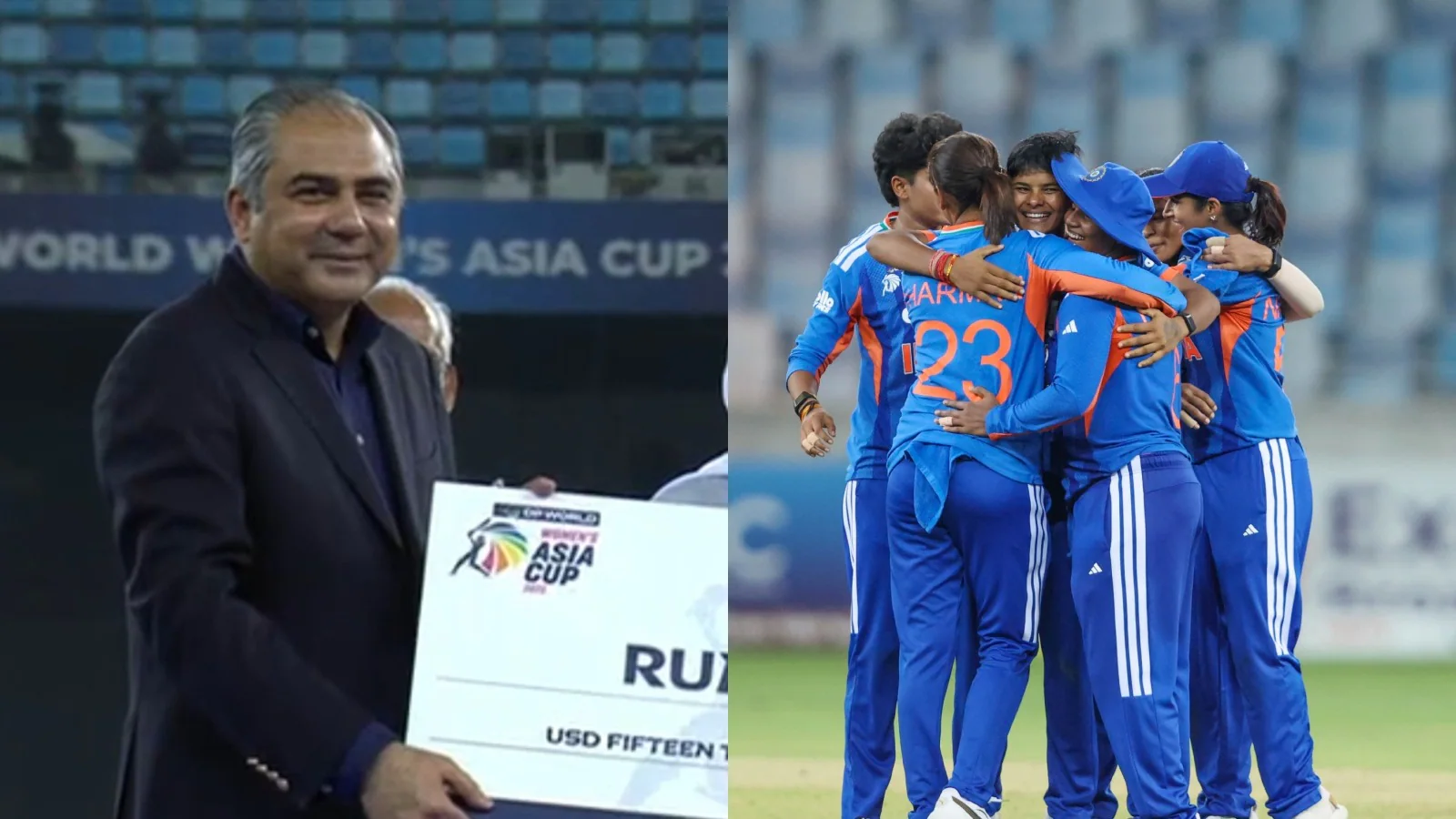
India’s women’s cricket team declined to receive the Asia Cup trophy from Asian Cricket Council chief Mohsin Naqvi after winning the tournament in Dubai, with the Board of Control for Cricket in India explaining that the decision was taken in solidarity with the stance adopted by the men’s team last year.
The development came after Harmanpreet Kaur-led India defeated Sri Lanka by 72 runs to secure a record eighth Women’s Asia Cup title. Despite the emphatic victory, the trophy presentation became the major talking point after the Indian players chose not to collect the silverware from Naqvi, who also serves as the chairman of the Pakistan Cricket Board and Pakistan’s interior minister.
The presentation ceremony was delayed by nearly an hour following the match. Naqvi presented the runners-up award to Sri Lankan captain Chamari Athapaththu before leaving the stadium. The Indian team instead conducted its medal ceremony separately, with senior BCCI officials present.
BCCI explains decision
BCCI secretary Devajit Saikia said the decision reflected the organisation’s position and was intended to maintain solidarity with the Indian men’s team, which had taken a similar stance during the previous Asia Cup.
According to Saikia, relations between India and Pakistan have changed significantly since the April 2025 Pahalgam terror attack. While India continues to participate in multinational tournaments involving Pakistan in accordance with government policy, the BCCI does not consider that participation to mean accepting every condition surrounding such events.
Saikia said the decision not to receive the trophy from Naqvi was connected to the ongoing tensions between the two countries. He also stressed that the stance should not be interpreted as taking anything away from the women’s team or its achievement on the field.
The BCCI secretary highlighted the dominant nature of India’s campaign and said the team’s performance remained the primary focus. India completed its title-winning campaign with a comprehensive victory over Sri Lanka, reinforcing its position as one of the strongest sides in women’s Asian cricket.
Similarity with men’s team stance
The decision closely mirrored events involving the Indian men’s team at the same venue during the previous Asia Cup.
India’s men had also declined to receive the trophy from Naqvi after winning the tournament. The stance came amid heightened diplomatic tensions following the Pahalgam attack and the subsequent military confrontation between India and Pakistan.
The women’s team had subsequently adopted similar positions in other tournaments, making the latest decision part of a broader approach rather than an isolated incident.
Saikia described the latest move as an expression of solidarity with the position taken by the men’s team. He maintained that the decision was not directed at the players from other participating countries and did not affect India’s commitment to playing multinational competitions.
Trophy presentation becomes a talking point
The unusual presentation ceremony attracted considerable attention because of Naqvi’s multiple positions in international cricket and Pakistani public life.
Naqvi had been expected to hand over the Asia Cup trophy to the winners. However, after the Indian team chose not to receive it from him, the normal presentation sequence was disrupted.
The Indian players and officials instead completed their own medal ceremony away from the main presentation area. Naqvi left the venue after presenting the runners-up award to Sri Lanka.
The situation also led to questions about interactions between BCCI officials and Naqvi during the match. Saikia clarified that conversations between officials inside the stadium were part of normal protocol and did not indicate a change in the BCCI’s position regarding the trophy presentation.
BCCI says focus remained on winning
Saikia said the organisation’s principal objective was to ensure that India won the tournament rather than concentrate on who would eventually hand over the trophy.
He explained that officials continued to perform routine responsibilities during the match, including participating in customary post-match activities. The BCCI secretary also said discussions in the Royal Box were unrelated to the decision over the trophy.
The remarks underline the distinction the BCCI is seeking to maintain between sporting participation and the political circumstances surrounding India-Pakistan relations. India continues to compete against Pakistan when required in multinational tournaments, while maintaining a separate position on bilateral cricket and ceremonial engagements.
Record eighth Asia Cup title
The controversy surrounding the presentation came after a highly successful campaign by Harmanpreet Kaur and her team.
India defeated Sri Lanka by 72 runs in the final to claim its eighth Women’s Asia Cup title. The victory further underlined the growing strength of women’s cricket in India and provided the team with a major achievement ahead of its upcoming international commitments.
The BCCI has also indicated that the team’s broader focus is now on preparing for the 2026 ICC Women’s T20 World Cup. The governing body considers the Asia Cup triumph an important step in building momentum ahead of that global tournament.
While the trophy presentation generated headlines, India’s dominant campaign remained the central sporting achievement. The team’s decision not to receive the trophy from Naqvi added a diplomatic dimension to an otherwise celebratory night.
The BCCI has maintained that the gesture was consistent with its existing position and with the stance previously taken by the men’s side. At the same time, the board stressed that India’s participation in multinational cricket tournaments will continue in accordance with the prevailing government policy.