
The Centre has indicated that it remains willing to engage in discussions with the Opposition and representatives of protesting students over concerns surrounding irregularities in competitive examinations. However, the government has stopped short of committing to the protesters’ key demands or announcing a timeline for the next round of talks, leaving the political standoff unresolved.
The development came amid escalating protests over alleged irregularities and paper leaks in competitive examinations, with the Opposition demanding accountability from the government and calling for the resignation of Union Education Minister Dharmendra Pradhan. The issue has emerged as a major political flashpoint, with the Congress intensifying its agitation and the government maintaining that it is prepared to discuss concerns related to the examination system through the appropriate forums.
According to people familiar with the developments, the Centre has conveyed to the Opposition, particularly Congress leaders, that the issue of examination irregularities could be taken up for discussion during the ongoing Monsoon Session of Parliament. The government’s outreach was aimed at easing tensions and persuading the Opposition to withdraw its protest.
However, the government has not provided any specific assurance that it would accept the demand for Pradhan’s resignation. It has also not disclosed when the next formal meeting with representatives of the protesting students is likely to take place.
A senior government functionary said that the government’s doors remained open for dialogue and that the concerns raised by the protesters would be considered at an appropriate forum. At the same time, the official made it clear that no immediate commitment had been given either on the protesters’ demands or on the timing of another meeting.
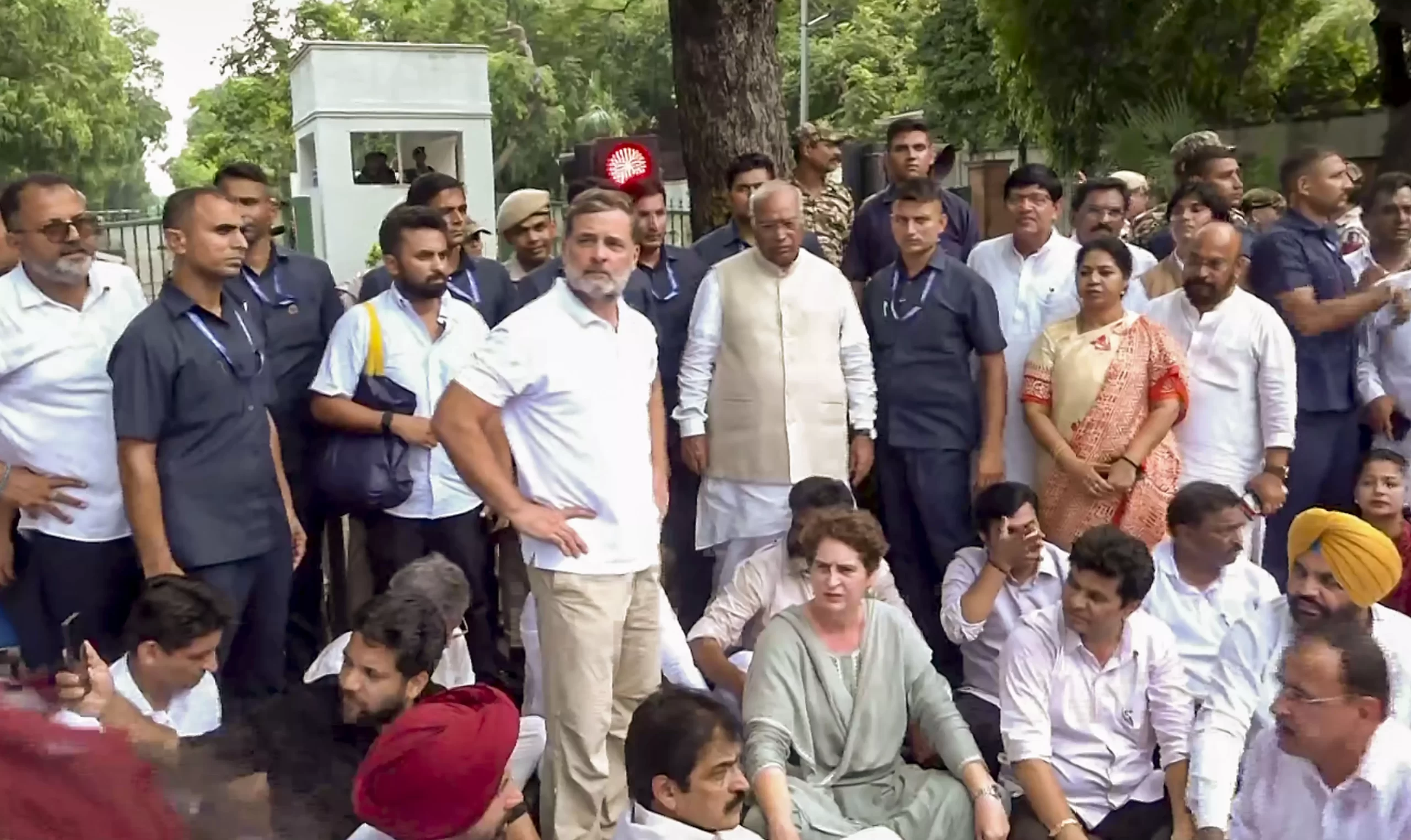
The uncertainty over the next phase of discussions comes as political pressure continues to build around the examination issue. Congress leaders, led by Leader of Opposition Rahul Gandhi, staged a protest outside Prime Minister Narendra Modi’s official residence in New Delhi, demanding action against the Union education minister.
The Congress has argued that the controversy surrounding examination irregularities requires political accountability at the highest level. The party has sought Pradhan’s resignation, linking the demand to concerns raised by students and aspirants over the integrity and fairness of competitive examinations. 
In response to the Congress protest, the government moved quickly to engage with Opposition leaders. Minister of State in the Prime Minister’s Office Jitendra Singh was sent to speak with Congress leaders and attempt to address the situation. However, the Opposition did not agree to call off its agitation.
The government’s outreach came shortly after a meeting between senior BJP leader JP Nadda and representatives of the protesting group. During that interaction, the protesters submitted a written memorandum outlining their demands, including the resignation of the education minister.
The meeting was described by the government side as cordial and substantive. The protesters’ concerns were discussed, and the government urged them to end their sit-in and cooperate with the administration in restoring normalcy.
Despite the talks, the central issue remains unresolved. The protesters continue to press for concrete action, while the government maintains that steps have already been initiated to improve the fairness and transparency of examinations.
The confrontation has also drawn a sharp political response from the BJP. BJP president Nitin Nabin criticised the Congress for holding a protest outside the Prime Minister’s residence, describing the move as inappropriate and accusing the Opposition of attempting to create unrest.
Nabin argued that the conduct of the Congress leadership was inconsistent with the responsibilities associated with the office of the Leader of Opposition. He also maintained that the Prime Minister’s position represents the country as a whole and not merely the interests of a political party.
The BJP leadership has further accused the Opposition of attempting to use student concerns for political purposes. A party leader claimed that the government had already demonstrated its willingness to listen to the protesters and pointed to recent measures aimed at ensuring that examinations are conducted fairly.
The BJP has also highlighted the government’s decision to ask National Democratic Alliance lawmakers to communicate with students and understand their concerns. According to the party, the move demonstrates that the government is seeking dialogue rather than confrontation.
The Opposition, however, continues to insist that the matter requires a stronger political response. The demand for the education minister’s resignation remains at the centre of the protest, while concerns about examination integrity have added to wider anxieties among students and job aspirants who depend on competitive examinations for higher education and government employment opportunities.
The dispute therefore reflects two parallel issues. On one side is the broader concern over the credibility and reliability of competitive examinations, while on the other is the political battle over responsibility and accountability for alleged lapses.
For the government, agreeing to discussions provides an opportunity to address concerns without immediately conceding the Opposition’s demand for a ministerial resignation. For the protesters and Opposition parties, however, the absence of a clear timeline and concrete commitments could make it difficult to end the agitation.
The government’s position that it is “open to talks” may help create space for further negotiations, but the lack of a definite schedule means that the immediate political deadlock is likely to continue. The next steps will depend on whether the government and protesters can agree on a framework for discussions and whether the Opposition is willing to participate in parliamentary deliberations on the issue.
With the Monsoon Session underway, the controversy is expected to remain a prominent political issue. The Opposition is likely to continue pressing for accountability, while the government is expected to emphasise measures taken to strengthen the examination process and prevent irregularities.
The developments also underline the growing political importance of student-led concerns surrounding competitive examinations. For thousands of aspirants, the issue goes beyond party politics and is directly linked to their academic and professional futures. Any further dialogue will therefore be closely watched by students, Opposition parties and the wider public.
For now, the Centre has signalled that it is willing to engage, but without committing to a specific date for the next meeting or accepting the demand for the education minister’s resignation. The absence of a clear roadmap leaves the door open for negotiations while keeping the broader political confrontation alive.