
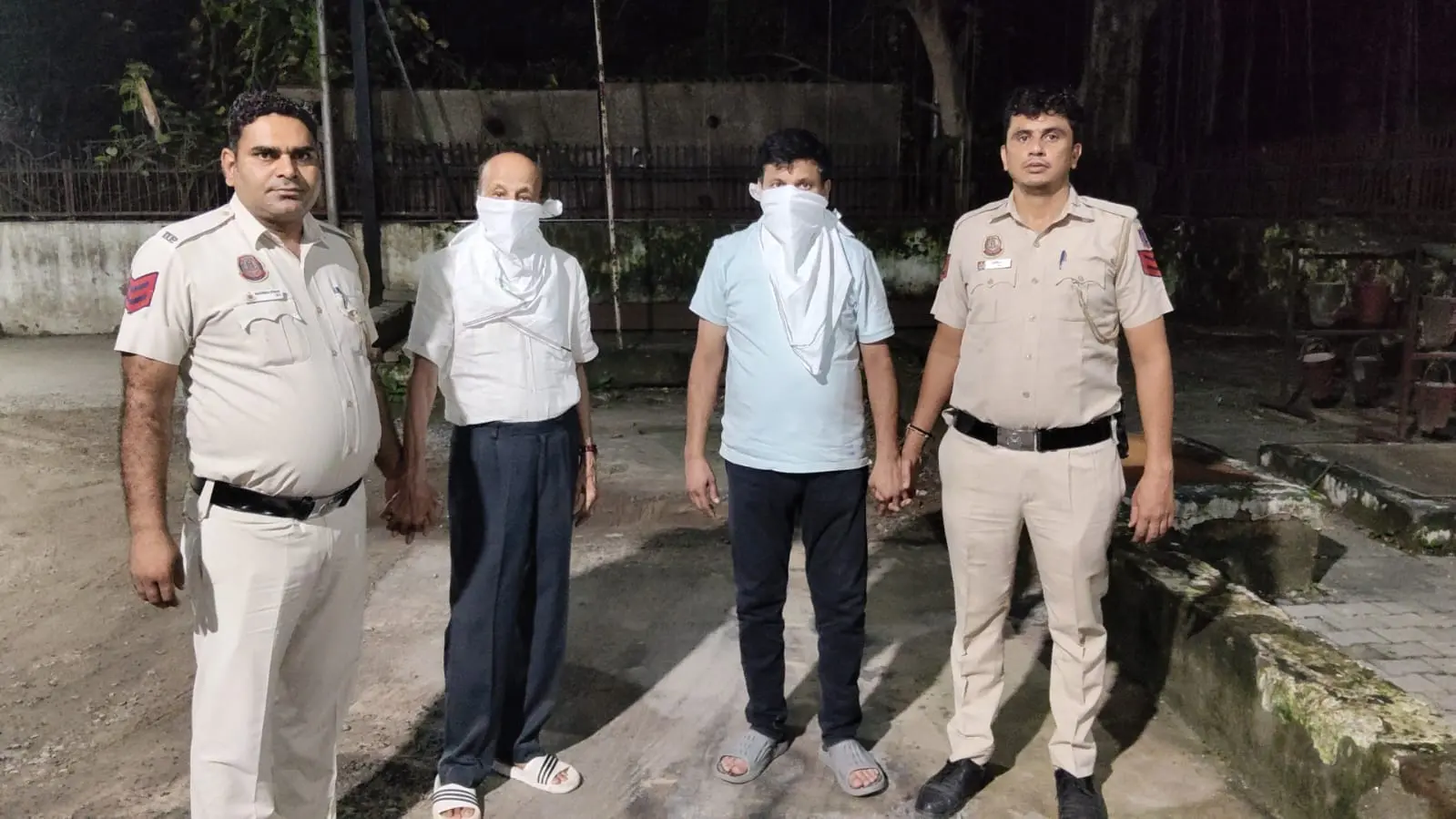
Delhi Police have arrested Sudhanshu, an operator of a private paying guest accommodation in Delhi’s Satya Niketan area, in connection with the collapse of a multi-storey building that killed seven people. The incident has triggered a wider investigation into the condition of the building, renovation work being carried out on the premises and the responsibilities of those involved in operating and maintaining the property.
The five-storey building, located in the Satya Niketan area near Delhi University’s South Campus, collapsed on Sunday afternoon. The structure was being used as a private student hostel and housed several young people, many of them students and aspirants preparing for competitive examinations.
The collapse resulted in seven deaths and left several others injured. Rescue teams worked for hours through the debris to locate people trapped beneath the collapsed structure.
PG operator arrested as investigation expands
Sudhanshu was arrested by Delhi Police on Wednesday as investigators widened their probe into the circumstances surrounding the collapse.
Police are examining the role of the people responsible for running the PG accommodation, along with the building’s owners and individuals involved in repair and construction activities.
Another person associated with the operation of the accommodation, identified as Shubham Tyagi, is also being sought by investigators.
The arrests are part of an effort to establish whether negligence, unauthorised construction, unsafe renovation work or structural deficiencies contributed to the disaster.
Investigators are expected to question Sudhanshu about the manner in which the property was being operated, the condition of the building and the repair work that was taking place shortly before the collapse.
Seven people killed in building collapse
The tragedy unfolded on Sunday when the building suddenly gave way, trapping occupants and workers beneath the rubble.
Seven people were ultimately confirmed dead. Several others were rescued from the collapsed structure and taken to hospital for treatment.
The incident shocked residents and students in the area, with rescue personnel spending hours searching through the debris. Police, firefighters and disaster-response teams were involved in the rescue operation.
The building was primarily being used to accommodate students, making the incident particularly alarming for families who depend on private PGs and hostels for accommodation while their children study in Delhi.
Repair and basement work under scrutiny
One of the central aspects of the investigation is the repair and construction activity that was reportedly underway inside the building before it collapsed.
Authorities are examining work being carried out in the basement, where water accumulation had reportedly become a concern. Investigators are also looking into construction activity on the ground floor.
Officials are trying to determine whether these activities affected the structural stability of the building.
The possibility that construction or renovation work may have weakened parts of the structure has become a key line of inquiry. Investigators are expected to examine whether proper permissions were obtained, whether structural engineers were involved and whether safety procedures were followed.
A labour contractor who was reportedly supervising work at the premises has also come under investigation.
Building ownership and management under investigation
The probe has also focused on the ownership and management of the property.
Police have already taken action against members of the family associated with ownership of the building. Investigators are examining property documents, agreements and other records to establish who was responsible for the premises and how the building came to be used as a PG accommodation.
The lease arrangement between the property owners and the PG operators is expected to be an important part of the investigation.
Authorities are attempting to determine the respective responsibilities of the owners, operators and contractors, particularly regarding structural maintenance, renovation work and the safety of residents.
Questions over unauthorised construction
The tragedy has raised broader concerns about construction practices and regulatory enforcement in Delhi’s densely populated student accommodation areas.
Preliminary investigations have raised questions about whether the building had undergone modifications that were not properly authorised. Officials are also examining whether the structure was being used beyond the limits permitted under its original approvals.
Such questions are particularly significant because structural changes, additional floors or extensive renovation work can place additional stress on older buildings if they are not properly assessed and executed.
The age and structural condition of the Satya Niketan building are therefore expected to form an important part of the investigation.
Safety of student PGs becomes major concern
The Satya Niketan collapse has also brought renewed attention to the safety of private PG accommodations across Delhi.
Thousands of students live in private hostels and PGs in areas surrounding universities and colleges. Many such properties operate in densely populated neighbourhoods where older residential buildings have been converted into student accommodation.
The incident has raised concerns about whether such properties are regularly inspected and whether they possess adequate structural safety certification, emergency exits and other safety facilities.
Authorities have indicated that structural audits of buildings in major PG hubs could be undertaken following the tragedy.
The wider issue is whether property owners and operators are adequately complying with construction and safety regulations and whether civic authorities have sufficient mechanisms to identify dangerous buildings before an accident occurs.
Government faces pressure for stronger safety measures
The collapse has also increased pressure on authorities to strengthen regulations governing buildings used for public and student accommodation.
Officials are considering measures that could require regular structural inspections and safety certification for buildings housing students and other members of the public.
The incident has also prompted discussions about improving monitoring of renovation and construction activities in densely populated areas.
For students and their families, the tragedy has highlighted the risks involved in choosing accommodation based solely on location and affordability without knowing whether a building has been properly inspected.
Investigation continues
With Sudhanshu now in custody, investigators are expected to examine his statements alongside documents, witness accounts and evidence collected from the site.
Police are also continuing efforts to trace the other PG operator and establish the complete chain of responsibility.
Investigators will determine whether the collapse resulted from structural weakness, construction activity, water accumulation, unauthorised modifications or a combination of several factors.
The authorities are also expected to examine whether any warnings regarding the building’s condition had previously been issued and whether required permissions and safety standards were followed.
The deaths of seven people have turned the Satya Niketan collapse into a major building-safety case in Delhi. As the investigation progresses, the focus is likely to remain on determining who was responsible for maintaining the structure, whether safety regulations were violated and whether the tragedy could have been prevented.