

The Delhi Chief Electoral Officer has rejected allegations by the Aam Aadmi Party (AAP) that BJP Rajya Sabha MP Raghav Chadha’s name was added to the Delhi electoral rolls by bypassing established procedures.
The controversy erupted after Chadha’s name appeared in the electoral roll of the Rajinder Nagar Assembly constituency during the ongoing Special Intensive Revision (SIR) of electoral rolls. AAP questioned the timing and procedure through which the BJP leader’s name was added, alleging that the entry appeared to have been made through a backdated process.
Election officials, however, have said that Chadha’s name was included through the regular electoral-roll updation process and that his application was processed along with other applications received for voter registration.
Election officials explain the process
According to the Delhi election authorities, Chadha’s name was added to the electoral roll as part of the normal process of updating voter records.
Officials said that applications seeking inclusion of names in electoral rolls are submitted through the prescribed Form 6. Applications for deletion and correction of existing entries are dealt with through the relevant electoral forms.
The authorities said that Electoral Registration Officers are responsible for examining such applications and taking decisions in accordance with the applicable electoral laws and rules.
The Delhi CEO’s office also clarified that the electoral roll had been frozen on June 16 for the preparation of the SIR draft. The draft electoral rolls were subsequently published on August 31.
During the period before the publication of the draft roll, a large number of Form 6 applications were submitted by people seeking inclusion in the electoral rolls. Officials said that these applications continued to be processed as part of the electoral-roll revision procedure.
The authorities maintained that once an application is approved, the corresponding addition, deletion or modification is incorporated into the electoral database according to the prescribed procedure.
AAP questions Chadha’s inclusion
AAP has raised questions over Chadha’s appearance in the Rajinder Nagar electoral roll.
The party pointed out that the draft electoral roll published on August 31 showed 746 voters in the concerned polling part. Chadha’s name subsequently appeared as the 747th entry.
AAP leaders questioned how the additional entry could appear after the publication of the draft roll and sought clarification from the Election Commission regarding the process used to add the BJP MP’s name.
The party alleged that Chadha’s registration was being processed through a backdated mechanism and demanded transparency regarding the date on which his application was submitted, the date on which it was approved and the basis on which the electoral authorities accepted it.
The allegations have added another dimension to the political confrontation between AAP and Chadha, who was previously one of the prominent leaders of the party before moving to the BJP.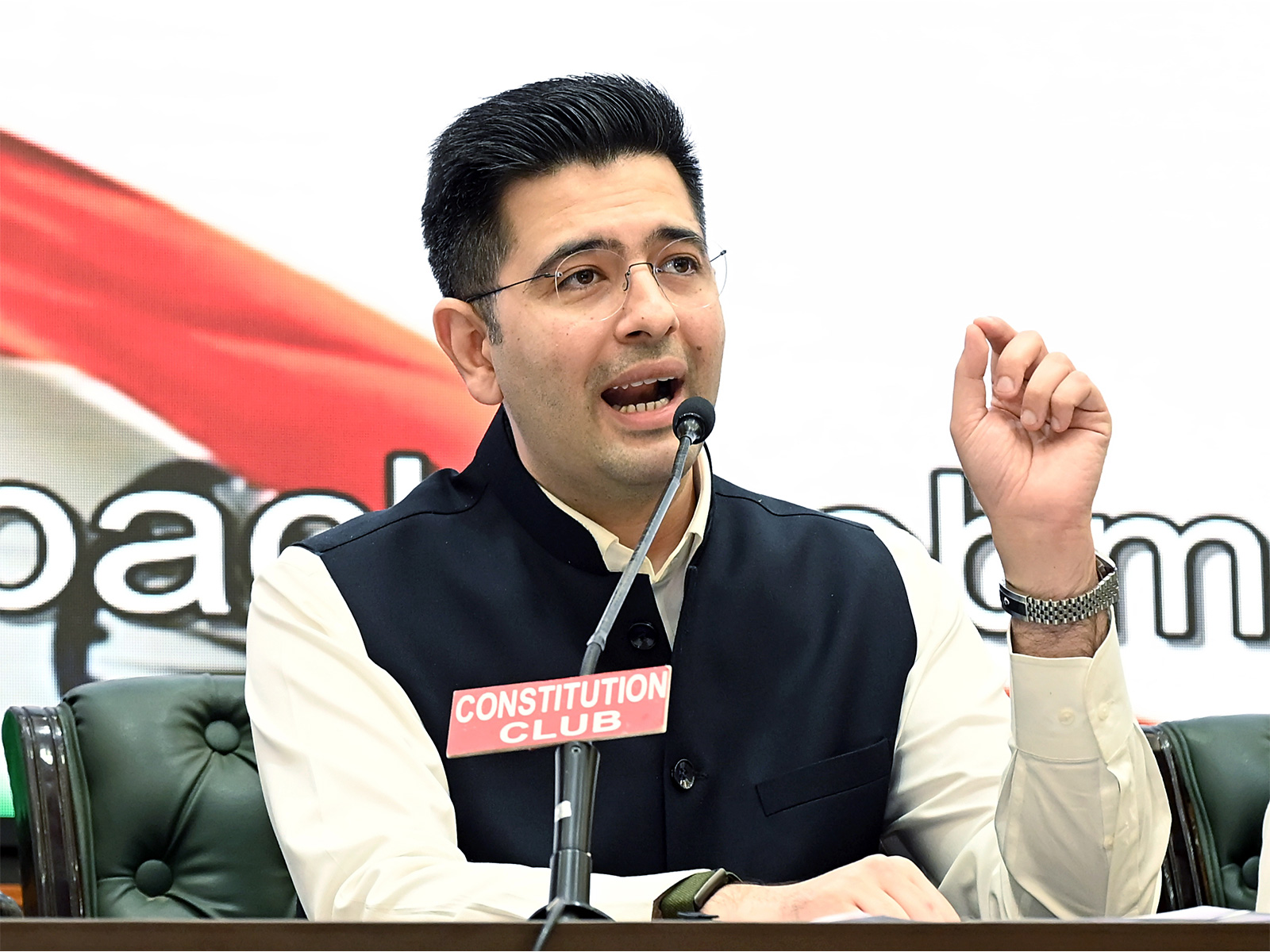
Chadha rejects allegations
Chadha has rejected the allegations and maintained that he followed the rules prescribed by the Election Commission.
The BJP leader has argued that his voter registration was carried out through the established electoral process and that there was no question of him bypassing the law.
The controversy gained momentum after Chadha’s name was marked as “permanently shifted” in the draft electoral rolls in Punjab during the SIR exercise.
Chadha had criticised the development and accused his former party of political vendetta. He questioned why his name had been classified as shifted and argued that the move was not simply an administrative error.
AAP has denied responsibility for the deletion and maintained that the revision of electoral rolls is conducted by election authorities rather than political parties.
Punjab voter-roll controversy
The dispute over Chadha’s Delhi registration cannot be separated from the controversy surrounding his voter status in Punjab.
Chadha was elected to the Rajya Sabha from Punjab as an AAP candidate. After his political association with AAP ended and he moved to the BJP, his name became part of a wider political dispute between the two parties.
During the ongoing revision of Punjab’s electoral rolls, Chadha’s name was listed among voters classified as having permanently shifted.
The BJP leader described the development as politically motivated and accused the AAP government in Punjab of targeting him.
AAP rejected the allegation and said the electoral-roll revision was being handled by the Election Commission and its officials. The party argued that Chadha was responsible for maintaining his voter registration and updating it if his place of residence had changed.
The dispute subsequently expanded to Delhi after Chadha’s name appeared in the Rajinder Nagar electoral roll.
Why the timing has become controversial
The central issue in the current dispute is not simply whether Chadha is eligible to register as a voter in Delhi. Instead, AAP has focused on the timing and procedure of the entry.
The party has questioned how his name could be added to the electoral database after the publication of the draft roll and why the entry appeared as a new serial number in the concerned polling part.
Election officials, however, have explained that the publication of a draft electoral roll does not mean that all subsequent applications for inclusion are automatically rejected.
Applications submitted during the prescribed periods can continue to be examined. Once they are approved by the competent electoral authority, the names can be incorporated into the electoral database and subsequently reflected in the relevant supplementary electoral roll.
This explanation forms the basis of the Delhi CEO’s rejection of the allegation that Chadha’s name was inserted through an unauthorised mechanism.
Hundreds of voter applications processed
The Delhi election authorities have said that Chadha’s application was not treated as a special case.
Officials said that hundreds of applications for inclusion had been approved across Delhi’s 70 Assembly constituencies. Chadha’s application was among those processed by the respective Electoral Registration Officers.
The authorities have therefore maintained that his inclusion followed the same administrative mechanism applicable to other voters.
The explanation is important because AAP’s allegation is centred on the claim that Chadha received special treatment. Election officials have sought to counter that argument by stating that his application formed part of the larger electoral-roll updation exercise.
Electoral roll revision under scrutiny
The controversy comes at a time when the electoral-roll revision process has attracted considerable political attention.
The Special Intensive Revision is intended to update electoral records, identify eligible voters and remove entries that are no longer valid because of death, migration, duplication or other reasons.
However, revision exercises can also lead to political disputes when names are deleted, shifted or added during different stages of the process.
The Chadha controversy has highlighted the importance of maintaining clear records of applications and decisions at every stage of voter registration.
For voters, the distinction between a draft electoral roll and the final electoral roll is particularly important. A draft list is subject to claims, objections and subsequent corrections before the final list is published.
Political battle between AAP and BJP intensifies
The dispute has also become part of the broader political confrontation between AAP and the BJP.
Chadha was once a prominent AAP leader and played a significant role in the party’s political activities in Delhi and Punjab. His subsequent move to the BJP has intensified tensions between him and his former political colleagues.
AAP has used the voter-registration controversy to question the credibility of the process through which Chadha’s name was added to Delhi’s electoral roll.
The BJP leader, meanwhile, has defended the registration and accused AAP of attempting to create a political controversy around a routine electoral procedure.
The Delhi election authorities have so far focused on the administrative aspect of the matter, stating that electoral-roll additions are processed through established procedures and by designated electoral officials.
What happens next
The controversy is likely to continue as the electoral-roll revision process moves forward.
The Election Commission and Delhi election authorities are expected to examine applications, objections and claims before the final electoral roll is published.
For Chadha, the Delhi registration provides a fresh voter record after his name was marked as shifted in Punjab’s draft electoral roll.
For AAP, the key question remains whether the Delhi entry was processed entirely according to the applicable rules and whether the timing of the addition raises questions that require further examination.
At present, however, the Delhi Chief Electoral Officer has rejected the suggestion that Chadha’s name was added by bypassing the electoral process.
The issue therefore remains a political and administrative dispute, with AAP demanding greater transparency and election officials maintaining that the prescribed procedure was followed.