

Activist and education reform campaigner Sonam Wangchuk has explained why he eventually softened his demand for the resignation of Union Education Minister Dharmendra Pradhan during the student-led agitation over examination-related concerns.
Wangchuk said his decision was influenced by the changing circumstances surrounding the protest, particularly concerns about possible violence, legal action against students and protesters, and the need to protect people who had joined the movement.
The demand for Pradhan’s resignation had emerged as one of the prominent political demands during the agitation. However, as the protest progressed, Wangchuk reassessed the immediate priorities of the movement and decided that protecting students and ensuring that protesters did not face legal consequences was more important than continuing to make the minister’s resignation an absolute condition.
Why Wangchuk Changed His Stand
Wangchuk said that his position changed as the situation surrounding the protest became more complicated. While he initially considered the resignation of the Education Minister an important expression of political accountability, he later became increasingly concerned about the possible consequences of maintaining the demand at all costs.
According to Wangchuk, by July 22, his focus had shifted towards ensuring that the protest did not escalate into a situation that could result in violence or widespread legal action.
He believed that the demand for Pradhan’s resignation could continue to be raised by other groups and political leaders, whereas protecting students who had participated in the agitation required immediate attention.
This prompted him to adopt a more flexible approach to negotiations.
Concerns Over Protesters Facing Legal Action
One of Wangchuk’s key concerns was the possibility of legal action against students and other protesters.
The agitation had involved young people who were raising concerns about the examination system and demanding greater accountability from authorities. Wangchuk said he felt a personal responsibility towards those who had joined the movement, particularly after encouraging people to participate in demonstrations.
The possibility of protesters facing police action or legal proceedings therefore became an important consideration in his discussions with government representatives.
Wangchuk sought assurances that students would not be subjected to unnecessary legal harassment because of their participation in the demonstrations. He also wanted such assurances to be meaningful rather than simply verbal.
For him, protecting the interests of students became a more immediate objective than continuing to insist on a single political demand.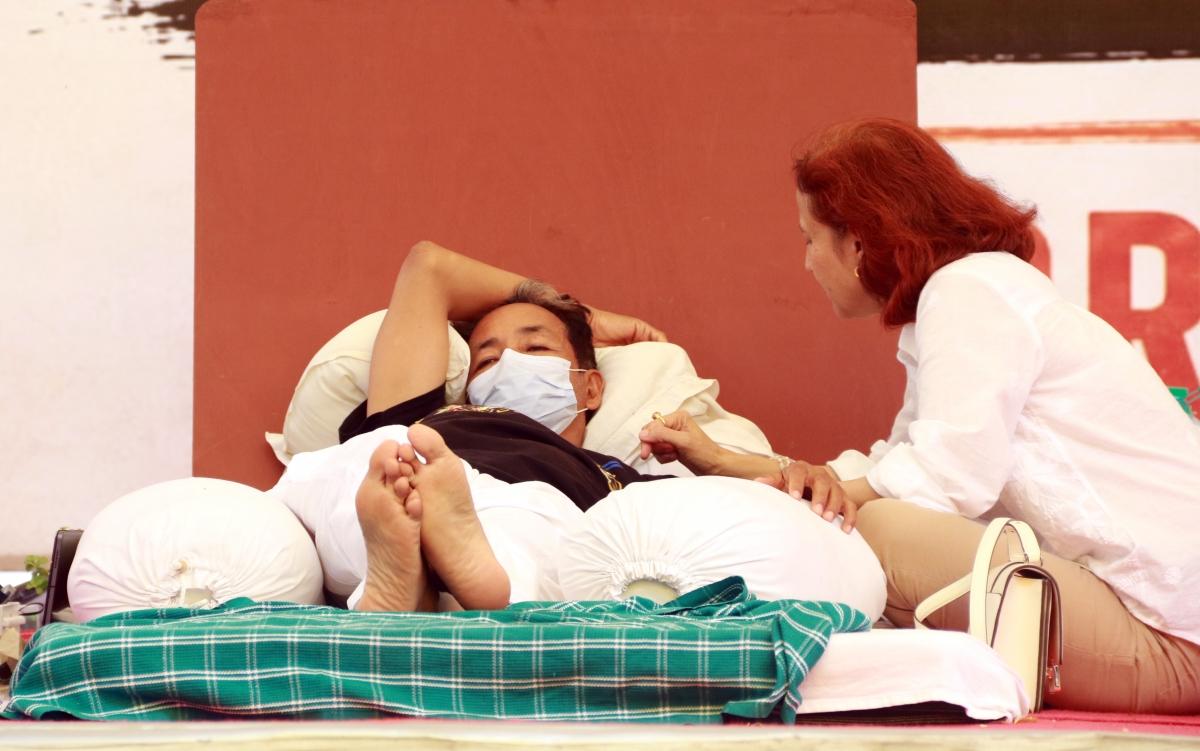
Examination System at the Centre of the Protest
Although Wangchuk softened his position on the resignation demand, he did not abandon the larger concerns that had brought the protesters onto the streets.
The agitation was driven by concerns over alleged irregularities in competitive examinations, questions surrounding paper leaks and wider issues related to the functioning of India’s examination system.
For students, examination-related irregularities can have serious consequences because competitive examinations often determine access to higher education and employment opportunities.
A compromised examination system can therefore affect thousands or even millions of candidates who spend months or years preparing for examinations.
Wangchuk and other protesters argued that such problems required greater institutional accountability and stronger safeguards to ensure that students were not disadvantaged because of administrative failures.
Resignation as a Symbol of Accountability
The demand for Dharmendra Pradhan’s resignation was significant because it represented a broader call for political responsibility.
Protesters viewed the resignation demand as a way of holding the political leadership accountable for problems within the education and examination system.
For Wangchuk, however, the political symbolism of the resignation eventually had to be weighed against the practical consequences for students and protesters.
He appeared to recognise that insisting on resignation as the only acceptable outcome could make negotiations more difficult and potentially put greater pressure on those participating in the movement.
As a result, his approach became more focused on achieving concrete assurances rather than maintaining an uncompromising position on one demand.
Fear of Violence and Escalation
Another factor behind Wangchuk’s change in approach was his concern that the agitation could escalate.
As the protest gained attention, the possibility of confrontation between demonstrators and authorities became an increasingly important issue.
Wangchuk said he was concerned that tensions could potentially spread beyond the immediate protest location and result in unrest or violence in other places.
This concern influenced his decision to reassess the movement’s strategy.
Rather than allowing the protest to become increasingly confrontational, he wanted to ensure that its central concerns remained focused on students, examination reforms and accountability.
His decision reflected the difficulties protest leaders often face when demonstrations become larger and politically more sensitive.
Hunger Strike Added Pressure
Wangchuk’s hunger strike also played an important role in bringing national attention to the issue.
A prolonged hunger strike can increase pressure on authorities, but it can also create serious concerns about the health and wellbeing of the person leading the protest.
As the fast continued, attention increasingly shifted towards Wangchuk’s health and whether the protest could continue without causing serious physical consequences.
This created another difficult balance between maintaining pressure on the government and preventing harm to the protest leader.
The circumstances eventually contributed to a broader discussion about whether the movement’s demands should be pursued through continued confrontation or negotiations.
A Strategic Shift, Not an Abandonment of the Issue
Wangchuk’s decision to soften the resignation demand should not necessarily be viewed as a complete withdrawal from the issue of accountability.
Instead, it represented a strategic change in priorities.
His broader concerns about examination irregularities, student rights and institutional responsibility remained.
By reducing the emphasis on Pradhan’s resignation, Wangchuk was able to place greater attention on issues that could potentially be addressed through negotiations, including assurances for protesters and students.
The move also created greater flexibility for discussions with the authorities.
In this sense, the decision can be viewed as an attempt to preserve the larger objectives of the movement while avoiding consequences that could affect students who had participated in the protests.
Political Significance of the Decision
The episode highlights the political difficulties associated with demands for ministerial resignations.
A resignation demand can provide a protest movement with a clear political objective and help attract public attention. However, governments are generally reluctant to accept such demands, particularly when they arise from street protests.
For protesters, the demand can represent accountability. For governments, accepting such a demand may have wider political implications.
Wangchuk’s decision to soften his position therefore created room for the movement to focus on other concerns.
It also demonstrated how protest strategies can change when leaders face competing priorities, including negotiations, public pressure, the safety of participants and the health of those leading the agitation.
Focus on Students and Education Reforms
At the heart of Wangchuk’s position remained the interests of students.
Competitive examination candidates invest significant amounts of time, money and effort in preparing for tests. Allegations of paper leaks, irregularities or other failures can therefore create considerable uncertainty and frustration among aspirants.
The protest highlighted a broader demand for a more reliable and transparent examination system.
Wangchuk’s decision to place greater emphasis on student protection suggested that the movement’s ultimate objective was broader than the resignation of one minister.
The larger question was whether the education system could provide students with confidence that examinations would be conducted fairly and that administrative failures would be addressed responsibly.
What Wangchuk’s Explanation Reveals
Wangchuk’s explanation provides an insight into the strategic considerations behind the protest.
While the resignation of Dharmendra Pradhan initially became a major political demand, Wangchuk later concluded that protecting protesters and keeping the larger education-related issues alive were more important immediate priorities.
His position also demonstrates how quickly the objectives of a protest can evolve.
A movement may begin with a specific demand but develop into a much wider campaign involving questions of accountability, institutional reform, political responsibility and the protection of participants.
For Wangchuk, softening the resignation demand allowed him to respond to these changing circumstances without abandoning the broader concerns that had brought him into the agitation.
The controversy surrounding examination irregularities and the demand for greater accountability in India’s education system are therefore likely to remain important issues, regardless of whether the demand for the Education Minister’s resignation remains at the centre of the movement.