
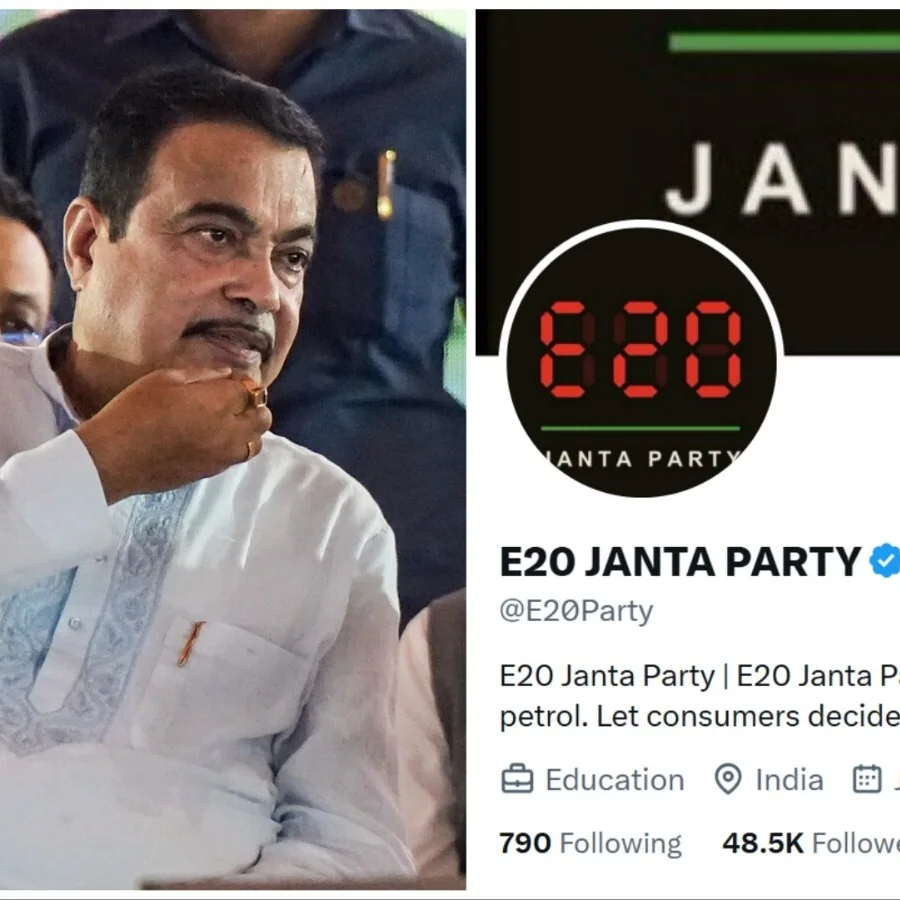
A new social media-led citizens’ movement calling itself the ‘E20 Janta Party’ has rapidly gained attention online, emerging as a fresh campaign against India’s 20 per cent ethanol-blended petrol policy. The movement has drawn thousands of followers across social media platforms and is calling for greater transparency, consumer choice and accountability over the government’s E20 fuel initiative.
The development comes shortly after the rise of another satirical online movement, the ‘Cockroach Janta Party’ (CJP), which became a major talking point during protests in Delhi and attracted significant public attention. While the CJP campaign focused on issues related to education and examination irregularities, the E20 Janta Party has turned its attention towards the impact of ethanol-blended petrol on vehicle owners, motorists and the wider public.
The latest campaign has also intensified political discussion around the government’s ethanol policy, particularly its possible consequences for consumers and vehicle owners. One of the social media accounts operating under the E20 Janta Party name has called for the resignation of Union minister Nitin Gadkari, while another account has announced plans for a Parliament march on August 4.
E20 Janta Party expands its social media presence
The E20 Janta Party has witnessed a sharp rise in its online following in recent days. One account on X, formerly known as Twitter, reportedly gained more than 25,000 followers within a few hours on Sunday and had crossed 48,000 followers by Monday morning. The movement also attracted more than 100,000 followers on Instagram.
The sudden growth has been attributed to increasing public debate over E20 petrol and the concerns expressed by some motorists and vehicle owners about the long-term effects of higher ethanol blending.
The movement has attempted to clarify that it is not demanding free fuel, government subsidies or an immediate withdrawal of ethanol-blended petrol. Instead, its stated position is that consumers should have the freedom to choose the type of fuel they wish to use.
In a social media statement, the group described itself as an independent citizens’ movement rather than a political organisation. It said its objective was to highlight issues affecting ordinary people and to encourage public discussion about the implementation and consequences of the E20 policy.
The group has also emphasised issues such as transparency, consumer rights and accountability. It has denied supporting any particular political party or ideology and urged people to focus on the policy debate rather than speculation about the identities of those operating the movement.
Protesters raise concerns over E20 petrol policy
E20 petrol refers to fuel containing 20 per cent ethanol blended with 80 per cent petrol. The policy is part of India’s broader strategy to increase the use of ethanol as a fuel additive and reduce dependence on imported crude oil.
Supporters of ethanol blending argue that it can help reduce the country’s petroleum import bill, lower certain vehicle emissions and create additional demand for agricultural produce used in ethanol production. The programme is also seen as part of India’s effort to diversify its energy sources and promote domestically produced fuel alternatives.
However, the policy has faced criticism from sections of vehicle owners and other stakeholders. Concerns have been raised about the compatibility of higher ethanol blends with older vehicles, potential effects on fuel efficiency and the possible cost implications for motorists.
Critics have also questioned the environmental impact of large-scale ethanol production, particularly because growing crops for fuel can require substantial quantities of water. These concerns have contributed to a wider debate over whether consumers should be given a choice between different fuel blends, particularly in areas where vehicles may not be designed to operate efficiently on higher ethanol concentrations.
The E20 Janta Party campaign appears to be building its support around these concerns, seeking to turn the technical debate over fuel policy into a broader public discussion about consumer rights. 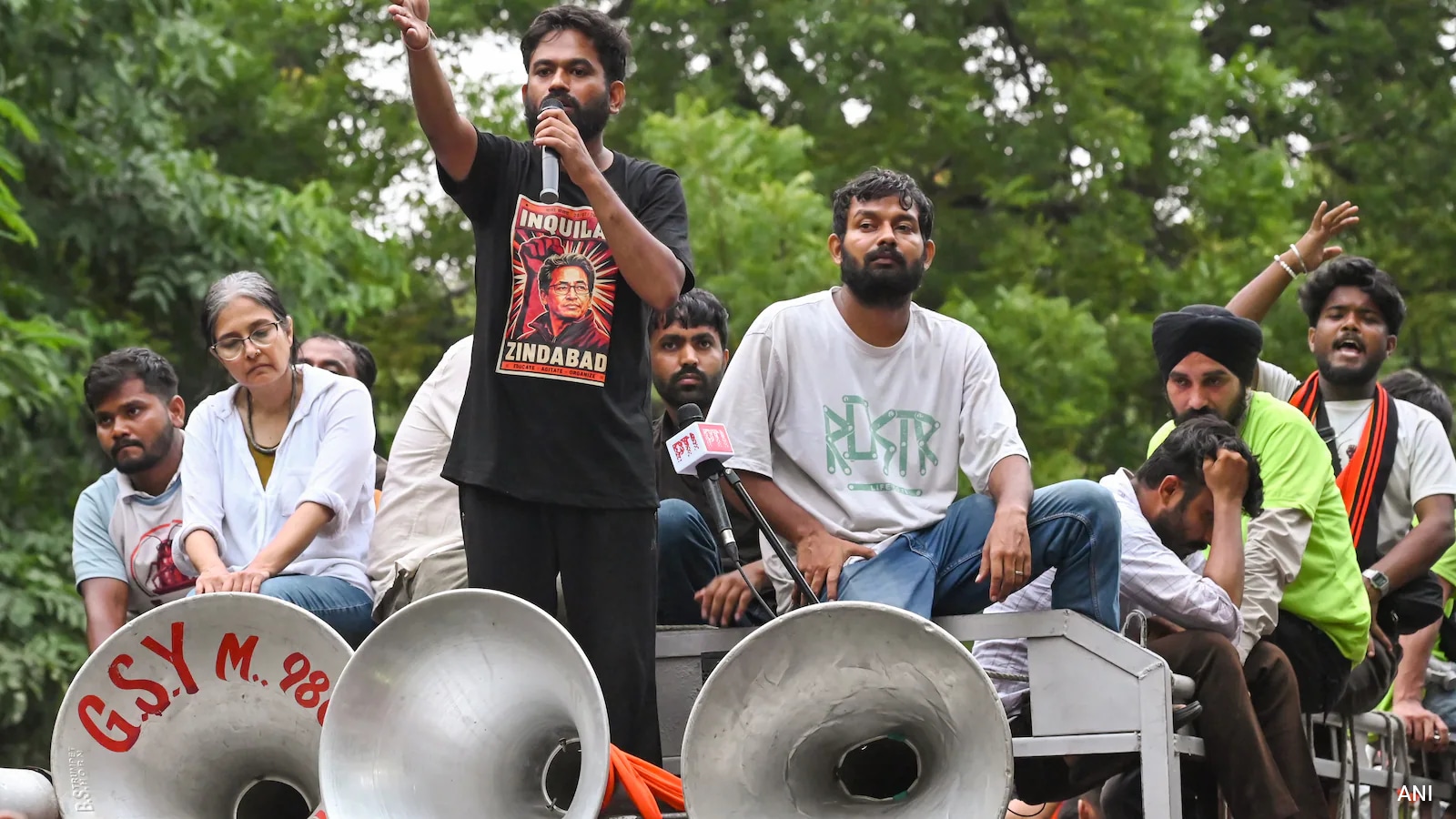
Parliament march announced for August 4
The campaign has gained further attention after another social media account using the E20 Janta Party name announced plans for a Parliament march on August 4.
According to the announcement, taxi operators, tourist vehicle owners and commercial drivers from different parts of the country are expected to participate. The proposed demonstration is aimed at highlighting objections to E20 petrol as well as concerns surrounding the mandatory installation of GPS tracking and panic-button systems in commercial vehicles.
The planned protest is expected to be led by Sanjay Samrat, with vehicle owners and drivers being urged to gather in the national capital to press the government for action.
It remains unclear how large the proposed demonstration will be or whether the campaign will achieve the same level of public mobilisation witnessed during the earlier CJP protests. The movement is, however, already attracting significant attention online, suggesting that fuel policy and vehicle-related regulations could become important subjects of public debate in the coming weeks.
Rise of the Cockroach Janta Party
The emergence of the E20 Janta Party follows the rapid growth of the Cockroach Janta Party, a satirical social media movement that became a major online phenomenon in recent months.
The CJP movement reportedly emerged after controversial remarks attributed to Chief Justice of India Surya Kant during a court hearing. The comments were interpreted by some young people and social media users as derogatory references to unemployed youth and online activists.
Rather than accepting the description as an insult, supporters turned the term into a symbol of protest. Boston University graduate Abhijeet Dipke reportedly established social media pages and an online platform around the concept in May.
The movement quickly gained a large following, with its online presence expanding rapidly and attracting supporters from different parts of the country. Dipke later returned to India and organised demonstrations in several cities.
The campaign eventually focused its attention on education-related concerns, particularly allegations surrounding examination irregularities and paper leaks. A sit-in protest was subsequently announced at Jantar Mantar, with protesters demanding accountability from the government and calling for the resignation of then Education Minister Dharmendra Pradhan.
The protest intensified during the Monsoon Session of Parliament, with demonstrators gathering in and around Jantar Mantar. The agitation continued for several days amid tensions between protesters and security personnel.
The CJP campaign ultimately ended after the announcement of Dharmendra Pradhan’s resignation as Education Minister on July 25.
Social media movements reshape public protests
The rise of both the Cockroach Janta Party and the E20 Janta Party highlights the growing influence of social media in shaping public campaigns and political conversations in India.
Unlike traditional political organisations, these movements have relied heavily on digital platforms to build visibility, communicate their demands and mobilise supporters. Their names and messaging are often designed to attract attention, generate discussion and encourage users to participate in wider conversations.
The E20 Janta Party’s rapid growth illustrates how a policy issue that might otherwise remain limited to technical discussions among experts can quickly become a mass public debate when concerns are amplified through social media.
At the same time, the movement’s future influence will depend on whether it can translate its growing online following into sustained public participation and organised action. The proposed August 4 Parliament march could become an important test of its ability to mobilise people beyond social media.
For the government, the growing campaign represents another challenge in communicating the benefits and implications of the E20 policy to consumers. As more motorists become aware of the transition towards higher ethanol blending, questions about vehicle compatibility, fuel economy, environmental costs and consumer choice are likely to remain central to the discussion.
The controversy also reflects a broader trend in Indian public life, where social media platforms are increasingly becoming spaces for political expression, citizen activism and protest mobilisation. Movements that begin with a small online following can rapidly gain national attention when their messages connect with public concerns.
Whether the E20 Janta Party develops into a sustained citizens’ campaign or remains primarily a social media phenomenon is yet to be seen. However, its emergence has already added a new dimension to the ongoing debate over ethanol-blended petrol and the government’s energy policy.