
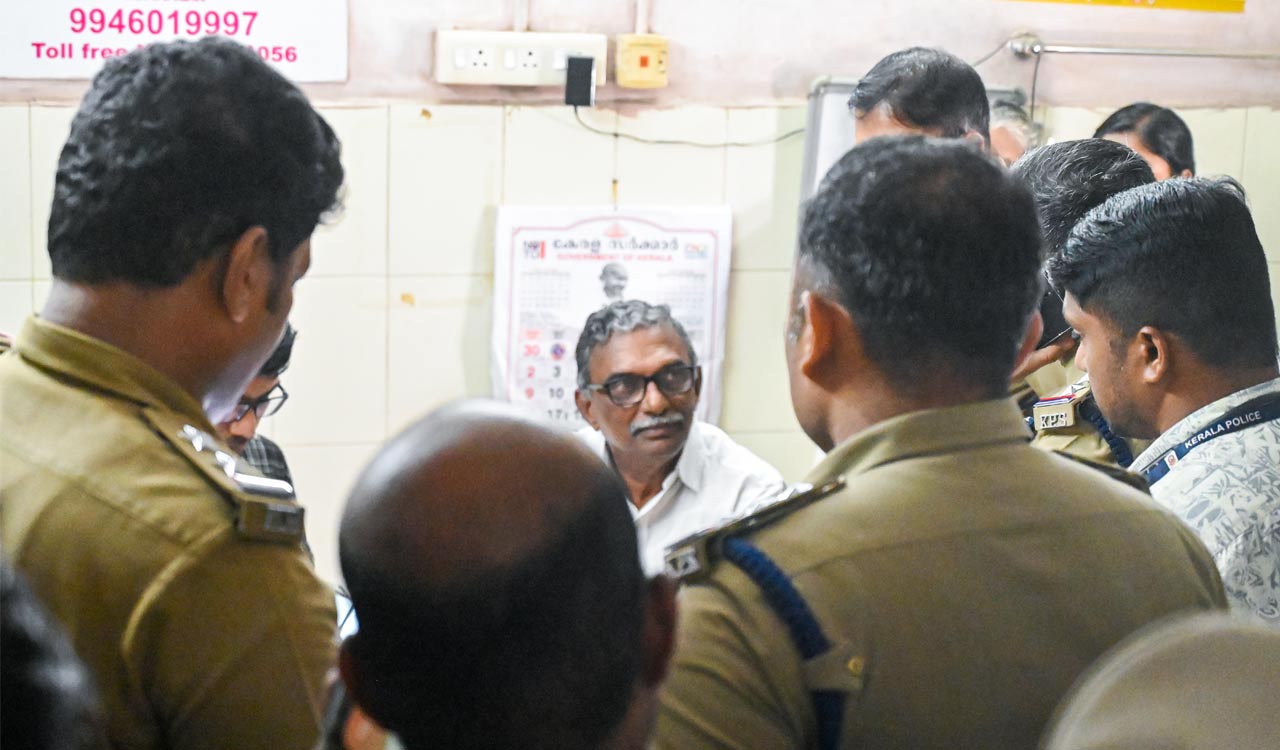
Former Travancore Devaswom Board (TDB) president P S Prasanth has expressed concern that he could be arrested in connection with the ongoing investigation into the alleged Sabarimala gold theft case. He has also alleged that the investigation against him and the board is being influenced by political considerations.
In a detailed statement shared on social media, Prasanth said he had received information that arrests could take place at any time. He claimed that the action was politically motivated and suggested that pressure from the current government was behind the developments.
Prasanth, however, said he was prepared to cooperate fully with the investigation being conducted by the Special Investigation Team (SIT) under the supervision of the Kerala High Court. At the same time, he defended the decisions taken by the board during his tenure and rejected allegations of wrongdoing in connection with the restoration of gold-plated sculptures at the Sabarimala temple.
Investigation into Sabarimala gold-related cases
The ongoing probe focuses on allegations concerning gold associated with the Dwarapalaka idols and doorframes of the Sreekovil, or sanctum sanctorum, at the Sabarimala temple. The items had reportedly been taken out of the temple for electroplating work in 2019.
The investigation has also expanded to examine a similar electroplating process carried out in 2025, during the period when Prasanth was serving as president of the Travancore Devaswom Board.
The former TDB chief said the board he headed had functioned in an honest and transparent manner and maintained that it had played a role in bringing the earlier gold-related irregularities to light. He questioned why the board was now being treated as an accused in the case despite its cooperation with the investigation.
According to Prasanth, the board had submitted all records and documents requested by the court and the investigating authorities. He argued that the decision to include the board in the case was not based on any wrongdoing by its members but was instead the result of alleged political pressure.
Prasanth defends 2025 restoration work
A significant part of Prasanth’s statement focused on the removal and restoration of the Dwarapalaka sculptures in 2025.
He rejected allegations that the sculptures had been taken away for repair without informing the Special Commissioner in an attempt to protect individuals allegedly connected with the 2019 gold theft case. Prasanth described the allegation as unreasonable and said the restoration process had been initiated for legitimate reasons.
He explained that the process of addressing defects in the temple doors, doorframes and Dwarapalaka sculptures had begun before his board took office. The proposal, he said, was originally initiated by the Sabarimala Executive Officer.
Prasanth assumed office as TDB president in November 2023. Following his appointment, he said the board received repeated complaints from temple employees regarding cracks in the Dwarapalaka sculptures.
According to him, the cracks were causing injuries to workers involved in cleaning the sanctum sanctorum after the ghee abhishekam ritual. He said blood from such injuries was falling in front of the shrine, creating a situation that was considered a ritual impurity.
Based on these complaints, the board directed officials in March 2024 to begin the necessary legal and administrative procedures to address the issue. 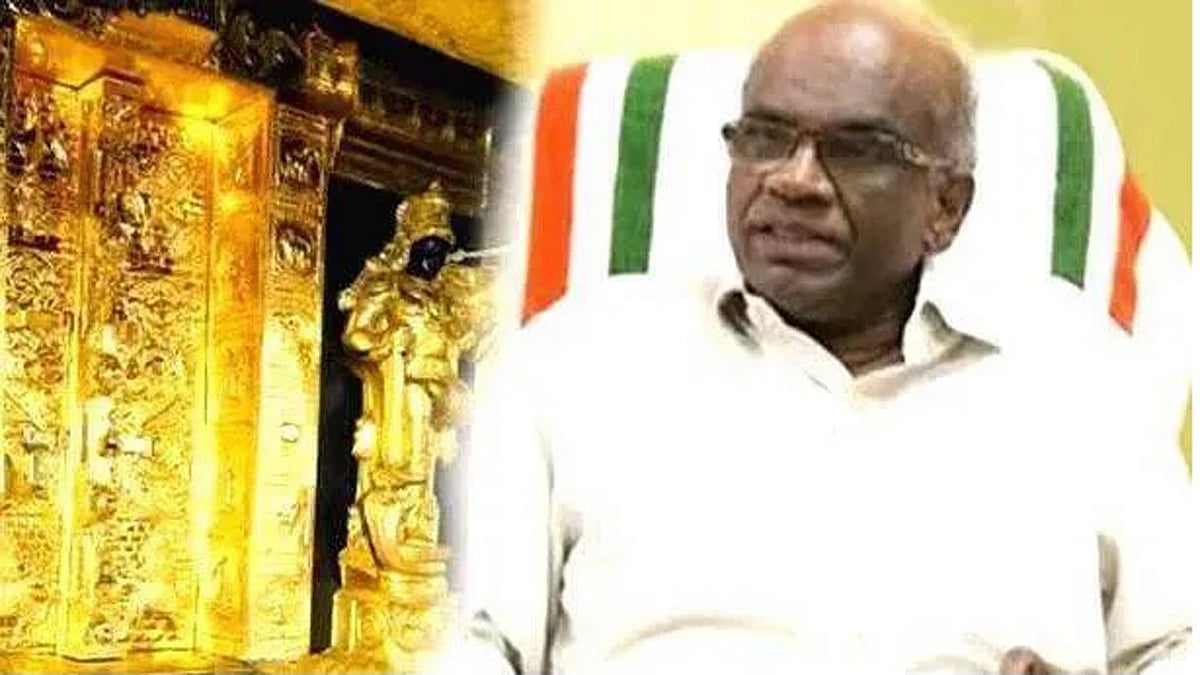
Board chose official supervision over private sponsorship
When the matter was placed before the board in September 2024, officials reportedly suggested that the sculptures be handed over to a sponsor for electroplating work in Chennai.
Prasanth said the board did not accept that approach. Instead, it decided that the restoration work should be carried out under the direct supervision of Devaswom officials and in the presence of the Vigilance wing.
According to his account, the decision was intended to ensure transparency and accountability throughout the process.
Prasanth maintained that the sculptures were removed from the temple in the presence of the Thiruvabharana Commissioner, Vigilance officials and other concerned authorities. Their weight and gold content were allegedly documented through a formal mahazar, while the entire removal process was videographed.
He also said that the sculptures were transported under official supervision and that the restoration process was monitored by the authorities.
Former TDB chief admits procedural omission
While defending the process, Prasanth acknowledged that the Special Commissioner had not been informed before the sculptures were removed.
However, he characterised this as an administrative omission by officials rather than an intentional decision by the board. He argued that the lapse did not indicate any conspiracy or attempt to conceal information.
Following the restoration, the sculptures were reportedly reinstalled in the presence of the temple Tantri, the Special Commissioner and Vigilance officials.
Prasanth claimed that subsequent measurements showed an increase in both the weight and gold content of the sculptures. On that basis, he argued that the Devaswom Board had not suffered any financial loss during the restoration process.
He also maintained that there was no evidence available to the board at the time suggesting that any irregularity had taken place during the removal, transportation or restoration of the sculptures.
Political motive allegation
Prasanth’s allegations have added a political dimension to an already sensitive investigation involving the management of valuables associated with one of Kerala’s most prominent pilgrimage centres.
The former TDB president claimed that both the previous Left Democratic Front government and the Devaswom Board had supported the demand for a Special Investigation Team probe following findings and directions from the High Court.
He argued that it was therefore contradictory for the same board to now face accusations in the investigation after having cooperated with the authorities and provided the required documents.
Prasanth said he had no regret over the decision to repair the sculptures. He insisted that the work was undertaken to address genuine structural problems and to prevent injuries and ritual concerns within the temple premises.
He further maintained that the restoration was not carried out to benefit any individual or group.
Investigation remains underway
The allegations made by Prasanth are part of his defence and have not been independently established. The SIT investigation into the Sabarimala gold-related cases remains ongoing, and the legal process is expected to determine the responsibility of individuals or institutions, if any, based on evidence collected during the probe.
The case has attracted significant attention because it concerns gold and other valuable materials associated with the Sabarimala temple. The investigation is examining events surrounding the handling, removal, restoration and electroplating of temple structures and objects over different periods.
As the probe continues under judicial oversight, the possibility of further questioning or arrests remains a key development to watch. Prasanth has said he will cooperate with investigators while continuing to challenge what he describes as politically motivated action against him and the institution he previously headed.
The investigation is likely to focus on official records, movement and custody of the temple objects, documentation of their weight and gold content, and the procedures followed during restoration work. The outcome of the probe will determine whether the allegations against those involved are supported by evidence and whether further legal action is warranted.