
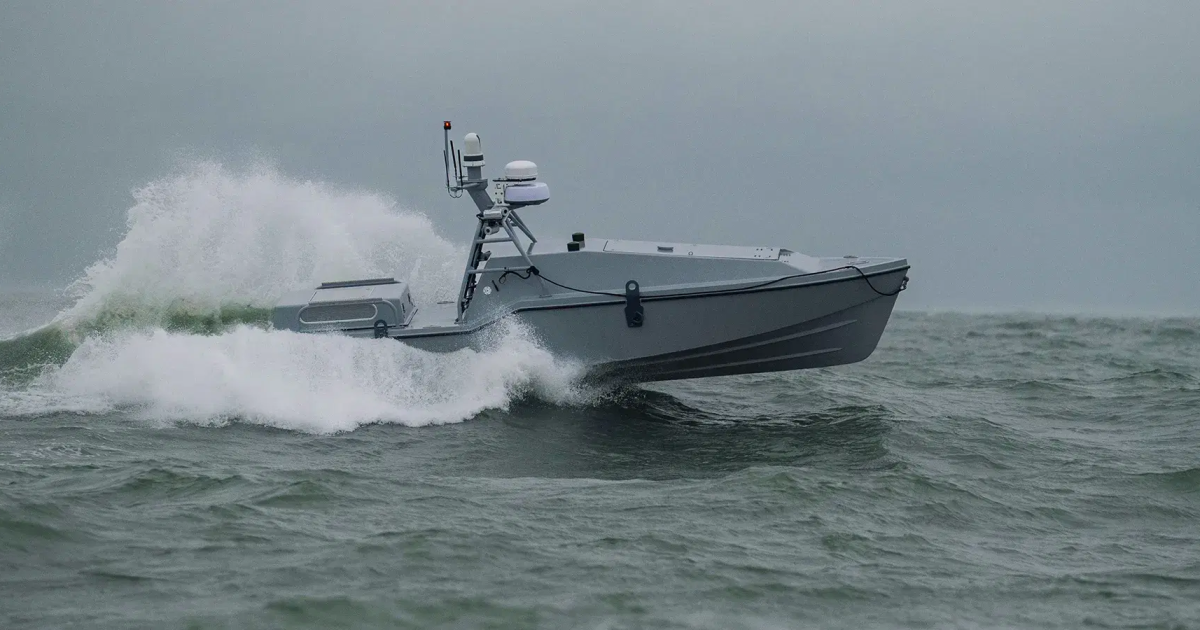
The United States Navy has introduced a new generation of autonomous maritime technology through its Corsair sea drones, a class of unmanned surface vessels (USVs) designed to enhance surveillance, reconnaissance, and combat operations in contested waters. The advanced platform has drawn significant international attention after reports indicated that it was deployed during military operations involving Iran, highlighting the growing importance of autonomous systems in modern naval warfare.
As geopolitical tensions continue to shape military strategies across the Middle East, the deployment of intelligent, unmanned vessels reflects a broader shift toward technology-driven defense operations. The Corsair sea drone is intended to support naval forces by carrying out dangerous missions with limited human involvement, reducing operational risks while expanding surveillance and strike capabilities.
What Are Corsair Sea Drones?
Corsair sea drones are autonomous or remotely operated unmanned surface vessels developed to perform a wide range of maritime missions. Unlike conventional naval ships that require onboard crews, these vessels rely on sophisticated navigation software, sensors, communication systems, and artificial intelligence to operate across vast ocean environments.
The drones are capable of functioning independently for extended periods while maintaining communication with command centers and nearby naval assets. Their modular design also allows them to be configured for different operational requirements, making them adaptable to various mission profiles.
Designed for High-Risk Naval Missions
Modern naval conflicts increasingly require continuous surveillance and rapid response in strategically important waterways. Corsair sea drones are specifically designed to operate in environments where deploying crewed vessels may involve significant risk.
Their primary operational roles include:
- Maritime intelligence gathering
- Long-range surveillance
- Reconnaissance missions
- Target detection and tracking
- Electronic monitoring
- Mine detection support
- Force protection for larger naval fleets
- Coordinated operations alongside manned warships
By undertaking these responsibilities, the drones allow traditional naval vessels to focus on strategic combat operations while reducing the exposure of military personnel.
Advanced Autonomous Navigation
One of the defining features of the Corsair platform is its autonomous navigation capability. Equipped with sophisticated onboard computing systems, the vessel can analyze its surroundings, identify obstacles, adjust routes, and continue missions with minimal operator intervention.
Multiple sensors continuously monitor sea conditions, nearby vessels, and potential threats. Artificial intelligence processes this information in real time, enabling the drone to make rapid navigational decisions while maintaining mission objectives.
Despite their autonomous capabilities, operators can assume remote control whenever tactical situations require direct human oversight.
Intelligence, Surveillance, and Reconnaissance
The Corsair sea drone serves as an important intelligence platform capable of collecting valuable maritime data across extensive operational areas.
Its integrated surveillance systems include:
- High-resolution optical cameras
- Infrared imaging equipment
- Radar systems
- Electronic intelligence sensors
- Secure communications technology
These systems enable military commanders to monitor ship movements, identify suspicious maritime activity, and maintain persistent situational awareness in strategically sensitive regions.
Because the drones can remain deployed for long durations without fatigue, they offer continuous monitoring capabilities that are difficult to achieve with conventional crewed patrol vessels.
Potential Combat Capabilities
Although much of the publicly available information focuses on surveillance and reconnaissance, autonomous surface vessels such as the Corsair can also support offensive military operations depending on mission configuration.
Possible capabilities may include:
- Precision targeting support
- Missile guidance assistance
- Electronic warfare missions
- Decoy operations
- Coordination with naval strike groups
- Target designation for other military platforms
The modular architecture allows military planners to tailor equipment packages according to operational requirements without redesigning the entire vessel.
Strategic Importance in the Middle East
The Middle East remains one of the world’s most strategically important maritime regions due to major international shipping routes, energy exports, and ongoing geopolitical rivalries.
Autonomous naval systems such as Corsair provide the United States with enhanced monitoring capabilities in areas where constant surveillance is considered essential. Their ability to patrol contested waters while minimizing risks to sailors makes them particularly valuable in regions where military tensions can escalate rapidly.
The reported operational use of these drones during actions involving Iran demonstrates how autonomous systems are becoming integrated into real-world military planning rather than remaining experimental technologies.
Reduced Risk to Military Personnel
One of the greatest advantages of unmanned naval platforms is their ability to perform dangerous missions without placing human crews directly in harm’s way.
Operations involving intelligence collection, close observation of hostile vessels, or patrols through potentially mined waters can expose traditional naval crews to significant threats. Autonomous surface vessels reduce those risks by allowing missions to continue without onboard personnel.
This approach also enables commanders to deploy multiple unmanned vessels simultaneously, creating broader surveillance coverage while conserving larger naval assets.
Artificial Intelligence at Sea
Artificial intelligence plays a central role in the Corsair’s operational effectiveness.
AI-powered software assists with:
- Route planning
- Threat recognition
- Obstacle avoidance
- Sensor data analysis
- Mission optimization
- Fleet coordination
These capabilities allow autonomous vessels to react more quickly to changing maritime conditions while maintaining communication with human operators who retain overall command authority.
Part of a Broader Naval Transformation
The introduction of autonomous sea drones reflects a wider transformation taking place across modern armed forces worldwide. Militaries are increasingly investing in unmanned systems capable of operating across land, air, sea, and underwater environments.
The US Navy has been expanding its portfolio of unmanned surface and underwater vessels as part of long-term modernization efforts aimed at improving operational flexibility, reducing costs, and enhancing maritime security.
Future naval fleets are expected to rely on a combination of crewed warships and autonomous platforms working together through integrated command-and-control networks.
Growing Global Interest
Several countries are accelerating investments in autonomous naval technologies as maritime competition intensifies. Advanced unmanned surface vessels are increasingly viewed as force multipliers capable of extending surveillance coverage, supporting combat operations, and protecting critical shipping lanes.
As artificial intelligence, robotics, and maritime communications continue to evolve, autonomous vessels such as the Corsair are expected to play a much larger role in future naval operations.
Conclusion
The US Navy’s Corsair sea drones represent a significant advancement in autonomous maritime warfare, combining artificial intelligence, sophisticated sensors, and long-endurance operational capabilities into a versatile unmanned platform. Their reported deployment during operations involving Iran underscores the growing reliance on autonomous systems in modern military strategy.
As naval warfare evolves, unmanned surface vessels are likely to become an increasingly important component of global defense operations, offering enhanced surveillance, improved operational flexibility, and reduced risks to military personnel while reshaping the future of maritime security.