
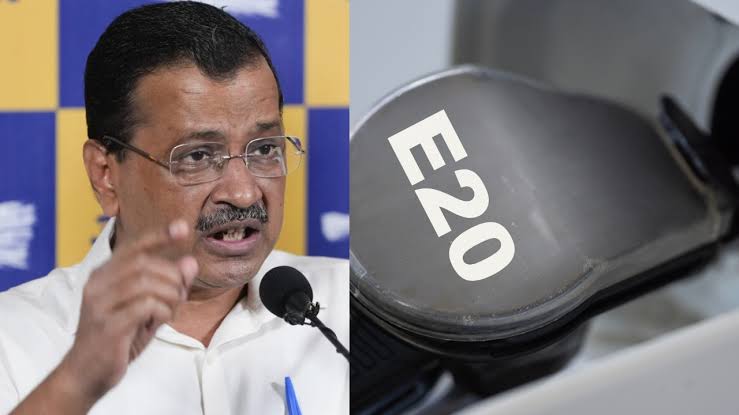
Former Delhi Chief Minister Arvind Kejriwal has written to several leading automobile manufacturers, raising serious concerns over the implementation of India’s E20 fuel policy and its possible financial impact on millions of vehicle owners. In his communication, Kejriwal questioned whether automobile companies would compensate consumers if their existing vehicles suffer damage or reduced performance because of the widespread adoption of ethanol-blended fuel.
The letter has sparked fresh debate over the country’s transition towards cleaner fuel alternatives, highlighting concerns about consumer awareness, vehicle compatibility, and the responsibilities of both policymakers and automobile manufacturers during the shift.
Questions Raised Over Vehicle Compatibility
Kejriwal addressed his letter to major automobile manufacturers, including Maruti Suzuki, Toyota, and Hero MotoCorp, seeking detailed clarification regarding the compatibility of existing vehicles with E20 fuel.
He questioned whether all vehicles currently on Indian roads are capable of safely operating on fuel containing 20 percent ethanol. If not, he sought to know what steps manufacturers plan to take to protect consumers whose vehicles may face mechanical issues after the nationwide rollout of E20 fuel.
The former Delhi Chief Minister argued that consumers who purchased vehicles based on existing fuel standards should not be forced to bear the financial burden if policy changes later affect the usability or durability of their vehicles.
Demand for Consumer Protection
A major concern highlighted in the letter relates to compensation for consumers.
Kejriwal asked automobile manufacturers whether they would compensate vehicle owners if engines or fuel systems suffer damage because of increased ethanol blending. He also questioned whether companies would extend warranty coverage or provide free repairs if compatibility issues arise after E20 fuel becomes widely available.
According to his argument, consumers deserve complete transparency regarding the risks and benefits associated with the transition to ethanol-blended fuel. He stressed that buyers should not face unexpected repair expenses resulting from changes in national fuel policy. 
Need for Greater Transparency
The letter also calls for improved communication between automobile companies and consumers.
Kejriwal sought detailed information on:
- Which vehicle models are fully compatible with E20 fuel.
- Whether older vehicles require modifications before using E20 fuel.
- The expected impact of E20 fuel on engine performance and long-term maintenance.
- The availability of technical support for affected customers.
- The company’s responsibility if vehicles experience fuel-related mechanical problems.
He maintained that clear public communication is essential before the policy is implemented on a wider scale.
India’s Push Towards Ethanol-Blended Fuel
India has been actively promoting ethanol blending as part of its broader strategy to reduce dependence on imported crude oil, lower carbon emissions, and support domestic agricultural production. Increasing ethanol content in petrol is viewed as an important step towards achieving energy security while encouraging the use of cleaner fuels.
The E20 initiative refers to petrol blended with 20 percent ethanol. The policy is expected to contribute to environmental sustainability while also providing additional income opportunities for farmers involved in ethanol production.
However, the transition has also generated discussions regarding vehicle readiness, infrastructure requirements, and public awareness.
Industry Preparedness Under Scrutiny
The questions raised by Kejriwal have shifted attention toward the preparedness of automobile manufacturers.
Experts have previously noted that many newer vehicle models are designed to accommodate higher ethanol blends, while certain older vehicles may require careful evaluation depending on their engine design and fuel system components.
The issue has therefore become not only an environmental discussion but also one involving consumer rights, manufacturer accountability, and policy implementation.
Automobile companies are expected to clarify their position regarding warranty provisions, technical guidance, and customer support if compatibility concerns emerge during the transition.
Balancing Environmental Goals and Consumer Interests
While the move toward cleaner fuels remains a significant national objective, Kejriwal argued that environmental progress should not come at the expense of ordinary vehicle owners.
He maintained that consumers deserve assurance that policy-driven fuel changes will not lead to unforeseen financial losses. If such risks exist, he believes manufacturers and relevant stakeholders should clearly define their responsibilities and provide appropriate safeguards.
The debate underscores the importance of balancing India’s long-term environmental ambitions with practical concerns surrounding vehicle ownership, maintenance costs, and consumer confidence.
Awaiting Industry Response
As discussions over the E20 fuel rollout continue, responses from leading automobile manufacturers are expected to provide greater clarity on vehicle compatibility, warranty policies, and consumer protection measures.
The issue is likely to remain at the center of public debate as India advances its transition toward cleaner transportation fuels, with stakeholders seeking a balance between sustainability, technological readiness, and consumer interests.