
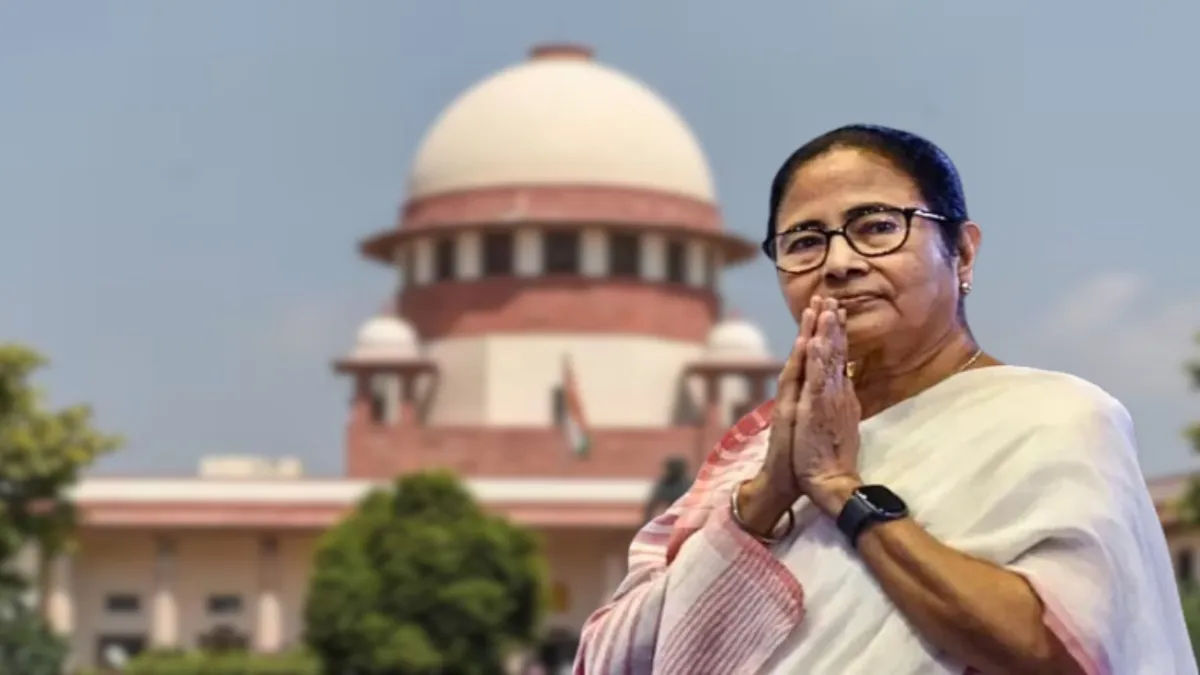
The Supreme Court on Monday advised the Trinamool Congress (TMC) to file separate petitions concerning allegations that the Special Intensive Revision (SIR) of electoral rolls may have materially affected the outcome of the 2026 West Bengal Assembly elections. The court’s observation came during hearings related to disputes over voter deletions and their alleged impact on several constituencies across the state.
A bench led by Chief Justice of India Surya Kant and Justice Joymalya Bagchi heard submissions from senior advocate Kalyan Bandopadhyay, representing the TMC. During the proceedings, the party claimed that in at least 31 constituencies won by the Bharatiya Janata Party (BJP), the margin of victory was lower than the number of voters whose names had been deleted from the electoral rolls and whose cases remain pending before appellate authorities.
According to the submissions made before the court, the TMC argued that the deletion of voter names under the SIR process may have significantly influenced election results in several closely contested seats. The party reportedly prepared a detailed chart highlighting constituencies where the number of deleted voters exceeded the final victory margin.
Justice Joymalya Bagchi observed that issues specifically linked to election results allegedly affected by pending voter deletions would require independent applications to be filed separately before the court. The bench indicated that such concerns could not simply be incorporated into the ongoing proceedings related to the broader SIR exercise. 
Chief Justice Surya Kant also stated that parties were free to submit appropriate interlocutory applications if they wished to raise concerns regarding constituencies where election outcomes may have been impacted by voter deletions. The court, however, stopped short of making any immediate findings on the merits of the allegations raised by the TMC.
During the hearing, counsel appearing for the Election Commission argued that if political parties had grievances related to election outcomes, they could pursue remedies through election petitions under the law. The Commission also maintained that any concerns regarding the SIR process itself could be addressed separately before the court.
The Special Intensive Revision exercise has emerged as one of the most politically sensitive issues in West Bengal following the 2026 Assembly elections. Opposition parties, particularly the TMC, have alleged that large-scale deletions from voter rolls disproportionately affected genuine voters and may have influenced the democratic process. Meanwhile, the Election Commission and the BJP have defended the exercise as an attempt to remove duplicate, shifted, deceased, or otherwise ineligible entries from the electoral database.
The controversy surrounding the voter roll revision has intensified after the TMC’s electoral setback in the state. The party has repeatedly accused the Election Commission and the BJP of using the SIR process to influence electoral outcomes, while the BJP has dismissed the allegations as politically motivated.
The Supreme Court’s latest observations are expected to pave the way for fresh legal challenges related to specific constituencies where disputed voter deletions may have affected results. Legal experts believe that separate petitions focusing on constituency-level data could lead to prolonged judicial scrutiny of the electoral revision process and its implementation in West Bengal.