
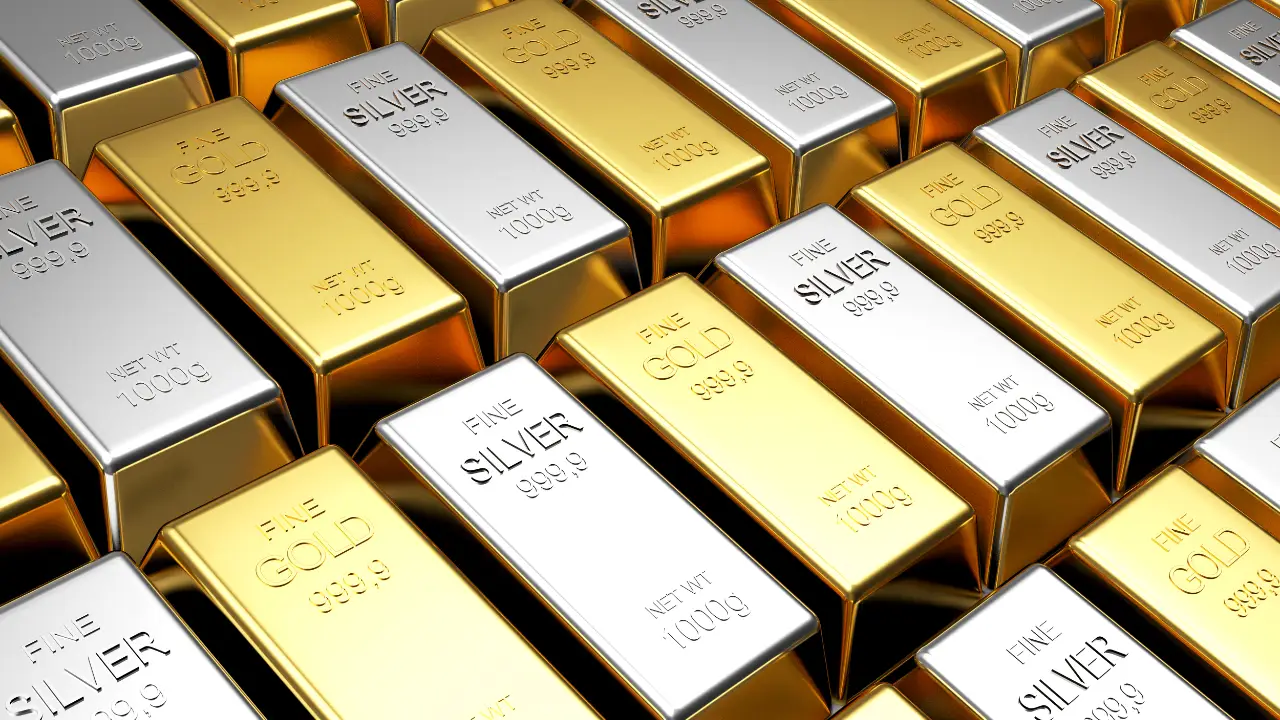
Gold prices witnessed a significant decline in domestic bullion markets on Monday, while silver registered strong gains as investors reacted to mounting geopolitical uncertainty in West Asia and shifting global economic signals. The sharp movement in precious metal prices came amid heightened concerns over rising crude oil prices, inflationary pressures, and uncertainty surrounding global monetary policy.
According to market data, gold prices dropped by Rs 638 to settle at Rs 1,51,892 per 10 grams in the national capital. In contrast, silver prices surged by Rs 2,625 to reach Rs 1,12,500 per kilogram, reflecting increased investor interest in industrial and alternative safe-haven metals.
The decline in gold prices follows recent fluctuations in international bullion markets, where traders have been closely monitoring escalating tensions in West Asia, especially developments involving Iran and disruptions linked to energy supply routes. Analysts noted that the strengthening US dollar and expectations of prolonged high interest rates also weighed heavily on gold demand globally.
International spot gold prices weakened as concerns over rising inflation and elevated oil prices triggered caution among investors. While gold is traditionally considered a safe-haven asset during periods of geopolitical instability, higher interest rates tend to reduce its attractiveness because the metal does not offer any fixed yield. Market participants are therefore balancing geopolitical risks against the possibility of tighter monetary conditions by major central banks.

Silver, however, continued its upward momentum due to a combination of industrial demand and investor buying. Analysts said silver benefited from broader commodity market strength and expectations of increased industrial consumption, particularly in sectors linked to clean energy and manufacturing. The metal has also been supported by speculative buying in international markets over recent sessions.
The broader commodity market remains highly sensitive to developments in West Asia. Ongoing uncertainty surrounding diplomatic negotiations and fears of supply disruptions in major oil transit routes have pushed crude oil prices higher, fueling inflation concerns across global economies. Rising energy prices have intensified fears that inflation could remain elevated for a longer period, potentially delaying interest rate cuts by major central banks.
In India, bullion traders reported mixed sentiment among buyers. While some investors viewed the recent correction in gold prices as a buying opportunity ahead of the wedding and festive season, others remained cautious due to heightened market volatility. Jewellery demand in several major cities remained moderate as consumers waited for further price stabilization.
Financial experts believe that precious metal prices are likely to remain volatile in the near term due to ongoing geopolitical tensions, fluctuating crude oil prices, and uncertainty surrounding global economic growth. Investors are also closely watching upcoming inflation data and central bank commentary for clues about future monetary policy decisions.
Market observers added that any escalation in geopolitical conflict or further disruption to energy supplies could once again trigger safe-haven buying in gold. However, a stronger dollar and elevated bond yields may continue to limit major upside movement in bullion prices over the short term.
Despite the latest decline, gold prices remain substantially higher compared to levels seen a year ago, reflecting persistent global uncertainty and strong long-term investment demand for precious metals. Silver too has maintained strong momentum in recent months, supported by both industrial consumption and investor interest in alternative assets.