
The Union Territory of Ladakh has added a new district to its administrative map with the creation of Sankoo as its eighth district, a move aimed at bringing government administration closer to residents and improving the delivery of public services in the region.
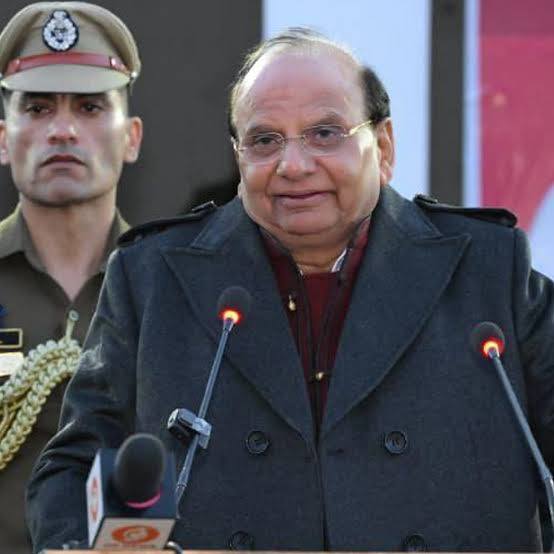
Lieutenant Governor Vinai Kumar Saxena announced the creation of Sankoo on Friday, fulfilling a long-standing demand from residents of the area. The new district has been carved out of Kargil district, marking another significant change in Ladakh’s administrative structure.
The administration has also announced the creation of five new tehsils across different parts of Ladakh as part of a wider effort to decentralise governance and make government services more accessible to people living in remote and geographically challenging areas.
Sankoo becomes Ladakh’s eighth district
Sankoo will now function as Ladakh’s eighth district, with Sankoo designated as the district headquarters. According to the administrative notification, the new district comprises four tehsils — Sankoo, GM Pore, TSG and Taisuru — along with the revenue villages included within their jurisdiction.
The creation of the district will result in a corresponding change in the jurisdiction of Kargil district, as the tehsils and revenue villages transferred to Sankoo will no longer remain under Kargil’s administrative control.
The formal notification was issued by the Revenue Department of the Union Territory administration under the applicable land revenue law. The order will take effect from the date of its publication in the Official Gazette.
Long-standing demand of local residents
The announcement addresses a demand that had been raised by people in Sankoo and neighbouring areas for greater administrative recognition and easier access to government institutions.
Addressing a public gathering in Sankoo, Saxena said the establishment of the district represented an important step towards bringing administration closer to citizens. He emphasised that residents across Ladakh should be able to access government services more easily and benefit from development initiatives irrespective of where they live.
The Lieutenant Governor also acknowledged the support of Prime Minister Narendra Modi and Union Home Minister Amit Shah for development initiatives in Ladakh.
The demand for district status had gained further attention following the earlier reorganisation of Ladakh’s administrative structure. Local representatives, community organisations and residents had sought the creation of additional districts to improve governance in areas located far from existing administrative headquarters.
Five new tehsils announced
Alongside Sankoo district, the administration has announced five additional tehsils in different districts of Ladakh.
The new tehsils are:
- Aryan Valley in Sham
- Sodh in Kargil
- Phey in Zanskar
- Thasgam in Drass
- Hemya in Changthang
The latest additions follow the creation of 17 new tehsils announced earlier in July. With the five latest additions, Ladakh’s total number of tehsils has increased to 37.
The expansion is intended to create smaller administrative units that can respond more efficiently to local requirements. For residents of remote mountain communities, reducing the distance to administrative offices can be particularly important because difficult terrain, harsh weather and limited connectivity can make travel to distant government centres challenging.
Ladakh’s administrative map has expanded rapidly
The creation of Sankoo follows a major administrative reorganisation announced earlier this year.
Before the recent expansion, Ladakh had only two districts — Leh and Kargil. In April, five additional districts were announced: Nubra, Sham, Changthang, Zanskar and Drass. That expansion increased the number of districts from two to seven.
The creation of Sankoo now takes the total to eight.
The changes represent one of the most substantial reorganisations of Ladakh’s district-level administration since the Union Territory was created in 2019.
The move also comes at a time when questions surrounding Ladakh’s governance structure, political representation and constitutional safeguards remain subjects of discussion between representatives from the region and the Union government.
Focus on better public service delivery
Administrative decentralisation is particularly significant in Ladakh because of its vast geographical area and difficult terrain.
The region covers large mountainous areas where communities can be separated by considerable distances. Creating smaller districts and tehsils can allow government departments to establish a stronger local presence and potentially make services such as revenue administration, welfare delivery, development programmes and other public services easier to access.
The administration has said that the necessary arrangements for the functioning of the new Sankoo district will be addressed at the earliest.
For residents, the expectation is that the new administrative structure will not merely change district boundaries but also improve the practical availability of government services.
Development push comes amid wider changes in Ladakh
The announcement of Sankoo’s district status comes shortly after a series of major development initiatives in Ladakh.
Prime Minister Narendra Modi recently inaugurated and dedicated several development projects in the Union Territory, with a combined value of around ₹3,350 crore. The projects include initiatives relating to connectivity, airport infrastructure, power, water resources and cultural preservation.
The timing places the creation of Sankoo within a broader period of administrative and infrastructure expansion in the region.
For the people of Sankoo, however, the creation of a separate district carries a more immediate significance. With the area now receiving its own district-level administrative identity, residents are expected to have greater proximity to key government institutions and officials.
What the new district means for Kargil
The creation of Sankoo will also reshape Kargil’s administrative boundaries. Areas transferred to the new district will no longer fall under Kargil district’s jurisdiction.
This reorganisation is expected to allow both Kargil and Sankoo administrations to focus more closely on the needs of their respective populations.
The move follows demands from several areas for greater administrative decentralisation after the announcement of Ladakh’s five new districts earlier this year. Besides Sankoo, demands for district status have also emerged from other areas, including Shakar, Chiktan and Shargole.
A significant administrative milestone
The creation of Sankoo marks another important stage in Ladakh’s evolving administrative framework.
For residents, the principal expectation is that the new district will translate into easier access to government offices, faster delivery of public services and stronger attention to local development needs.
The addition of five new tehsils further strengthens the decentralisation process by creating smaller administrative units across the Union Territory.
With Sankoo now becoming Ladakh’s eighth district and the number of tehsils reaching 37, the region is undergoing a substantial restructuring of its grassroots administrative system. The effectiveness of the changes will ultimately depend on how quickly infrastructure, staffing and administrative facilities are established and how effectively the new units serve local communities.