
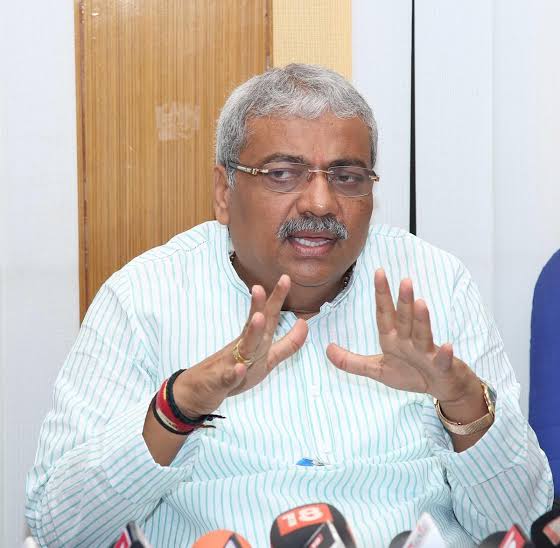
Congress MLA Yashvanthrayagouda V Patil has submitted his resignation from the Karnataka Legislative Assembly in protest against the exclusion of Indi and Chadachan taluks in Vijayapura district from the state’s list of drought-affected areas.
Patil, who represents the Indi Assembly constituency, submitted his resignation to Assembly Speaker Gurupadagouda Sanganagouda Patil on Wednesday, September 23. His decision came amid an ongoing discussion in the state legislature over the drought situation and the difficulties being faced by farmers across Karnataka.
The MLA said the exclusion of Indi and Chadachan from the drought-affected list had made it increasingly difficult for him to address the concerns of people in his constituency. He has repeatedly urged the state government to reconsider the decision and recognise the two taluks as drought-hit areas.
However, the resignation was later rejected by the Assembly Speaker on technical grounds, as it was reportedly not submitted in the prescribed format.
MLA Raises Concerns Over Drought Status
Patil had been seeking drought-affected status for Indi and Chadachan for several weeks. In a letter addressed to Chief Minister D K Shivakumar, he highlighted the agricultural difficulties faced by people in the two taluks.
The MLA pointed out that a large majority of taluks in Vijayapura district had already been included in the drought-affected list, while Indi and Chadachan remained excluded.
According to Patil, the situation had created considerable concern among farmers and residents. He said people in his constituency were expecting their elected representative to raise the issue with the government and secure appropriate relief measures.
Patil also expressed dissatisfaction over the government’s response to his repeated representations. He indicated that he had attempted to raise the matter through official channels before taking the decision to submit his resignation.
Farmers Face Pressure Due to Poor Rainfall
The dispute comes against the backdrop of a wider drought situation in Karnataka. Poor rainfall has affected agricultural activities in several parts of the state, creating concerns over crop production, irrigation and farmers’ incomes.
For farmers, recognition as a drought-affected area is significant because it can enable affected communities to access various relief and support measures. These may include financial assistance, agricultural relief, drinking-water arrangements and other government interventions.
The exclusion of a taluk from the official drought list can therefore become a major political and administrative issue, particularly in predominantly agricultural constituencies.
Chief Minister Responds to Resignation
Chief Minister D K Shivakumar said Patil had been under pressure from farmers and residents in his constituency.
Shivakumar said he had spoken with the MLA and attempted to understand the concerns behind his decision. The chief minister indicated that the government was aware of the difficulties being faced by farmers and was working to address the drought situation.
He also appealed to elected representatives not to resign over the issue and instead remain in the Assembly to raise the concerns of their constituencies.
According to the government, drought declarations cannot be made solely on the basis of demands from individual legislators. Authorities have to consider specific parameters and assessment procedures before declaring an area drought-affected.
Government Defends Drought Assessment Process
The Karnataka government has maintained that the identification of drought-affected taluks is based on established criteria.
Rainfall deficiency, the number of days without adequate rainfall and other agricultural and ground-level indicators are taken into account during the assessment process.
The government has argued that elected representatives cannot independently determine whether a particular taluk qualifies for drought status. Instead, officials are required to examine available data and conduct assessments before making recommendations.
This process has become a point of disagreement between some legislators and the government, particularly in areas where representatives believe that ground conditions are more severe than reflected in official assessments.
Number of Drought-Affected Taluks Increases
The resignation controversy emerged as Karnataka continued to expand the number of areas identified as drought-affected.
The state initially declared 101 taluks as drought-hit. The government later added more areas following further assessments, taking the number to 177 taluks.
Officials indicated that the number could increase further depending on subsequent assessments and ground-level conditions.
The expansion of the drought list reflects the scale of rainfall-related difficulties being reported across different regions of Karnataka.
Rainfall Deficit Raises Agricultural Concerns
Karnataka has experienced a significant rainfall deficit during the monsoon period, increasing concerns among farmers and authorities.
The state received substantially less rainfall than the normal seasonal average between June and September. The shortage has been particularly noticeable in several agricultural regions.
Different parts of Karnataka have recorded varying levels of rainfall deficiency. North interior Karnataka and south interior Karnataka have faced considerable shortages, while other regions have also reported below-normal rainfall.
The lack of adequate rainfall has affected agricultural activities and increased concerns over crop losses, irrigation and water availability.
Opposition Raises Issue in Assembly
The resignation attempt also became a political issue inside the Karnataka Assembly.
Opposition legislators referred to Patil’s resignation while the House was discussing the drought situation. The development highlighted concerns within the ruling Congress over the government’s handling of drought assessment and relief.
The issue also brought attention to the difficulties faced by legislators who are under pressure from farmers and local residents to secure drought-related assistance.
While the government has maintained that it must follow established assessment procedures, legislators representing affected regions have continued to demand quicker action.
Indi and Chadachan Remain at the Centre of Dispute
The central issue remains the demand to include Indi and Chadachan in the official drought-affected list.
Patil has argued that the people of his constituency require government support because of the agricultural difficulties caused by inadequate rainfall. His resignation attempt was intended to draw attention to the issue and put pressure on the authorities to reconsider the exclusion.
The Speaker’s rejection of the resignation on technical grounds means that the political and administrative dispute over the drought status of the two taluks remains unresolved.
The government, meanwhile, is continuing its assessment of drought conditions across Karnataka and has indicated that additional areas may be considered for inclusion depending on the findings.