
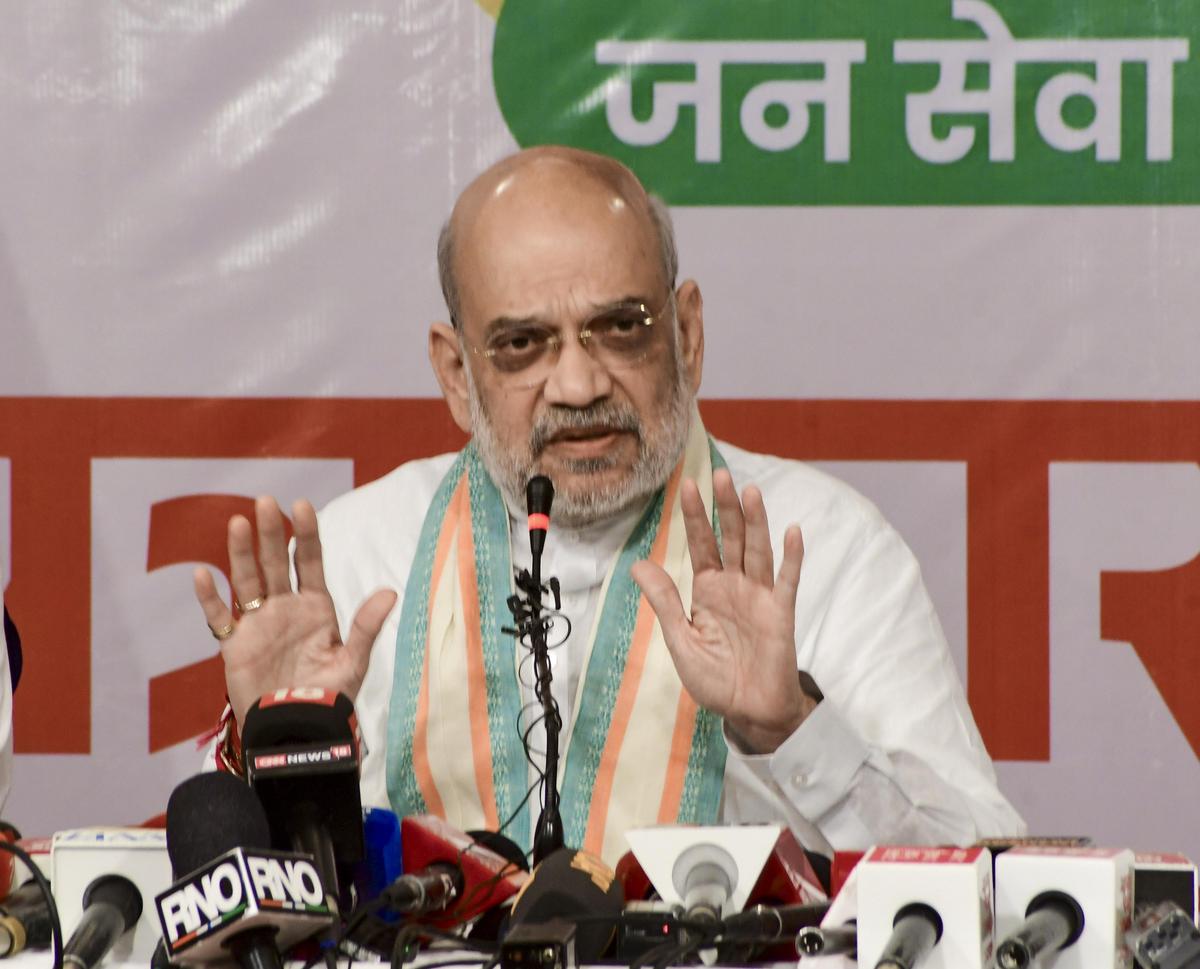
Union Home Minister Amit Shah has said that the Uniform Civil Code (UCC) will be introduced in all states governed by the National Democratic Alliance before the 2029 Lok Sabha elections. He said the implementation of the UCC remains an important priority for the ruling alliance and indicated that the process would be expanded across NDA-ruled states in the coming years.
Shah’s remarks put the Uniform Civil Code at the centre of the government’s broader political and legislative agenda. The UCC has been one of the long-standing policy objectives of the Bharatiya Janata Party and has generated extensive debate over personal laws, constitutional principles, religious practices and equality before the law.
UCC rollout planned across NDA-ruled states
Shah said the UCC would be introduced in all 21 states ruled by the NDA before 2029. Several states have already taken steps towards implementing a common civil code, while others are examining the issue through committees and legislative processes.
The Uniform Civil Code seeks to establish a common framework governing personal matters such as marriage, divorce, inheritance, adoption and related family laws. At present, several personal matters are governed by different laws and customs applicable to various religious communities.
Uttarakhand became the first state in India to implement a Uniform Civil Code. Its move has since encouraged other BJP-ruled and NDA-governed states to examine the possibility of introducing similar legislation.
States including Gujarat, Assam and Madhya Pradesh have also taken steps towards preparing or introducing UCC-related legislation. Other states have initiated consultations and constituted committees to study the legal and social implications of implementing a common civil code.
Article 44 and the constitutional debate
The UCC is linked to Article 44 of the Constitution, which directs the state to work towards securing a uniform civil code for citizens.
Supporters of the UCC argue that a common legal framework could strengthen equality and ensure that citizens are governed by the same rules in matters relating to family and personal law. They also contend that it could help promote gender equality and reduce differences arising from separate personal-law systems.
Critics, however, have raised concerns about the effect of a uniform framework on religious freedom, cultural traditions and community-specific practices. The debate has therefore extended beyond legislation and into broader questions concerning India’s constitutional structure and its pluralistic society.
UCC remains a major BJP priority
The Uniform Civil Code has been part of the BJP’s political agenda for several decades. Shah has previously linked the UCC with other major issues that the party has pursued over the years.
The latest announcement indicates that the government intends to make significant progress on the issue before the next general election in 2029. If implemented across more NDA-ruled states, the UCC could become one of the most important legislative and political developments of the current electoral cycle.
The implementation process is expected to vary from state to state because individual state governments will need to consider legislative procedures, administrative requirements and local circumstances.
Government also discusses nationwide NRC
Shah also spoke about the possibility of implementing the National Register of Citizens across the country. He said discussions were being held with NDA allies regarding a nationwide NRC.
The NRC has remained a sensitive political and legal issue, particularly because of questions surrounding citizenship documentation, illegal immigration and the identification of people who may not meet the requirements for Indian citizenship.
Shah indicated that consultations with alliance partners were continuing before decisions are taken on the broader implementation of the NRC.
He also referred to discussions concerning the baseline year that could be used for an NRC exercise in Manipur. The issue is particularly significant because of the state’s complex demographic, political and security situation.
Shah highlights national security measures
During his remarks, Shah also highlighted the government’s approach towards national security and terrorism.
He referred to military and security operations carried out under the current government and described them as evidence of a tougher approach towards terrorism. He also highlighted the government’s decisions concerning Jammu and Kashmir, including the abrogation of Articles 370 and 35A.
Shah said these measures had contributed to the integration of Jammu and Kashmir with the rest of the country. He also pointed to efforts to address Left-wing extremism and the surrender of militants as part of the government’s wider security strategy.
The Home Minister further highlighted peace agreements and political initiatives in the Northeast, presenting them as examples of efforts to resolve long-standing conflicts and create conditions for development.
Focus on India’s history and decolonisation
Shah also spoke about the need to examine India’s history from a broader perspective.
He said the process of decolonisation should not be interpreted as an attempt to erase history. Instead, he argued that it should involve correcting gaps in historical narratives and ensuring that India’s own perspectives, traditions and contributions receive greater recognition.
According to Shah, colonial rule influenced India’s understanding of history, culture, knowledge and institutions. He said the country should now work towards developing a more comprehensive understanding of its past while recognising the contributions of Indian thinkers, scholars and institutions.
UCC likely to remain a major political issue
Shah’s statement is expected to intensify the political debate surrounding the Uniform Civil Code as the country moves towards the 2029 Lok Sabha elections.
For the BJP and its NDA partners, the UCC represents an important step towards establishing common laws for citizens in personal and family matters. For critics, the proposed legislation raises questions about religious autonomy, cultural diversity and the protection of community-specific practices.
With multiple NDA-ruled states examining the issue, the coming years are likely to witness further legislative discussions, consultations and political debate over the scope and implementation of the UCC.
Shah’s announcement makes it clear that the government wants the issue to move forward at the state level before 2029. The eventual shape of the legislation, however, will depend on individual state laws, constitutional considerations and the political consensus surrounding the proposal.