
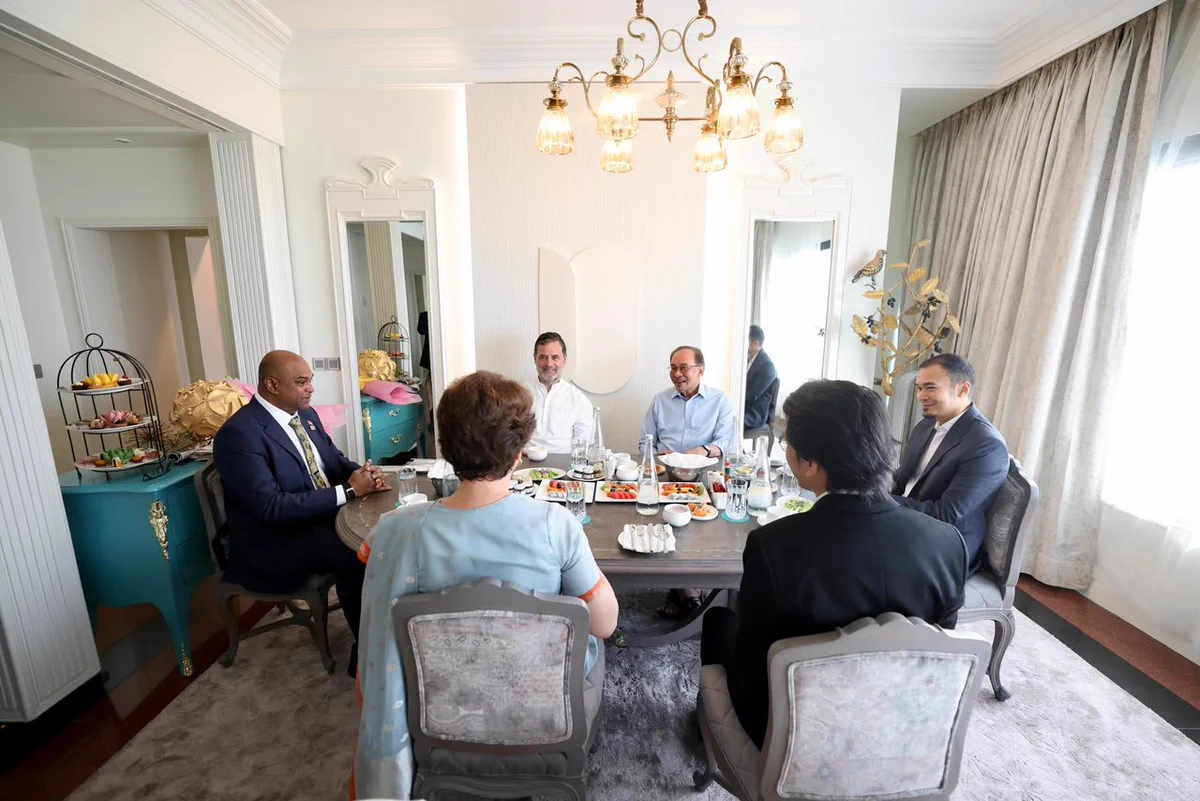
The menu served to international dignitaries during the BRICS Summit in New Delhi has triggered a political exchange between the Congress and the Bharatiya Janata Party (BJP), with the Opposition questioning why guests were served an entirely vegetarian spread.
The controversy emerged after the conclusion of the two-day BRICS Summit at Bharat Mandapam in New Delhi. Congress leaders criticised the decision to serve only vegetarian food to visiting heads of government and other international dignitaries, arguing that India’s culinary identity extends well beyond vegetarian cuisine.
Congress leaders said the menu did not adequately reflect the country’s diverse food traditions and accused the government of presenting a limited version of Indian culture to foreign guests.
Congress leader Pawan Khera alleged that the government had extended what he described as its dietary preferences to international visitors. He argued that India is known for a wide range of cuisines, including numerous non-vegetarian dishes that are popular both within the country and internationally.
Khera questioned why the non-vegetarian component of India’s culinary culture was not represented at an international diplomatic gathering. He said India’s food traditions are closely linked to its regional diversity and that global visitors should have the opportunity to experience the country’s broader culinary heritage.
The issue was also raised by Congress leader Rahul Gandhi, who highlighted the large proportion of Indians who consume non-vegetarian food. In a social media post, Gandhi referred to the popularity of Indian non-vegetarian cuisine while also sharing a reference to chole bhature, one of Delhi’s best-known food items.
The controversy drew reactions from other Opposition leaders as well. Trinamool Congress MP Mahua Moitra suggested that visiting BRICS dignitaries could explore well-known Delhi eateries if they wanted to sample traditional non-vegetarian food.
The criticism has centred not simply on the choice of food at the summit but on the broader question of how India presents its cultural diversity during major international events. Congress leaders maintained that an international gathering of this scale should showcase the country’s different regional culinary traditions rather than appear to favour one dietary preference.
The BJP, however, rejected the criticism and hit back at the Congress. BJP MP Sambit Patra mocked the Opposition’s reaction, saying some Congress leaders were experiencing what he described as “indigestion” because of India’s growing global position.
Patra linked the criticism to India’s role in BRICS and emphasised the country’s importance within the grouping. He argued that the focus should remain on India’s increasing influence and contribution to the international organisation rather than on the summit menu.
The latest dispute is not the first instance in which an official international event hosted by India has featured an exclusively vegetarian menu. During the G20 meetings held in New Delhi, meals served at Bharat Mandapam as well as the presidential banquet were also entirely vegetarian.
Those menus were designed to highlight India’s vegetarian culinary traditions and the country’s broader food culture. The BRICS menu has similarly become a subject of political debate, although the government has not indicated that the choice was intended to make a political statement.
The disagreement reflects a wider political debate in India over food preferences, cultural representation and individual dietary choices. Food has frequently become part of political discussions in the country, particularly when questions of regional identity, religious practices and cultural diversity are involved.
India’s culinary traditions vary significantly from region to region. While vegetarian cuisine occupies an important place in several Indian communities and traditions, non-vegetarian dishes are also an established part of the country’s food culture. Congress leaders have therefore argued that both traditions should be represented when India hosts major international gatherings.
The BRICS Summit brought together senior leaders and representatives from member countries for discussions on global economic cooperation, international affairs and other strategic issues. Against that diplomatic backdrop, the food menu became an unexpected point of political confrontation after the summit concluded.
For the BJP, the criticism offered another opportunity to highlight India’s growing international standing and its role within BRICS. For the Congress and other Opposition parties, the menu raised questions about whether the government was adequately showcasing India’s diverse cultural and culinary identity.
The dispute ultimately goes beyond what was served at the summit table. It has become another example of how cultural and dietary issues can quickly enter India’s political discourse, with both the government and Opposition using the controversy to reinforce their respective positions.
As the political exchange continues, the BRICS menu controversy has added an unusual domestic dimension to an otherwise significant international summit, turning the choice of food for foreign dignitaries into a debate over India’s identity, diversity and representation.