
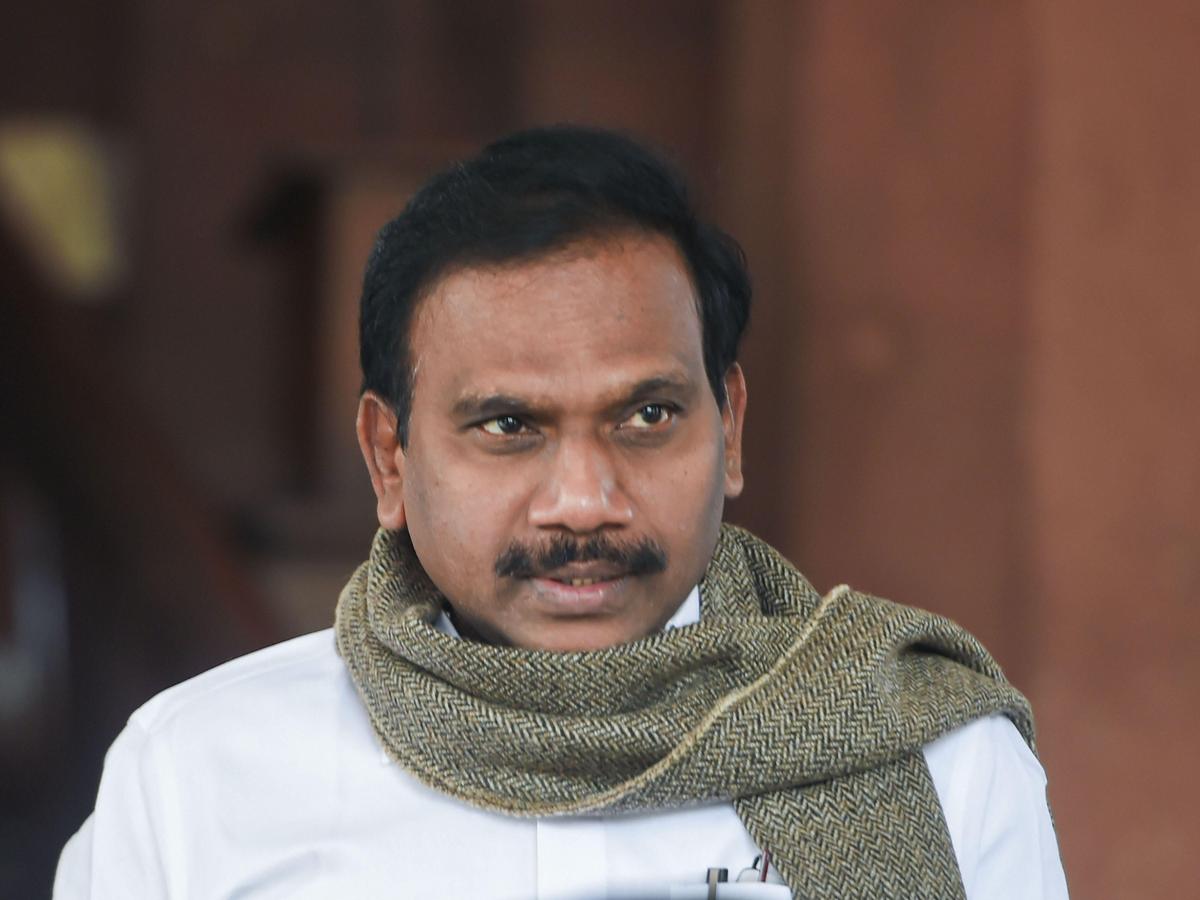
Senior Dravida Munnetra Kazhagam (DMK) leader A Raja has expressed regret over his controversial remarks against Tamil Nadu minister and Tamilaga Vettri Kazhagam (TVK) leader Nirmal Kumar, following criticism from several political leaders.
Raja, a senior DMK leader and former Union minister, said his comments were made in an emotional moment and announced that he was withdrawing the remarks. The controversy has triggered criticism from political figures across party lines and has also led to a police complaint being filed over the comments.
The dispute began during a political protest where Raja criticised Nirmal Kumar over comments concerning Tamil Nadu Chief Minister MK Stalin and his political past. Raja’s remarks subsequently became a major point of political discussion, with several leaders objecting to the language used.
Raja expresses regret
Raja later acknowledged that his remarks had gone too far. He said his comments were influenced by his emotions while responding to criticism directed at Stalin.
The DMK leader said he regretted questioning the minister in the manner he did and decided to withdraw his words. Raja maintained that his reaction was linked to remarks about Stalin’s detention during the Emergency-era MISA period.
According to Raja, Stalin’s political history and his experience of detention were matters that he felt strongly about. He said repeated references to that period had provoked an emotional response.
While withdrawing his remarks, Raja also indicated that political disagreements should not be allowed to cross certain limits. His statement was seen as an effort to bring the controversy under control after it attracted criticism from several quarters.
Nirmal Kumar responds
Nirmal Kumar strongly criticised Raja’s remarks and questioned the nature of political discourse within the DMK.
The minister argued that political leaders should respond to criticism through issues and facts rather than making personal or offensive comments. He also questioned whether senior members of the DMK approved of the language used by Raja.
Kumar’s response further intensified the political dispute, with the exchange becoming part of a wider argument over political conduct and public speech.
He suggested that the controversy reflected the increasingly aggressive nature of political debates in Tamil Nadu and questioned whether such statements were appropriate for public political platforms.
TVK legislator files police complaint
The controversy also took a legal turn after a TVK legislator approached the police over Raja’s remarks.
The complaint sought action against the DMK leader, alleging that his comments were objectionable and crossed the limits of acceptable political speech.
The police complaint added to the pressure surrounding Raja’s statement and ensured that the controversy extended beyond political criticism.
The development is significant because TVK has emerged as an increasingly prominent political force in Tamil Nadu, adding another dimension to the state’s already competitive political environment.
Political allies criticise Raja
Raja’s remarks also drew criticism from leaders belonging to parties that have political ties with the DMK.
Communist Party of India (Marxist) leaders objected to the language used by Raja and stressed the importance of maintaining dignity in political discourse.
DMK MP Kanimozhi Karunanidhi also appeared to signal concern over the controversy. She referred to the importance of exercising restraint while speaking, highlighting the need for political leaders to be responsible with their words.
Congress leaders also criticised Raja and argued that public figures should avoid personal attacks and offensive language during political debates.
The criticism from members of parties associated with the DMK made the controversy more politically significant.
Debate over political language
The controversy has once again raised questions about the standard of political discourse in Tamil Nadu.
Political leaders regularly engage in sharp exchanges, particularly during protests, election campaigns and Assembly debates. However, comments involving individuals and their families can quickly escalate into larger political disputes.
Raja’s decision to withdraw his remarks indicates an attempt to prevent the issue from becoming a prolonged controversy. His expression of regret may help reduce some of the immediate political pressure surrounding the issue.
However, the criticism from political allies, the response from Nirmal Kumar and the police complaint filed by a TVK legislator have ensured that the issue continues to attract attention.
Wider political significance
The controversy comes at a time when Tamil Nadu’s political landscape is witnessing growing competition between established parties and emerging political formations.
The DMK remains one of the state’s major political forces, while newer organisations such as TVK are seeking to establish themselves as significant players in Tamil Nadu politics.
As political competition increases, statements made by senior leaders are likely to receive greater public and media scrutiny.
The latest dispute demonstrates how quickly a political speech can develop into a broader controversy when comments are perceived as personal or inappropriate.
For Raja, withdrawing the remarks and expressing regret represents an attempt to draw a line under the matter. However, the political debate surrounding the incident is likely to continue, particularly as parties prepare for future electoral battles in the state.
Key Developments
- A Raja expressed regret over his controversial remarks against Nirmal Kumar.
- The DMK leader said his comments were made in an emotional moment.
- Raja subsequently withdrew the remarks.
- Nirmal Kumar criticised Raja and questioned the language used in the political debate.
- A TVK legislator filed a police complaint over Raja’s comments.
- Leaders from the Congress and CPI(M) also criticised the remarks.
- DMK MP Kanimozhi Karunanidhi stressed the importance of restraint in political speech.
- The controversy has renewed debate over political decorum in Tamil Nadu.