
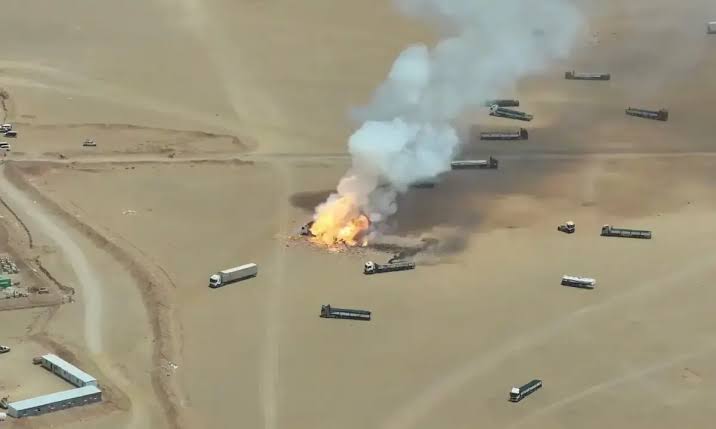
India has strongly condemned the recent Houthi attacks on Saudi Arabia, warning that the escalation poses a serious threat to regional peace, maritime security and the stability of critical energy and trade routes.
The latest attacks, carried out by Yemen-based Houthi forces using missiles and drones, targeted several locations in southern Saudi Arabia, including areas linked to the country’s energy infrastructure and military facilities. The strikes have heightened concerns over the widening security crisis in the Middle East and the possibility of further disruption to strategically important shipping corridors.
India’s response comes as tensions across the region remain high, with developments involving Yemen, Saudi Arabia and Iran increasingly affecting wider Gulf security. New Delhi has expressed concern that attacks on critical infrastructure and commercial routes could undermine regional stability and create additional risks for international shipping and global energy supplies.
India voices concern over escalation
India’s condemnation reflects its broader position that attacks against civilian and strategic infrastructure cannot be allowed to further destabilise an already fragile regional security environment.
The latest Houthi offensive has added another layer to the complex security situation surrounding the Arabian Peninsula. The group has repeatedly demonstrated its ability to launch long-range missiles and drones against targets far beyond areas under its direct control in Yemen.
The attacks on Saudi territory have raised particular concern because some of the affected areas are connected to the country’s oil and energy network. Any prolonged disruption to major energy facilities could have consequences well beyond Saudi Arabia, given the country’s importance to global oil markets.
India, which maintains extensive economic, energy and people-to-people ties with Gulf countries, has a direct interest in the security and stability of the region.
Houthi attacks target key Saudi locations
The recent assault reportedly involved coordinated missile and drone strikes against multiple targets in southern Saudi Arabia. Areas including Jizan, Abha, Najran and Khamis Mushait were among those affected.
Energy infrastructure was a major focus of the attacks. Facilities associated with Saudi Aramco were targeted, while military installations and other strategic locations also came under attack.
The strikes caused injuries and triggered fires at some sites, according to reports. Saudi authorities have described the attacks as a dangerous escalation and indicated that measures would be taken to protect the country’s territory and critical infrastructure.
The attacks are significant because they demonstrate the continued ability of the Houthis to threaten strategically important sites inside Saudi Arabia despite years of military and diplomatic efforts aimed at reducing tensions.
Bab el-Mandeb emerges as another major concern
Beyond the immediate damage caused by the attacks, the wider implications for maritime security have become a major concern.
The Bab el-Mandeb Strait, located between Yemen and the Horn of Africa, is one of the world’s most important maritime chokepoints. It connects the Red Sea with the Gulf of Aden and provides a crucial route for ships travelling between the Indian Ocean and the Mediterranean through the Suez Canal.
Any prolonged threat to shipping in the area could force vessels to take longer alternative routes, increasing transportation costs, insurance premiums and delivery times.
The Houthis have previously targeted commercial shipping in and around the Red Sea, citing their regional political and military objectives. The renewed escalation therefore raises fears that maritime traffic could again face significant security risks.
For India, the issue is particularly important because a substantial portion of the country’s trade with Europe, the Middle East and other markets depends on secure maritime transportation.
Wider Iran-Saudi tensions add to uncertainty
The latest developments also come against the backdrop of wider tensions involving Iran and its regional allies.
The Houthis are closely aligned with Iran, although Tehran has repeatedly rejected allegations that it directly controls the group’s military operations. Their relationship has nevertheless remained a major factor in assessments of security dynamics across the Middle East.
Saudi Arabia and Iran have historically been regional rivals, although diplomatic efforts in recent years had created hopes of reducing tensions. The renewed Houthi attacks could complicate those efforts and increase pressure on countries across the Gulf.
The situation is particularly sensitive because the conflict is no longer confined to Yemen’s internal political and military divisions. Developments involving the Houthis increasingly intersect with broader disputes involving Iran, Gulf states, Israel, the United States and maritime security.
Threat to global energy markets
The attacks on Saudi energy facilities have also raised concerns about their potential impact on global oil markets.
Saudi Arabia is one of the world’s largest oil producers and plays a central role in maintaining stability in global energy supplies. Any sustained damage to production, refining or export infrastructure could influence crude prices and increase uncertainty for countries dependent on imported energy.
The latest attacks come at a time when international energy markets are already vulnerable to geopolitical disruptions. Concerns surrounding shipping through the Strait of Hormuz and the Red Sea have increased the sensitivity of oil markets to developments in the Middle East.
Even limited disruptions can have wider economic effects if they persist. Higher energy and transportation costs can eventually influence fuel prices, inflation, manufacturing expenses and consumer markets around the world.
India has major stakes in Gulf stability
India’s concern over the escalation is also linked to its extensive strategic and economic relationship with Gulf countries.
Millions of Indians live and work across the Gulf region, while India maintains substantial trade, investment and energy links with Saudi Arabia and other countries in the region.
Saudi Arabia is an important energy supplier for India, making the security of its oil infrastructure and export routes strategically significant for New Delhi.
India also depends heavily on maritime routes connecting the western Indian Ocean with the Red Sea and the Mediterranean. Any prolonged disruption could affect shipping schedules, freight costs and supply chains involving Indian businesses.
For these reasons, instability in the Red Sea, Gulf of Aden or Bab el-Mandeb can have consequences for India’s economy even when the country is not directly involved in the conflict.
Risk of a wider regional confrontation
The latest attacks have renewed concerns that the Yemen conflict could once again become a major regional confrontation.
The relative reduction in fighting in Yemen in recent years had created cautious hopes that the country could move towards a political settlement. However, the resurgence of Houthi military activity and its spillover into regional security calculations threatens to reverse some of that progress.
A prolonged cycle of attacks and retaliation could draw more countries into the confrontation, increasing the possibility of attacks against energy infrastructure, military bases and commercial vessels.
Such an escalation would also make diplomatic efforts more difficult. Regional governments would face growing pressure to respond militarily while simultaneously trying to protect economic infrastructure and prevent further deterioration in security conditions.
Maritime security remains a critical issue
The renewed attacks underline the strategic importance of protecting international maritime routes.
The Red Sea and Bab el-Mandeb are essential corridors for global trade, connecting major markets in Asia, Europe, Africa and the Middle East. Continued attacks or threats against shipping could result in vessels avoiding the area and taking longer routes around the African continent.
Such diversions would increase fuel consumption and transit times while adding costs to international supply chains.
For India, which has been closely monitoring maritime security in the Indian Ocean and surrounding waters, maintaining freedom of navigation remains a major strategic priority.
What the escalation means for the region
India’s condemnation signals concern that the latest Houthi attacks could contribute to a broader deterioration in Middle East security.
The immediate challenge for Saudi Arabia is to protect its territory and vital infrastructure while preventing the confrontation from expanding further. At the same time, the international community faces the difficult task of maintaining secure commercial shipping routes and preventing disruptions to global energy supplies.
The situation also places renewed attention on the need for diplomatic engagement to address the underlying conflicts involving Yemen and its regional actors.
As tensions continue to develop, the security of Saudi energy infrastructure, the Red Sea shipping corridor and the Bab el-Mandeb Strait will remain closely watched by governments and international markets.
For India, the message is clear: instability in the Middle East has consequences far beyond the region. The protection of civilians, critical infrastructure and international maritime routes remains essential to preventing a wider crisis with global economic and security implications.