
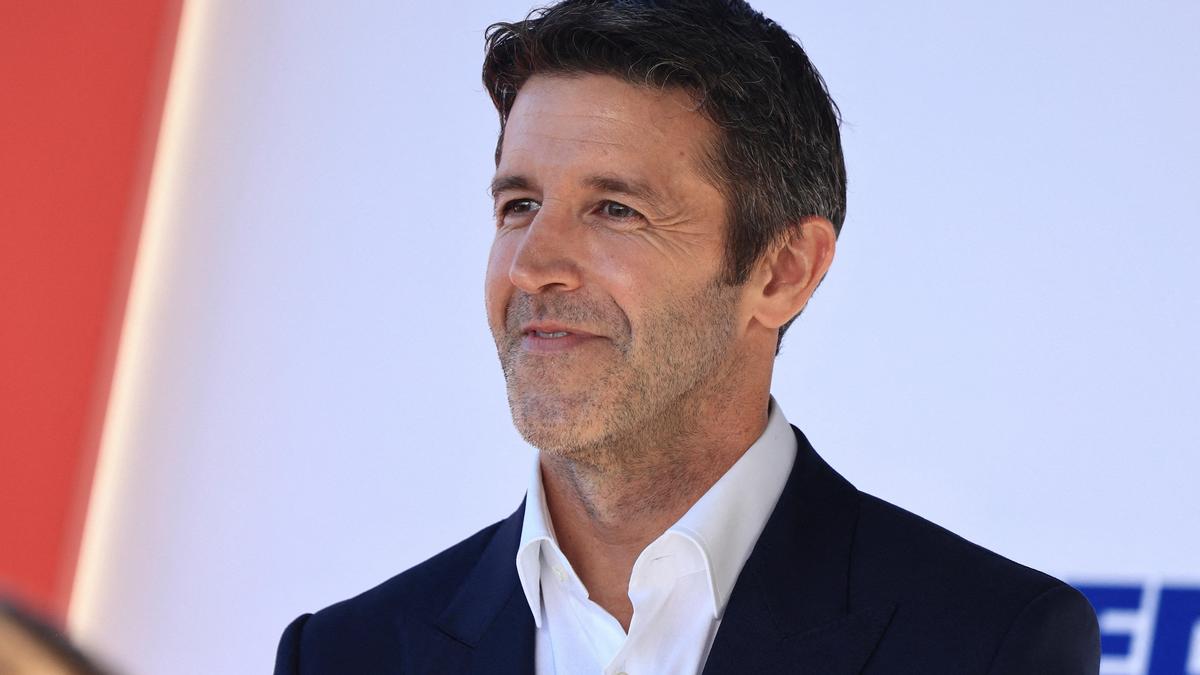
Apple has entered a new era of leadership with John Ternus taking over as chief executive officer from Tim Cook, bringing an end to Cook’s 15-year tenure at the top of one of the world’s most influential technology companies.
Ternus officially assumes the role on September 1, 2026, while Cook moves into the position of executive chairman. The leadership transition marks the first change in Apple’s chief executive position since Cook succeeded co-founder Steve Jobs in 2011.
The appointment of Ternus represents a carefully planned succession rather than a sudden leadership change. A longtime Apple executive with deep experience in hardware engineering and product development, Ternus has spent roughly 25 years at the company and has worked on several of its most important products.
His promotion comes at a critical time for Apple. The company is facing intense competition in artificial intelligence, pressure to deliver major new products and growing expectations that it will accelerate innovation in areas such as AI-powered devices, next-generation computing and emerging hardware categories.
Who is John Ternus?
John Ternus is an engineer and longtime Apple executive whose career has been closely connected with the company’s hardware development.
He joined Apple in 2001 as a member of its product design team. Over the years, he moved through increasingly senior engineering positions and became vice president of Hardware Engineering in 2013.
Ternus was promoted to senior vice president of Hardware Engineering in 2021. In that position, he became one of the company’s most important figures responsible for its hardware strategy.
His work has covered a broad range of Apple’s product portfolio, including the iPhone, iPad, Mac, Apple Watch and AirPods. His experience has given him a detailed understanding of how Apple’s engineering, design and product-development teams operate.
Before joining Apple, Ternus worked as a mechanical engineer at Virtual Research Systems. He studied mechanical engineering at the University of Pennsylvania, giving him a technical background that is closely aligned with Apple’s engineering-driven approach to product development.
From hardware engineer to Apple’s CEO
Ternus’ rise to the CEO position is significant because he comes from one of Apple’s most technically important divisions.
As head of Hardware Engineering, he played a key role in the development and refinement of Apple’s major devices. His responsibilities placed him close to the company’s product roadmap and gave him direct involvement in decisions surrounding hardware design, engineering, performance and manufacturing.
Ternus also became a familiar face during Apple’s product presentations, appearing on stage to introduce hardware developments and explain technical changes.
That combination of technical knowledge and familiarity with Apple’s internal culture helped establish him as one of the strongest candidates to succeed Cook.
His appointment also signals that Apple’s board is placing considerable importance on engineering and product innovation as the company prepares for its next phase.
Tim Cook’s 15-year Apple legacy
Ternus inherits a company that has changed dramatically during Tim Cook’s leadership.
Cook became Apple CEO in 2011 after Jobs stepped down because of his declining health. Following Jobs’ death later that year, Cook faced the enormous challenge of leading a company that had been closely identified with its co-founder and his product vision.
Over the following 15 years, Cook established his own leadership style.
Rather than attempting to replicate Jobs, Cook focused heavily on operations, supply-chain management, global expansion, financial performance and the development of Apple’s services business.
During his tenure, Apple expanded its product ecosystem with devices and services including the Apple Watch, AirPods, Apple Pay and other offerings.
The company also significantly expanded its services business, creating a large recurring-revenue stream through products such as cloud storage, music, video, payments and subscriptions.
Cook’s tenure also saw Apple’s increasing move toward designing its own chips. The development of Apple silicon strengthened the company’s control over the technology powering its computers and other devices.
By the time Cook stepped down, Apple had become a significantly larger company with a vast global user base and an ecosystem spanning hardware, software and services.
Why John Ternus faces a difficult challenge
Although Ternus inherits an extremely strong company, maintaining Apple’s momentum will not be easy.
The technology industry is undergoing a major transformation driven by artificial intelligence. Companies across Silicon Valley are investing heavily in generative AI, advanced computing infrastructure and AI-powered consumer products.
Apple has faced questions about whether it has moved quickly enough in the AI race.
That makes artificial intelligence one of the biggest challenges facing Ternus as he begins his tenure.
Apple’s approach to AI has traditionally emphasised privacy, security and tight integration between hardware and software. Under Ternus, the company will need to demonstrate that this approach can compete with rapidly advancing AI platforms and products.
The challenge will be to make AI useful across Apple’s ecosystem without compromising the privacy and user experience that have become important parts of its brand identity.
Ternus’ engineering background could shape Apple’s future
Ternus’ engineering experience could influence Apple’s priorities as the company enters its next phase.
Unlike Cook, whose career before becoming CEO was heavily associated with operations and supply-chain management, Ternus has spent most of his Apple career working directly with hardware and product engineering.
That could lead to greater emphasis on product development and technological innovation.
Apple is expected to continue investing in its custom chips, device integration and new hardware concepts. The company is also exploring technologies that could eventually expand its ecosystem beyond its traditional lineup of smartphones, computers, tablets and wearables.
For Ternus, the challenge will be balancing long-term innovation with Apple’s enormous existing business.
The iPhone remains central to the transition
The iPhone will remain one of Ternus’ most important responsibilities.
The smartphone continues to be a central part of Apple’s ecosystem, connecting customers to services, accessories and other devices.
However, the smartphone market has become increasingly competitive, with manufacturers experimenting with foldable designs, AI features, advanced cameras and new forms of mobile computing.
Apple’s ability to maintain the iPhone’s appeal while introducing meaningful technological changes will be closely watched during Ternus’ leadership.
The new CEO’s hardware background could be particularly valuable in this area because product design and engineering decisions are likely to play a major role in determining how Apple responds to emerging competition.
Artificial intelligence will test Apple’s new leadership
The AI race could ultimately become the defining issue of Ternus’ early years as CEO.
Apple has been developing its own artificial intelligence capabilities while also working with external technology partners. The company faces pressure to improve AI-powered features and make its digital assistant more competitive.
The next generation of Apple’s AI strategy will need to address several questions.
Can Apple deliver AI features that are genuinely useful to consumers? Can it compete with companies that have invested heavily in AI models and data centres? And can it maintain its privacy-focused approach while delivering increasingly powerful AI services?
Ternus will be expected to provide answers to these questions while maintaining the company’s existing strengths.
Tim Cook remains part of Apple’s leadership
Cook’s departure from the CEO position does not mean that he is leaving Apple.
He becomes executive chairman, allowing him to remain involved with the company while handing day-to-day executive responsibility to Ternus.
The arrangement provides continuity during the leadership transition. Cook’s experience running Apple for 15 years could remain valuable to the board and to the new CEO.
At the same time, Ternus will have the opportunity to establish his own leadership style and set priorities for the company.
The transition therefore combines continuity with a change in executive leadership.
A carefully planned succession
Apple’s decision to promote Ternus from within the company reflects the importance of institutional knowledge at the technology giant.
Ternus has spent decades working inside Apple’s product-development culture. He understands its engineering processes, knows its senior leadership and has worked on products that have become central to the company’s business.
That familiarity could help reduce the disruption normally associated with a major CEO transition.
It also means Ternus begins his tenure with a detailed understanding of Apple’s strengths and weaknesses.
However, familiarity alone will not guarantee success. The new CEO must make difficult decisions about AI, product innovation, global manufacturing, regulation and competition.
What comes next for Apple?
The beginning of the Ternus era comes at a pivotal moment for Apple.
The company has an enormous installed user base, a powerful global brand and a tightly integrated ecosystem. But the technology landscape is changing rapidly.
Artificial intelligence is altering how consumers interact with technology. New device categories are emerging, while competitors are seeking opportunities to challenge Apple’s dominance.
Apple will therefore need to demonstrate that it can continue producing products that create new demand rather than simply improving existing ones.
For Ternus, the immediate challenge is to maintain Apple’s enormous existing business while preparing it for technologies that could define the next decade.
His engineering background may prove to be one of his biggest advantages. At the same time, moving from leading a specialised hardware organisation to running Apple’s entire global business will require him to demonstrate skills far beyond engineering.
The beginning of the John Ternus era
John Ternus takes charge of Apple with the company at an important crossroads.
He inherits the achievements of the Cook era, including a powerful ecosystem, a massive global customer base and a highly profitable services and hardware business.
But he also inherits difficult questions about Apple’s position in artificial intelligence and the pace of product innovation.
His success will ultimately depend on whether he can combine Apple’s established strengths with a new generation of technological breakthroughs.
The transition from Cook to Ternus is therefore more than a routine change at the top. It represents the beginning of a new chapter for Apple — one in which an engineer who spent decades helping build the company’s products must now determine the direction of the entire organisation.
The coming years will show whether Ternus can preserve what made Apple successful under Cook while giving the company the innovation and technological momentum needed to compete in the next era of technology.