
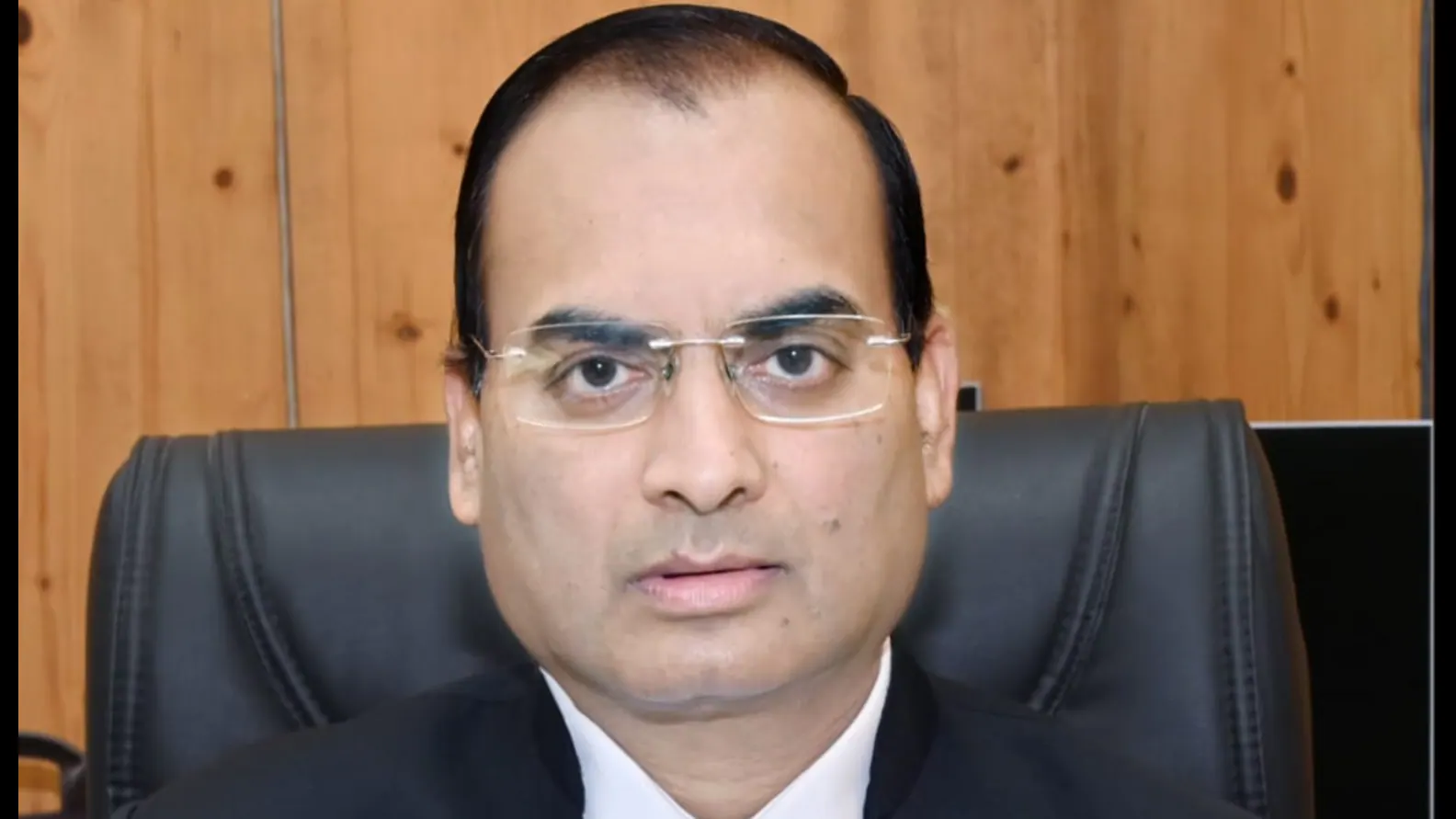
The Supreme Court collegium’s decision to recommend Justice Sanjay Kumar Agrawal as the next Chief Justice of the Rajasthan High Court has assumed wider significance because of a separate recommendation to transfer him from the Chhattisgarh High Court to Rajasthan.
The two decisions were taken together but issued as separate resolutions, a distinction that could allow Justice Agrawal to assume administrative responsibility in Rajasthan before the formal process of appointing him as the regular chief justice is completed. The move comes at a time when the Rajasthan High Court is facing an unusual controversy over the continuation of its acting Chief Justice, Justice Sanjeev Prakash Sharma.
Why was Justice Agrawal’s transfer recommended separately?
The separate transfer recommendation appears to address an immediate administrative requirement. While the collegium has proposed Justice Agrawal for the post of Chief Justice of Rajasthan, the formal appointment of a high court chief justice involves several stages after the collegium’s recommendation.
The recommendation has to go through the prescribed government-level process and consultations before the appointment is formally notified. Such a process can take time. A transfer of an existing high court judge, on the other hand, follows a comparatively different and more direct route.
By recommending Justice Agrawal’s transfer at the same time, the collegium has created the possibility of his moving to Rajasthan before the entire chief justice appointment process is completed.
This distinction becomes particularly important because Justice Agrawal’s seniority would put him in a position to serve as acting chief justice after taking charge in Rajasthan. Consequently, the administrative leadership of the high court could change without waiting for the final notification of his appointment as permanent chief justice.
Rajasthan High Court controversy
The development comes against the backdrop of a serious dispute involving the functioning and administrative leadership of the Rajasthan High Court.
Supreme Court judge Justice Sandeep Mehta had written three letters to Chief Justice of India Surya Kant on August 2, 10 and 17, calling for the appointment of a chief justice from another high court and seeking the transfer of Justice Sharma from Rajasthan.
In those communications, Justice Mehta made allegations concerning corruption, nepotism and favouritism against Justice Sharma. He also questioned the exercise of administrative authority by the acting chief justice, particularly in relation to his role as master of the roster and the allocation of cases.
The allegations are part of an institutional controversy and remain allegations rather than established findings against Justice Sharma.
The Chief Justice of India subsequently said that complaints or concerns involving a sitting judge have to be addressed through the established institutional mechanism. He also stressed the importance of giving the judge concerned an opportunity to respond.
At the same time, the Chief Justice indicated that the process for appointing regular chief justices to the high courts was already underway.
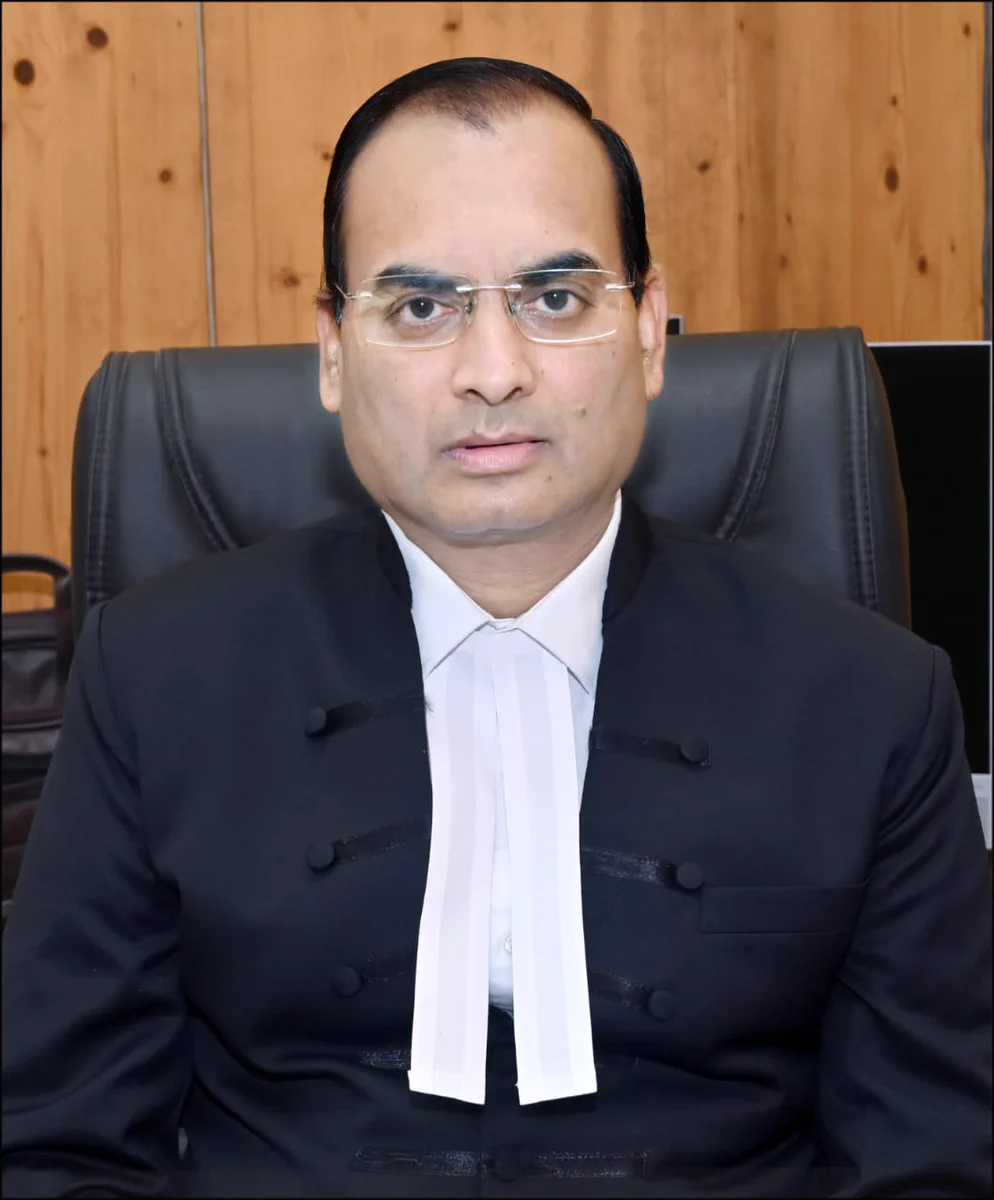
Lawyers protest over administrative control
The controversy has also generated an open reaction among sections of the legal fraternity in Rajasthan.
Lawyers in Jaipur and Jodhpur have protested against Justice Sharma and demanded that he be removed from administrative responsibilities. The Rajasthan High Court Lawyers Association announced a complete strike until September 6 and decided to submit representations to the Chief Justice of India as well as President Droupadi Murmu.
The developments intensified further when Justice Sharma stopped participating in judicial work amid the controversy. A modified roster was issued under which matters assigned to his bench were distributed among other benches.
This situation has increased pressure for an institutional solution that could provide stable administrative leadership to the Rajasthan High Court.
Why the collegium move matters
The separate transfer recommendation for Justice Agrawal can be viewed against this background.
If the collegium had only recommended Justice Agrawal for appointment as Chief Justice of Rajasthan, his actual assumption of office could have been delayed until the formal appointment process was completed. During that period, the existing arrangement involving the acting chief justice could potentially have continued.
The transfer recommendation creates another route.
Once the transfer is formally processed, Justice Agrawal could move from the Chhattisgarh High Court to the Rajasthan High Court. Because of his seniority, he could then be positioned to take over as acting chief justice while his appointment as the permanent chief justice goes through the remaining stages.
In practical terms, the collegium has therefore addressed two different timelines through two separate recommendations: one concerning the long-term appointment of a regular chief justice and another aimed at facilitating an earlier administrative transition.
Appointment process can take time
The significance of the strategy is also linked to the broader process governing judicial appointments.
A recommendation by the Supreme Court collegium does not automatically result in an immediate appointment. Government consultations and other procedural steps may have to be completed before an appointment is formally notified.
A recent example involving the Punjab and Haryana High Court illustrates how such recommendations can remain pending. The collegium had recommended Justice Ashwani Kumar Mishra, then acting chief justice of that high court, for appointment as its full-time chief justice on August 6. The state government had not conveyed its views even after more than two weeks.
The Memorandum of Procedure provides a six-week period for a state government to convey its views in cases involving appointments of high court judges, although there is no specifically prescribed timeline for completing the appointment of a chief justice.
This procedural uncertainty explains why the collegium may have considered it necessary to treat Justice Agrawal’s transfer as an independent and potentially faster step.
Justice Sharma’s tenure as acting chief
The situation in Rajasthan is particularly notable because Justice Sharma has been serving as acting Chief Justice for an extended period.
He took over the position in September 2025 following the retirement of Justice S. Shriram. His tenure as acting chief has consequently lasted for more than 10 months.
Justice Sharma is scheduled to retire on September 26.
Justice Mehta had questioned the prolonged absence of a regularly appointed chief justice and argued that the continued arrangement had enabled the acting chief justice to exercise substantial administrative powers.
The collegium’s latest recommendations appear designed to address the prolonged vacancy at the top while also providing a mechanism for an earlier change in administrative leadership.
What remains unresolved?
Although the recommendations could facilitate a transition in Rajasthan, one aspect of Justice Mehta’s demand has not been directly addressed.
Justice Mehta had called for Justice Sharma’s transfer out of Rajasthan. The collegium’s decision instead focuses on recommending Justice Agrawal as the next chief justice and transferring him from Chhattisgarh to Rajasthan.
Therefore, the separate transfer of Justice Agrawal should not automatically be interpreted as a decision on the allegations against Justice Sharma or as a finding of wrongdoing.
Justice Agrawal is currently serving as a judge of the Chhattisgarh High Court. He was appointed as an additional judge in September 2013 and became a permanent judge in March 2016.
The immediate importance of the collegium’s decision lies in the possibility of ensuring continuity and a change in administrative leadership at the Rajasthan High Court while the formal appointment process for its next regular chief justice continues.
The move thus reflects the practical realities of judicial appointments: an institutional recommendation may be made at one point, while the formal appointment can take additional time. By separating the transfer from the chief justice recommendation, the collegium has potentially created a faster mechanism for Justice Agrawal to reach Rajasthan and assume a leadership role amid the ongoing controversy.