
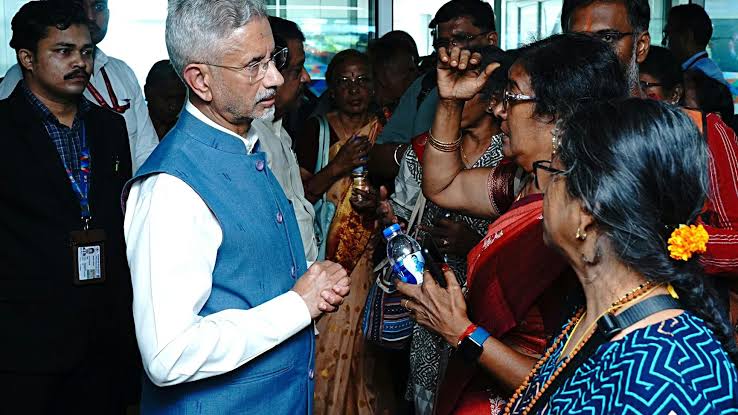
India has intensified its humanitarian and rescue operations in flood-hit Nepal, sending a fourth Indian Air Force (IAF) relief flight carrying emergency supplies to Kathmandu as authorities continue efforts to locate Indian nationals affected by the devastating floods.
The latest developments came after severe flooding triggered by the Bhote Koshi River on August 26 caused widespread destruction in several parts of Nepal. The disaster disrupted road connectivity, damaged infrastructure and left several people stranded in affected areas.
According to the latest information shared by Indian authorities, 108 Indian nationals had been rescued from flood-affected areas in Nepal as of Saturday night. Contact has also been restored with 40 other Indian nationals, providing relief to families who had been struggling to establish communication with relatives caught in the disaster.
However, the situation remains serious, with efforts continuing to trace 275 Indian nationals and 128 Persons of Indian Origin (PIOs) who have been reported missing.
Fourth Indian Air Force flight reaches Kathmandu
India’s latest relief effort involved a fourth IAF aircraft carrying approximately 11 tonnes of emergency assistance to Kathmandu. The shipment is part of India’s wider response to the natural disaster and is aimed at supporting immediate relief operations as well as the restoration of essential infrastructure.
The latest consignment includes critical relief materials such as blankets, sleeping bags, tarpaulins, plastic sheets and hygiene kits. Equipment and personnel required for search-and-rescue operations were also sent as part of the mission.
With the arrival of the fourth flight, India has transported a total of about 68.5 tonnes of relief material to Kathmandu by air. The supplies include essential medicines, food packets, portable generator sets, water-purification tablets and other equipment needed by communities and rescue teams working in difficult conditions.
The Indian government has also been coordinating technical assistance to help Nepal deal with the extensive infrastructure damage caused by the floods.
Focus shifts to missing Indian nationals
While the rescue of 108 Indian nationals has provided some relief, authorities continue to face the challenging task of locating hundreds of people whose whereabouts remain unknown.
Indian officials said 275 Indian nationals and 128 PIOs have been reported missing. Rescue and tracing operations are therefore continuing in coordination with local authorities and Indian diplomatic officials in Nepal.
The scale of the challenge has been compounded by damage to roads, bridges and other communication links in flood-affected areas. Many locations have become difficult to access, making ground-based rescue and identification operations more complicated.
Indian authorities have also released information concerning the identification of mortal remains of victims of the flash floods. The Indian Embassy in Nepal has provided assistance channels for families seeking information about missing relatives and victims.
598 Indians cross into Nepal from China
Alongside the rescue operation in flood-hit areas, India is also monitoring the movement of Indian nationals who had been in China.
Local government sources have confirmed that 598 Indian nationals have safely crossed from China into Nepal. At the same time, around 900 additional Indians remain in China and are reportedly safe and in contact with the Indian Embassy in Beijing.
The figures highlight the broader logistical challenge facing Indian authorities as they work to assist citizens affected by disruptions across the region.
Efforts underway to restore road connectivity
India’s assistance is not limited to airlifting relief supplies. A major component of the response involves helping Nepal restore road connectivity after bridges and other infrastructure were damaged by the floods.
Sixteen trucks carrying components for a 230-foot Single Lane Modular Steel Bridge have already reached Nepal. The bridge equipment is expected to support efforts to reconnect areas where existing road links have been damaged or washed away.
Equipment for seven additional Bailey bridges is also expected to be sent, accompanied by technical teams that will assist Nepalese authorities with their installation.
The restoration of bridges is particularly important because road connectivity is essential for transporting food, medicines, rescue equipment and other emergency supplies to isolated communities.
Technical teams support search-and-rescue operations
India has also deployed technical personnel and specialised equipment to assist with rescue and infrastructure-recovery operations.
The latest IAF flight reportedly carried an additional technical contingent equipped to support tunnel search-and-rescue operations. Such specialised assistance could prove important in areas where flooding, landslides or structural damage have left people trapped or cut off from conventional rescue routes.
The deployment reflects the increasingly complex nature of the response, with rescue agencies required to operate not only in flooded areas but also around damaged roads, bridges and other infrastructure.
Nepal floods create major humanitarian challenge
The Bhote Koshi River floods have caused significant disruption in parts of Nepal, with fast-moving water damaging infrastructure and sweeping away vehicles and other structures.
The disaster has also affected areas along important transportation routes, creating difficulties for both local residents and visitors. The destruction of bridges and roads has increased dependence on emergency rescue operations and temporary infrastructure.
For India, the situation has an additional humanitarian dimension because a significant number of Indian nationals were travelling or staying in Nepal when the flooding occurred.
The Indian government has therefore been coordinating evacuation, rescue, relief and communication efforts through diplomatic channels, local authorities and military assets.
Continued coordination remains critical
As rescue operations continue, authorities are focusing on three immediate priorities: locating missing Indian nationals, providing emergency assistance to those stranded in affected areas and helping restore critical connectivity.
The identification of victims and mortal remains is another sensitive aspect of the ongoing response. Authorities are working to ensure that families receive verified information and assistance during the difficult process of establishing the whereabouts of their relatives.
The arrival of the fourth relief flight underlines India’s continued involvement in Nepal’s emergency response. With additional bridge equipment, technical teams and relief material being deployed, the effort is expected to continue until critical connectivity is restored and more people affected by the floods are brought to safety.
For families of the missing, however, the situation remains uncertain. While the rescue of more than 100 Indian nationals offers hope, the search for 275 reported missing Indians and 128 PIOs remains one of the most urgent tasks in the aftermath of the disaster.