
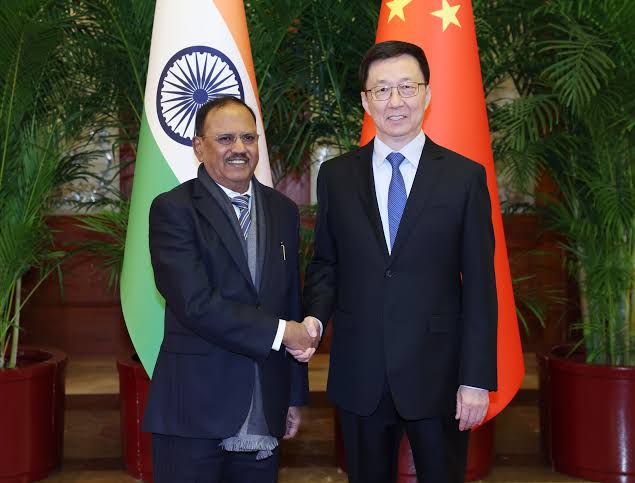
India and China have agreed on an eight-point set of measures aimed at advancing negotiations on their long-running boundary dispute, improving management along the Line of Actual Control (LAC) and reducing the risk of military misunderstandings along the disputed frontier.
The agreement was reached during the 25th round of talks between the two countries’ Special Representatives in Beijing. India’s National Security Adviser Ajit Doval and Chinese Foreign Minister Wang Yi led the discussions, which focused on maintaining peace and stability along the border while creating mechanisms for further progress on the boundary question.
A major element of the latest understanding is the decision to move forward with discussions on an “Early and Substantial Harvest” in boundary delimitation and border management. The formulation signals an attempt to achieve concrete progress in areas where the two sides may be able to narrow differences, even as a comprehensive settlement of the boundary dispute remains a longer-term objective.
The two countries have also agreed to strengthen communication between their military establishments. Two additional points for meetings involving generals and senior military commanders will be established, while two additional military hotline channels will be created in the eastern and middle sectors of the LAC.
These measures are intended to improve communication on the ground and allow the two sides to respond quickly when incidents or disagreements emerge along the frontier.
Focus Shifts Towards Practical Border Management
The latest agreement places considerable emphasis on preventing local incidents from escalating into larger confrontations.
Under the consensus, situations arising along the LAC are to be addressed promptly through established diplomatic and military mechanisms. These include the Working Mechanism for Consultation and Coordination on India-China Border Affairs, local commander-level meetings and other agreed communication channels.
The objective is to resolve outstanding issues at the earliest possible stage and prevent misunderstandings or miscalculations from developing into serious security incidents.
The two sides also discussed improving their understanding of the LAC in appropriate areas as part of efforts to strengthen border management. This is significant because India and China continue to have differing perceptions of the alignment of the LAC in several sectors.
Rather than allowing such differences to repeatedly trigger confrontations, the latest measures seek to create additional institutional mechanisms for managing disagreements.
Boundary Delimitation Remains a Central Objective
The eight-point consensus does not represent a final settlement of the India-China boundary dispute. Instead, it provides a framework for pushing forward discussions on specific aspects of delimitation and border management.
The Special Representatives mechanism was established in 2003 with the broader objective of finding a framework for resolving the boundary dispute. The latest discussions therefore represent another stage in a diplomatic process that has continued for more than two decades.
The Expert Group on Boundary Delimitation and the Working Group on Border Management, operating under the existing consultation mechanism, will now take forward discussions on the proposed early and substantial outcomes.
The first task for the two groups will be to finalise their respective terms of reference. This is expected to establish the scope and procedures through which the two sides will conduct their next phase of negotiations.
The emphasis on an early outcome is particularly important because the complete resolution of the boundary dispute remains complicated by competing territorial claims, differing perceptions of the LAC and longstanding strategic concerns.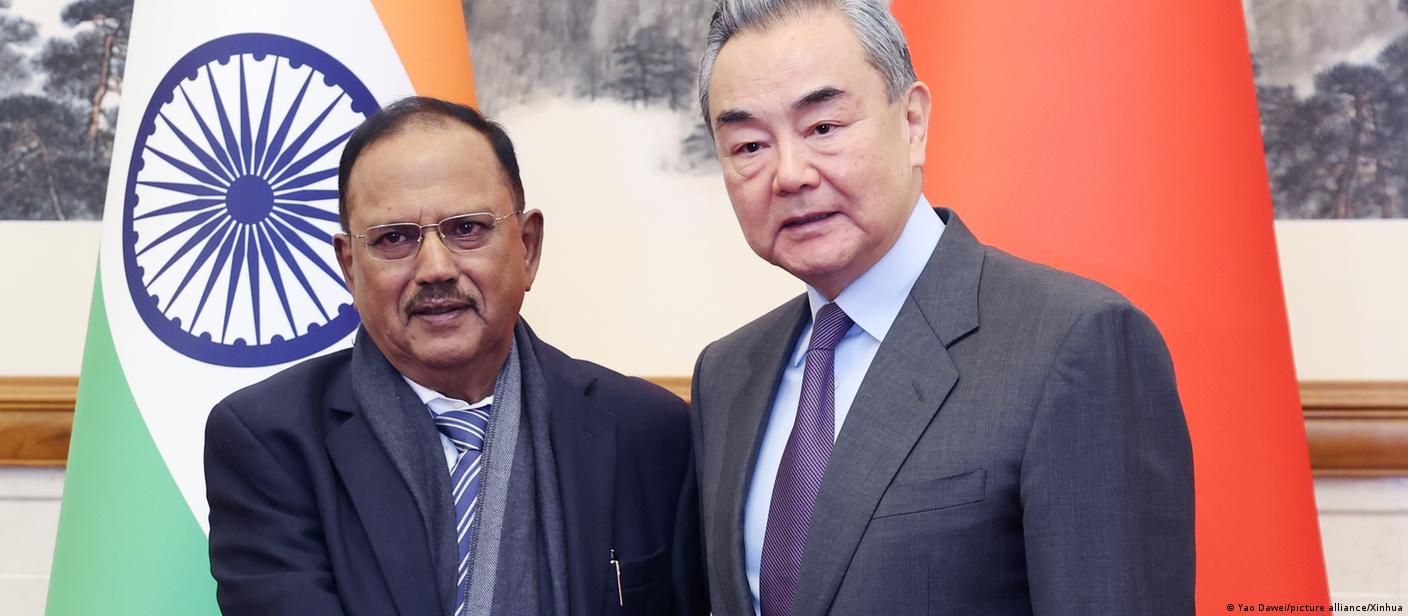
Agreement Comes After Years of Border Tensions
The latest diplomatic development comes after a prolonged period of tension between the two countries.
Relations between India and China deteriorated sharply following the deadly 2020 confrontation in eastern Ladakh. The military standoff led to a significant deterioration in bilateral ties and resulted in a prolonged deployment of troops and military equipment along the frontier.
The two countries subsequently engaged in multiple rounds of military and diplomatic negotiations. An understanding reached in October 2024 helped end a prolonged phase of confrontation in parts of the Ladakh sector and created space for broader efforts to stabilise bilateral relations.
The latest Special Representatives’ meeting is part of that continuing diplomatic engagement.
For New Delhi, maintaining peace and tranquillity along the border has remained an important condition for improving the broader relationship with Beijing. The latest agreement indicates that both sides are seeking to institutionalise mechanisms that can prevent border disagreements from disrupting diplomatic engagement.
New Military Communication Channels to Strengthen Crisis Management
One of the most concrete elements of the new consensus is the decision to establish two additional military hotlines in the eastern and middle sectors of the LAC.
Military communication channels can play an important role during periods of heightened tension because they allow commanders to communicate directly and clarify developments before they lead to escalation.
The agreement to establish additional meeting points for senior military commanders is similarly aimed at improving face-to-face communication.
Together, these measures could provide additional avenues for addressing incidents quickly, particularly in areas where Indian and Chinese troops operate in close proximity.
The underlying objective is to ensure that tactical incidents do not automatically become strategic crises.
Trans-Border Rivers Also on the Agenda
The latest discussions were not restricted to the boundary issue.
India and China agreed to hold the next meeting of their Expert-Level Mechanism on Trans-border Rivers in September. The two sides are expected to maintain communication on issues including hydrological data sharing and the renewal of relevant agreements.
Trans-border water management is an important component of India-China relations because several major river systems originate on the Tibetan plateau before flowing into India and, in some cases, onward into Bangladesh.
India has expressed concerns over major Chinese infrastructure projects in the upper reaches of the Brahmaputra, including the potential environmental and downstream implications of large-scale dam construction.
The decision to continue discussions on river-related matters therefore provides another channel for bilateral engagement beyond the immediate border dispute.
Border Trade and Pilgrimage Cooperation to Expand
The consensus also includes measures relating to people-to-people and border-region exchanges.
India welcomed China’s efforts to increase the number of batches permitted for the Kailash Mansarovar pilgrimage. Both sides also noted the reopening of three designated border trade points and agreed to strengthen cooperation in areas including border trade, pilgrimage and other exchanges.
Such measures could contribute to the broader process of rebuilding confidence between the two countries.
While these issues are separate from the central boundary dispute, they provide opportunities for regular interaction and can help create a more stable environment for wider bilateral engagement.
2005 Framework to Guide Future Boundary Negotiations
India and China have agreed that future negotiations on a framework for settling the boundary will continue in accordance with the political parameters and guiding principles agreed upon in 2005.
The two sides reiterated their pursuit of a fair, reasonable and mutually acceptable solution.
This approach indicates that the latest agreement is being presented as part of the existing diplomatic framework rather than as a completely new process.
A final settlement, however, is likely to remain difficult. The border dispute involves complex historical, geographical and strategic considerations, while both countries have longstanding positions on disputed areas.
Consequently, the immediate focus appears to be on achieving incremental progress, strengthening confidence-building measures and preventing fresh confrontations while broader negotiations continue.
Next Round of Special Representatives’ Talks to Be Held in India
The two countries have agreed to hold the 26th round of Special Representatives’ talks in India in 2027.
The decision to schedule another round demonstrates that both sides intend to maintain high-level engagement on the boundary issue.
The continuation of the Special Representatives mechanism is significant because it provides a political channel through which the broader boundary question can be discussed alongside practical arrangements for maintaining peace along the LAC.
What the Eight-Point Consensus Means
The latest agreement marks an effort by India and China to move their border relationship from crisis management towards more structured and predictable engagement.
Its significance lies less in an immediate resolution of the boundary dispute and more in the creation of mechanisms designed to prevent instability while negotiations continue.
The proposed early and substantial progress on boundary delimitation could potentially open the door to agreements in areas where differences are relatively limited. At the same time, additional military hotlines, commander-level meetings and diplomatic channels are intended to reduce the possibility that local incidents will spiral into wider confrontations.
The decision to continue discussions on trans-border rivers, border trade and pilgrimage also reflects a broader effort to rebuild functional engagement between the two countries.
For India and China, the challenge now will be to translate the eight-point consensus into concrete action. The effectiveness of the new arrangements will depend on how quickly the agreed mechanisms are operationalised and whether they can withstand future disagreements along the frontier.
The latest understanding therefore represents an important diplomatic step, but not the end of the boundary dispute. Its long-term significance will ultimately depend on whether the two countries can sustain the current momentum, manage differences peacefully and gradually move towards a durable settlement of their contested border.