
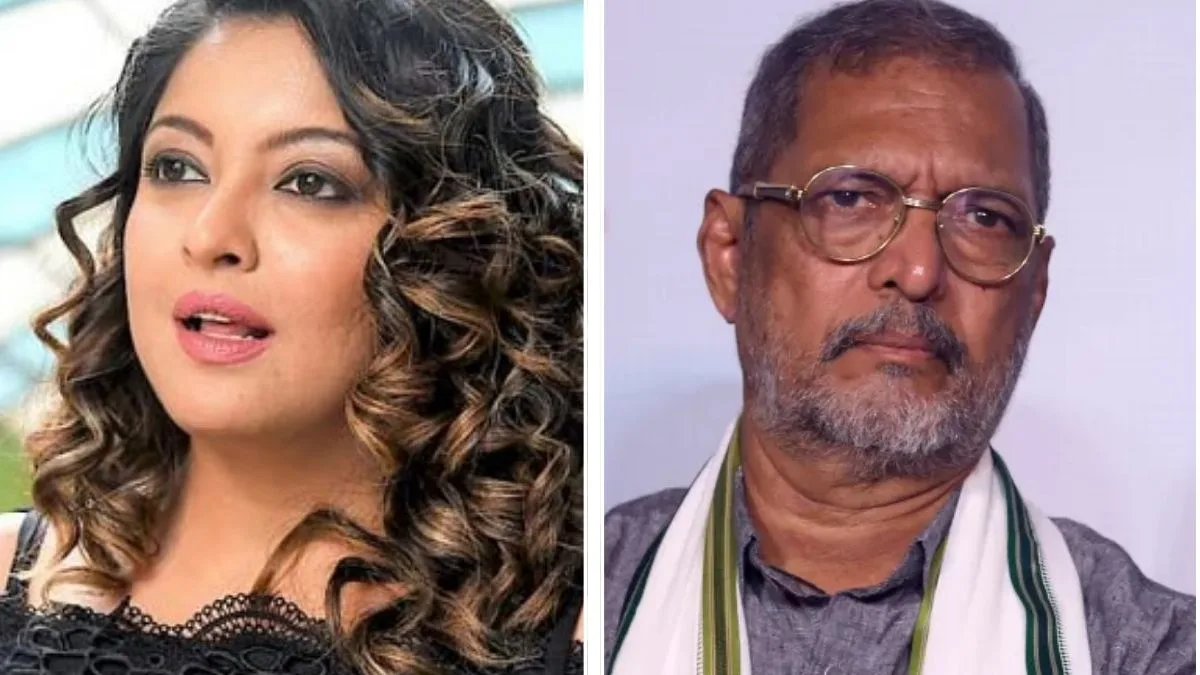
The All Indian Cine Workers Association (AICWA) has strongly criticised actor Tanushree Dutta following her social media reaction to the death of veteran actor Nana Patekar. The controversy erupted after Dutta posted a video discussing the news of Patekar’s death, using the phrase “evil dead” while expressing concern that the incident could overshadow her professional commitments.
The association described her choice of words as insensitive and inappropriate at a time when members of the film industry and admirers were mourning the actor’s death. Its founder and president, Suresh Shyamlal Gupta, issued a strongly worded statement questioning the timing and tone of Dutta’s remarks.
The dispute has attracted attention because Dutta and Patekar were involved in a widely discussed controversy during India’s #MeToo movement in 2018. Dutta had accused Patekar of sexual harassment in connection with the film Horn Ok Pleassss, allegations that he denied.
AICWA’s criticism has brought the long-standing dispute back into public discussion, raising questions about how celebrities express personal feelings, respond to a death and address unresolved controversies in the public sphere.
AICWA Calls the Remarks Insensitive
In its statement, AICWA condemned Dutta’s use of the phrase “evil dead” while referring to the news surrounding Patekar. The organisation argued that the death of a public figure should be approached with sensitivity, even when that person has been involved in serious allegations or public disputes.
Gupta accused the actor of seeking publicity through her reaction and said her comments were objectionable during a period of mourning. The association also appealed for greater restraint in public statements made immediately after a person’s death.
AICWA emphasised Patekar’s contributions to Indian cinema and his public service. It referred to his Padma Shri honour and his involvement with the Naam Foundation, which works to support farmers and their families facing distress. The statement also highlighted his service during the Kargil War.
The association extended its condolences to Patekar’s family while maintaining that Dutta’s remarks were inappropriate. Its response reflected the organisation’s view that criticism of a person and the language used following their death are separate matters.
However, the controversy also highlights the difficulty of separating a public figure’s professional legacy from allegations and disputes that have shaped their public image.
Association Questions Dutta’s Reference to Her Work Commitments
AICWA also objected to Dutta discussing her scheduled professional activities in the same video. The actor said she was travelling to Lucknow for an important event and wanted to concentrate on her work.
She also expressed concern that media attention later in the day might focus on the controversy surrounding her reaction rather than her planned commitments.
The association criticised this part of the video, arguing that discussing personal schedules at a time when the film industry was mourning Patekar appeared inappropriate. It suggested that the focus should have remained on the news of his death and condolences to his family.
The statement used unusually sharp language in addressing Dutta and advised her to exercise greater care when speaking publicly. It also criticised her reference to the possibility of media coverage concentrating on the phrase “evil dead.”
The exchange has intensified debate over celebrity behaviour on social media, where brief videos and comments can quickly become the focus of widespread public scrutiny. It has also demonstrated how a single phrase, particularly when used during a sensitive event, can draw attention away from the broader context of a public figure’s remarks.
What Tanushree Dutta Said in Her Video
In her Instagram video, Dutta acknowledged that she had heard the news concerning Patekar but said she intended to focus on her scheduled event in Lucknow.
She described the timing as unusual because she had planned a busy day involving professional activities and social media content. She also expressed concern that the news might become the main subject of media attention by the evening.
Dutta said she would provide a fuller reaction after deciding how she wanted to respond. She also conveyed condolences to Patekar’s family, although the video ended before she completed her sentence.
The wording of the video, particularly the reference to “evil dead,” prompted criticism from viewers and subsequently drew AICWA’s attention.
The association interpreted the remark as disrespectful. Dutta’s video, meanwhile, appeared to reflect her reluctance to discuss the news at length while she was preparing for a professional engagement.
The episode illustrates how remarks made in a short social media clip can be interpreted differently by audiences, especially when the people involved have a history of public disagreement.
The Background: Tanushree Dutta and Nana Patekar’s #MeToo Controversy
The latest dispute is closely connected to the controversy that emerged in 2018, when Dutta publicly accused Patekar of sexual harassment during the filming of Horn Ok Pleassss.
Dutta alleged that an incident took place during the production of the film and brought renewed attention to workplace harassment within the Indian entertainment industry. Her allegations became a prominent part of the wider #MeToo discussion in India, which encouraged people to speak publicly about alleged sexual harassment and misconduct.
The controversy attracted significant media attention and prompted broader discussions about the treatment of women in the film industry, the responsibilities of production teams and the mechanisms available for reporting complaints.
Dutta also said that she had previously approached the Cine & TV Artists Association (CINTAA) regarding the matter. A police case was subsequently registered, while Patekar denied the allegations.
The police submitted a closure report in 2019, citing insufficient evidence to proceed with the case. In 2025, criminal proceedings were dismissed by a Mumbai court on limitation grounds, according to reports about the case.
These legal developments are important when discussing the controversy. The allegations were publicly made and denied, while the subsequent proceedings did not result in a criminal conviction against Patekar.
The dispute nevertheless remained a significant episode in discussions about the #MeToo movement in India and the challenges faced by people who raise allegations of misconduct.
Nana Patekar’s Career and Public Contributions
Patekar was widely recognised for his work across Hindi and Marathi cinema. Known for his intense performances and distinctive dialogue delivery, he established a career spanning a variety of roles, including characters in crime dramas, action films and socially relevant cinema.
In addition to his film work, he received recognition for his public contributions. AICWA specifically referred to his Padma Shri honour and his involvement with the Naam Foundation, which supports farmers and their families during periods of financial hardship.
The association also recalled his service during the Kargil War while highlighting his contributions beyond the entertainment industry.
These achievements formed a central part of AICWA’s argument that Dutta’s choice of words was inappropriate. The organisation maintained that his professional and public contributions deserved consideration in the wake of his death.
At the same time, the renewed discussion has shown how a public figure’s legacy can be viewed through multiple perspectives, including professional achievements, social contributions and controversies from the past.
Social Media Reactions Renew Debate Over Celebrity Statements
The controversy has once again drawn attention to the influence of social media on celebrity news. Public figures can communicate directly with audiences through personal videos and posts, but their remarks can also be rapidly circulated, criticised and interpreted beyond their original context.
In this case, Dutta’s comments about her work schedule and the phrase that appeared to refer to Patekar’s death became the central focus of public debate. AICWA’s response further amplified the controversy by issuing a formal condemnation.
The incident also raises broader questions about the language used during periods of mourning, particularly when a death involves someone with whom the speaker has a difficult personal history.
While some observers may focus on expectations of public courtesy, others may view the controversy in the context of Dutta’s past allegations and the experiences she has described. These perspectives do not remove the need to distinguish between allegations, documented legal outcomes and personal reactions.
The episode demonstrates the challenges celebrities face when discussing emotionally charged events in public. It also underscores the importance of examining complete statements and relevant background information rather than relying solely on short clips or isolated phrases.
A Long-Running Dispute Returns to the Spotlight
AICWA’s criticism has brought renewed attention to the complicated history between Dutta and Patekar. The association has defended the importance of respectful language following a death, while Dutta’s earlier allegations remain part of the wider public discussion surrounding their relationship.
The latest controversy is therefore not limited to a single social media video. It is connected to years of debate about workplace harassment, public accountability, legal processes and the way the entertainment industry responds to allegations involving prominent figures.
As discussions continue, the distinction between public criticism and established legal findings remains essential. The #MeToo controversy placed questions about harassment and accountability at the centre of public debate, while the latest exchange highlights how those questions can resurface during moments of intense media attention.
The incident has once again placed both actors’ names at the centre of Bollywood news, with AICWA’s statement and Dutta’s social media remarks becoming the latest chapter in a controversy that has continued to attract public interest.