
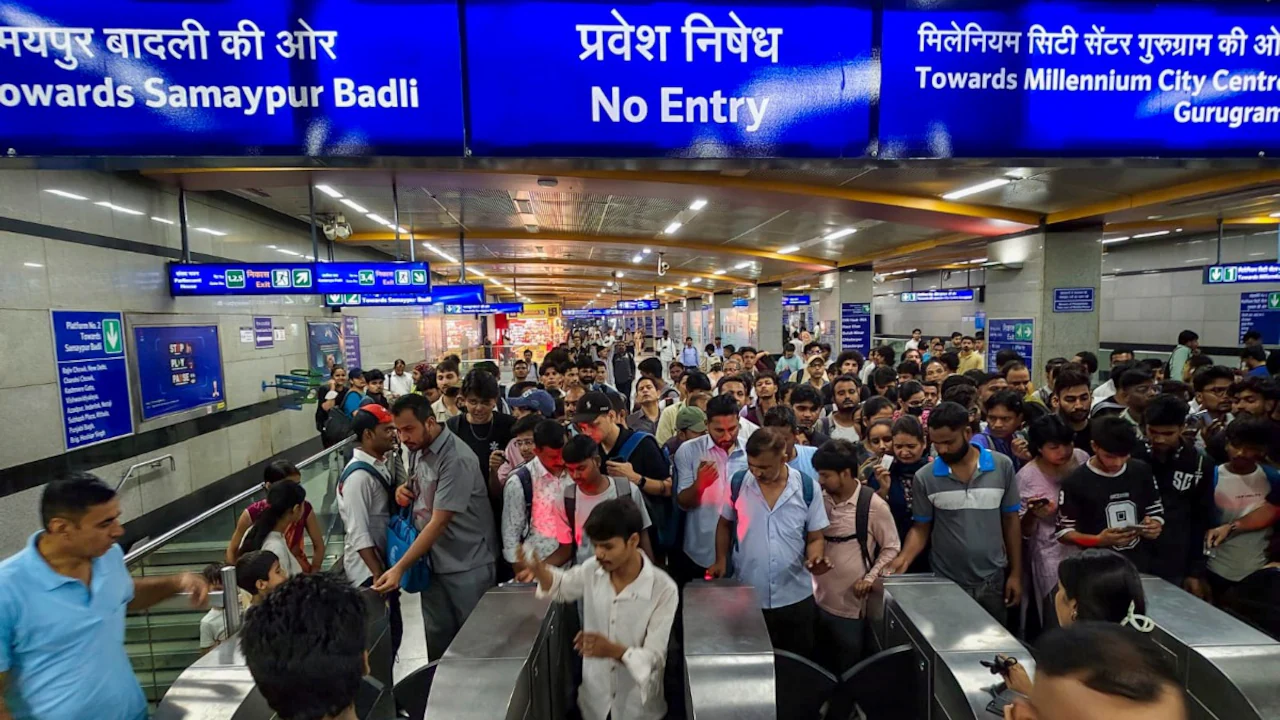
Delhi Police has asked the Delhi Metro Rail Corporation (DMRC) to consider closing entry and exit gates at 57 metro stations as part of heightened security arrangements ahead of a planned protest on October 10. The proposed measures are intended to manage the expected movement of demonstrators, prevent overcrowding around sensitive locations and maintain law and order in the national capital.
The proposed restrictions could affect passengers travelling across several parts of Delhi, including central, north, south, east and west Delhi. Police have also suggested changes to metro train frequency as part of a wider security plan for the demonstration.
The proposed action comes amid preparations for a protest organised by the Cockroach Janta Party (CJP) and the All India Students’ Association (AISA), with demands centred on Chief Election Commissioner Gyanesh Kumar and concerns regarding the electoral process.
Proposed Restrictions From October 9 Night
According to the police communication, entry and exit gates at the identified metro stations may be closed from 9 pm on Friday, October 9. The restrictions could continue through Saturday, October 10, until the situation returns to normal.
Delhi Police has also asked metro authorities to consider reducing the frequency of trains passing through the affected stations. The objective is to manage passenger movement and limit the possibility of large crowds gathering at locations considered sensitive during the protest.
The measures remain subject to implementation by the metro authorities. Passengers should therefore distinguish between the restrictions proposed by the police and any closures formally announced by DMRC.
The proposed steps form part of a broader security strategy designed to prevent uncontrolled crowd movement towards central Delhi, where several important government buildings and public institutions are located.
Why Delhi Police Has Requested the Measures
The police have cited concerns about possible disorder and the movement of large groups towards sensitive areas as reasons for seeking restrictions on metro services.
Jantar Mantar, a prominent protest venue in New Delhi, is expected to be a focal point of the planned demonstration. The surrounding area also includes important administrative and government locations, making crowd management a significant concern for security agencies.
Authorities are preparing for the possibility that demonstrators could arrive from Delhi and neighbouring states. Restricting access at selected metro stations and adjusting train frequency have been proposed as ways to control the flow of people into areas where security arrangements are being strengthened.
The scale of the proposed restrictions indicates that officials are preparing for potential disruptions beyond the immediate vicinity of the protest venue. However, the request itself does not establish that every identified station will necessarily be closed.
57 Metro Stations Could Be Affected
The list of stations covered by the police request extends across multiple metro corridors. Several stations in central Delhi, including major interchange points and locations near government offices, feature among those identified.
Stations named in the proposed arrangements include Janpath, Patel Chowk, Central Secretariat, Lok Kalyan Marg, Rajiv Chowk, New Delhi, Seva Teerth, Mandi House, Barakhamba Road, ITO, Delhi Gate, Khan Market, R.K. Ashram Marg, Jhandewalan, Supreme Court, Indraprastha and Shivaji Stadium.
Other stations listed include INA, Hauz Khas, Jor Bagh, Sarai Kale Khan-Nizamuddin, Lajpat Nagar, Jangpura, Ashram, Kalindi Kunj, Jasola, Jamia Millia Islamia and Okhla Vihar.
The proposed list also covers northern and north-western locations such as Kashmere Gate, Civil Lines, Vishwavidyalaya, Vidhan Sabha, Inderlok, G.T.B. Nagar, Netaji Subhash Place, Azadpur, Jahangirpuri, Haiderpur Badli Mor, Majlis Park and Shalimar Bagh.
In eastern and other parts of the capital, stations including Seelampur, Maujpur, Jafrabad, Welcome, Yamuna Vihar, Khazuri Khas, Shahdara, Rithala, Rohini East and Rohini West are among those identified.
The geographical spread of the proposed measures means that commuters travelling for work, education, medical appointments and other essential activities could need to reconsider their routes if restrictions are implemented.
CJP Protest and Demand for the Chief Election Commissioner’s Resignation
The proposed metro restrictions come ahead of the CJP-led protest scheduled for October 10. The demonstration is linked to demands for the resignation of Chief Election Commissioner Gyanesh Kumar and allegations concerning the management of electoral rolls and the electoral process.
The party has raised objections to the Special Intensive Revision (SIR) of electoral rolls, an exercise associated with reviewing and updating voter lists. Its concerns have contributed to the planned mobilisation, with supporters expected to gather in Delhi.
The allegations and demands form part of the political dispute surrounding the protest. The proposed security measures are a separate administrative response to the anticipated gathering and concerns about public order.
AISA is also associated with the planned demonstration, while opposition groups are expected to participate. The prospect of people arriving from outside the capital has added to the challenges facing the police as they prepare security arrangements.
Wider Security Arrangements Across the Capital
The metro-related request is one part of a wider effort to prepare for the October 10 demonstration. Police have been strengthening security around important locations and monitoring the movement of people and vehicles towards New Delhi.
Authorities are concerned about the possibility of large crowds gathering near Jantar Mantar and other sensitive areas. Barricades, additional security personnel and coordination between different agencies are among the measures being used or prepared for crowd management.
Police have also taken steps to monitor the movement of buses and engage with educational institutions and paying guest accommodation operators as part of preparations for the protest.
The restrictions are intended to reduce the likelihood of a sudden influx of demonstrators into restricted areas and help security personnel respond to changing conditions. The extent of the arrangements will depend on the situation and any subsequent directions issued by the authorities.
Possible Impact on Daily Metro Commuters
The proposed restrictions could cause inconvenience for thousands of people who depend on the Delhi Metro for their daily travel. Commuters passing through central Delhi and other affected corridors may need to use alternative stations or consider different routes.
Closing entry and exit gates can prevent passengers from beginning or completing journeys at particular stations, even when trains continue to operate through the network. Any reduction in train frequency could also increase waiting times and crowding at stations that remain accessible.
Office workers, students and visitors travelling to central Delhi are likely to be among those who need to pay particular attention to service announcements. Passengers travelling to railway stations, hospitals or other essential destinations should allow additional time in case their usual route is disrupted.
Commuters should check official metro service updates before leaving home and avoid relying solely on the preliminary list of proposed closures. The final arrangements, including the stations affected and the duration of any restrictions, will depend on official instructions.
What Passengers Should Know Before Travelling
Passengers planning to travel on the evening of October 9 or on October 10 should verify the latest operational information through official Delhi Metro announcements.
Travellers should confirm whether their departure or destination station is affected, identify alternative stations where necessary and check whether interchange facilities remain available. They should also allow extra time for journeys involving central Delhi.
People intending to visit Jantar Mantar or nearby government areas should pay attention to police advisories concerning access restrictions and permitted movement. Following official instructions will help commuters avoid unnecessary delays and reduce congestion around security-sensitive locations.
The proposed measures highlight the impact that major demonstrations can have on public transport in a densely populated city. While authorities seek to maintain public order, clear communication about station access and train operations will be important in helping residents plan their journeys.
The final impact on metro services will depend on which recommendations are implemented and how long any restrictions remain in force.