
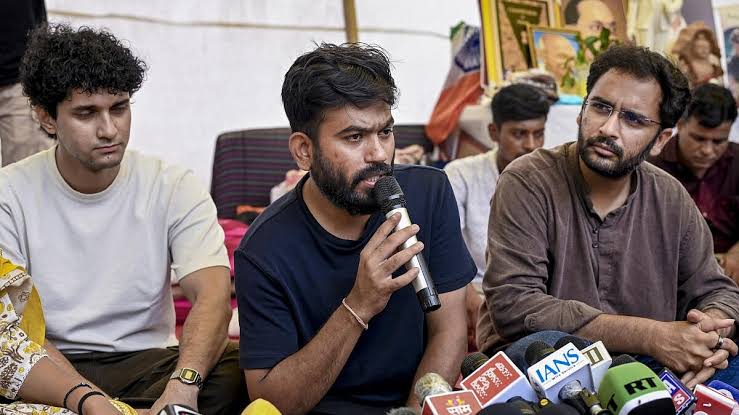
A growing wave of student activism around education is putting pressure on governments and state authorities across India, with young people increasingly demanding better schools, stronger infrastructure and reforms aimed at improving the quality of education.
The latest development has been highlighted by the Cockroach Janta Party (CJP), a pressure group that has been campaigning under the slogan “School Thik Karo”. The organisation said its campaign has helped bring greater attention to the concerns of students and has forced authorities to respond to demands raised by children and young people.
In a statement shared on social media, CJP said the impact of the movement had been significant, arguing that authorities had been compelled to listen more closely to students and recognise their demands. The group, however, said it would continue its campaign until students in remote and disadvantaged parts of the country receive access to better educational facilities.
The development comes against the backdrop of growing student mobilisation in several parts of India. While Gen Z activism has previously focused heavily on issues affecting higher education, examinations, recruitment and employment, a newer wave involving school-going children is drawing attention to basic facilities and the quality of government schools.
Education concerns move beyond campuses
The emerging movement reflects a broader shift in the way students are engaging with education policy. Concerns are no longer limited to examination systems or admission processes. Students are also raising questions about classrooms, toilets, electricity, teachers, school buildings and the overall learning environment.
Reports of student protests and demonstrations have emerged from states including Rajasthan, Uttar Pradesh, Bihar and Madhya Pradesh. In several instances, students have reportedly taken collective action to highlight inadequate facilities at government schools.
The involvement of younger students is particularly significant because many members of Gen Alpha are not old enough to vote or participate directly in formal political processes. Their ability to attract administrative attention through protests and public campaigns demonstrates the increasing influence of youth-led civic mobilisation.
The movement has also created pressure for governments to examine broader structural problems within the education system.
Karnataka sets up panel to examine education reforms
Karnataka has taken a step towards examining several concerns surrounding the education system by constituting a five-member Cabinet sub-committee.
The committee has been tasked with examining a wide range of issues, including the integrity of examinations and recruitment processes, education fees, regulation of coaching centres, infrastructure and the quality of public educational institutions.
Other areas under consideration include curriculum development, skill-building, student mental health and wellbeing, as well as access and equity.
The composition of the committee brings together ministers handling different areas of governance, reflecting the wide-ranging nature of the challenges confronting the education sector.
The panel’s mandate is important because many of the concerns raised by students extend beyond the functioning of individual schools. Examination integrity, recruitment systems, coaching regulation and affordability affect students at different stages of their education and can have a direct bearing on their future opportunities.
Rajasthan also focuses on government school quality
Rajasthan has similarly taken steps aimed at improving the quality of education in government schools and educational institutions.
The developments in Rajasthan and Karnataka have added momentum to the wider debate over the condition of public education. Student campaigns have increasingly placed basic infrastructure and the quality of learning environments at the centre of public discussion.
For campaigners, improving education requires more than announcing new policies. They argue that reforms must translate into functioning classrooms, adequate teachers, essential facilities and equal access for students regardless of where they live or their economic circumstances.
CJP says campaign will continue
Despite the developments, CJP has indicated that it does not consider the recent government responses sufficient.
The group has said its campaign will continue until students in the most remote and deprived regions receive access to high-quality educational facilities. Its position reflects a demand for reforms that reach beyond major cities and better-served institutions.
The organisation has also maintained that pressure and opposition will not cause it to abandon its campaign. Instead, it has framed the movement as a continuing effort to make education authorities more responsive to the concerns of students.
A changing role for young people in public debates
The developments also point to a changing relationship between young people and public institutions. Social media has made it easier for student concerns originating in individual schools or communities to gain wider visibility and attract public attention.
Gen Z has already demonstrated the ability to organise around issues affecting examinations, employment, recruitment and political accountability. The participation of Gen Alpha in campaigns concerning school facilities suggests that this form of civic engagement is beginning at an increasingly younger age.
For governments, the growing mobilisation presents both a challenge and an opportunity. Student protests can expose weaknesses that may otherwise remain overlooked, while meaningful administrative responses can help rebuild confidence in public education.
The immediate question is whether the growing pressure will lead to sustained improvements on the ground. Committees, reviews and policy announcements can provide a starting point, but their effectiveness will ultimately depend on implementation.
As student voices become more prominent in discussions over education policy, governments across states are likely to face increasing demands to treat students not merely as recipients of education but as important stakeholders in shaping the system itself.
The latest developments therefore represent more than a series of isolated education-related protests. They indicate a wider push by younger generations for better public institutions, greater accountability and an education system capable of meeting their expectations for quality, opportunity and equality.