
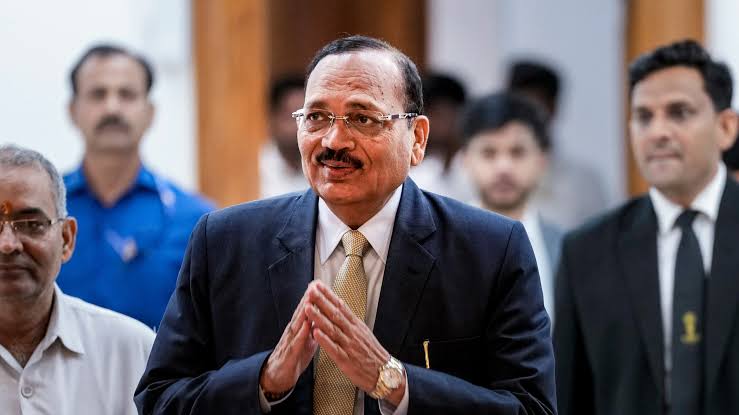
Chief Justice of India Surya Kant has stressed that allegations made against a sitting judge cannot, by themselves, be treated as established findings, as the Supreme Court examines a controversy surrounding Rajasthan High Court Acting Chief Justice Sanjeev Prakash Sharma.
The CJI’s remarks came after Supreme Court judge Justice Sandeep Mehta wrote three letters to the Chief Justice of India seeking immediate intervention in the functioning of the Rajasthan High Court. Justice Mehta has raised serious allegations against Justice Sharma, including claims of maladministration, misuse of administrative powers, favouritism, nepotism and selective handling of cases.
Justice Mehta has urged the Supreme Court collegium to appoint a Chief Justice from another high court to Rajasthan and transfer Justice Sharma out of the state. However, CJI Surya Kant made it clear that the allegations must be examined through the established institutional process and that no conclusion can be reached merely because accusations have been levelled.
CJI stresses due process in judicial complaints
CJI Surya Kant said the concerns raised by Justice Mehta had been taken note of by him and other senior members of the Supreme Court collegium. However, he underlined that allegations against a sitting judge require careful examination and cannot be publicly adjudicated before the concerned judge has been given an opportunity to respond.
According to the CJI, the material submitted by Justice Mehta and the response of Justice Sharma would form part of the consideration process. Any decision concerning Justice Sharma’s continuation, transfer or other administrative action would be taken by the competent institutional authority after examining the relevant material.
The statement effectively drew a distinction between an allegation and an established finding, reinforcing the principle that complaints against members of the higher judiciary must be dealt with through institutional mechanisms rather than through public debate.
The development assumes significance because the allegations have been made by a serving Supreme Court judge against a serving high court judge, making the dispute an unusual episode within the higher judiciary.
Justice Mehta’s three letters
Justice Mehta wrote to CJI Surya Kant on August 2, August 10 and August 17, raising concerns about the functioning of the Rajasthan High Court under Justice Sharma.
In the letters, Justice Mehta alleged that several cases were being selectively withdrawn from other benches and moved to the acting chief justice’s court. He questioned the manner in which roster powers were allegedly being exercised and claimed that certain decisions appeared to benefit influential litigants and lawyers.
Justice Mehta also said that he had received complaints from judges regarding Justice Sharma’s functioning. According to him, some of these complaints were serious enough to raise concerns about the judge’s integrity.
The Supreme Court judge consequently argued that the situation required an institutional response rather than continued inaction. He repeatedly requested that the collegium appoint a chief justice from outside Rajasthan and transfer Justice Sharma from the state.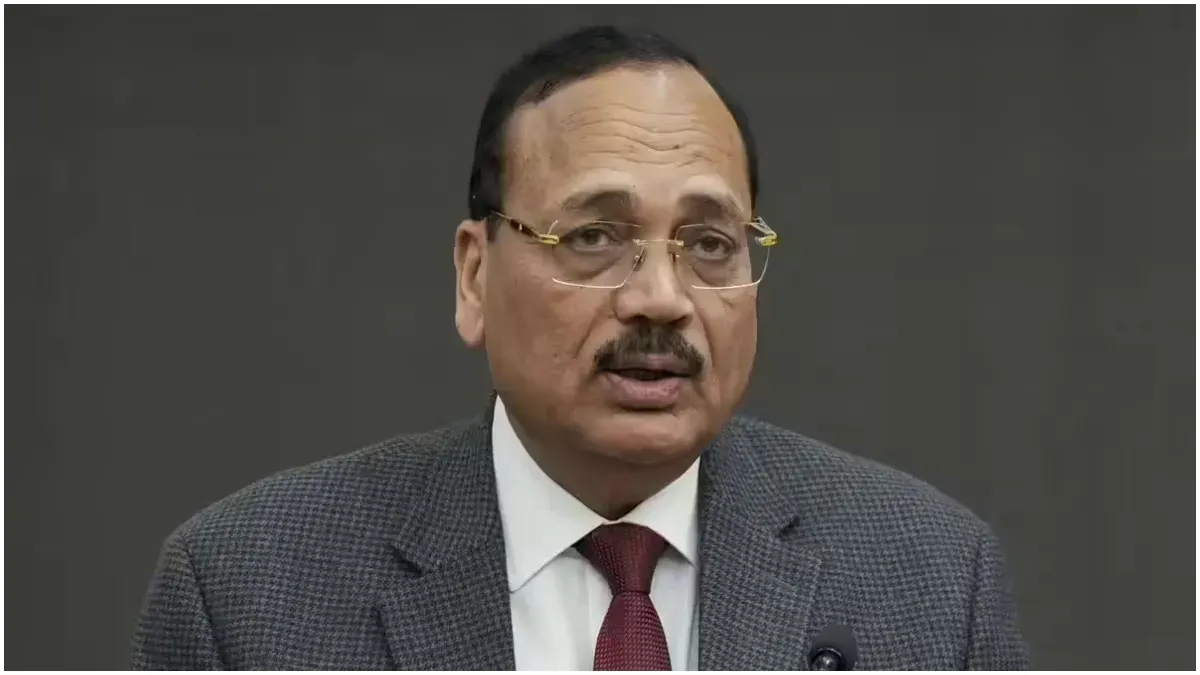
Allegations over case allocation and roster powers
One of the principal issues raised by Justice Mehta concerns the use of the chief justice’s administrative authority over the allocation of cases.
Justice Mehta alleged that matters originally assigned to other benches were, in certain instances, withdrawn and subsequently listed before the bench headed by Justice Sharma without sufficient justification.
He particularly referred to cases concerning valuable land in Udaipur. According to his allegations, a group of appeals relating to the land was listed before a bench headed by Justice Sharma at the Jaipur seat despite an earlier judicial position concerning the jurisdiction of matters associated with the Jodhpur principal seat.
Justice Mehta argued that such developments raised questions about the manner in which administrative and roster powers were being exercised.
Another matter cited by him involved a dispute connected with a mining businessman. Justice Mehta alleged that a proceeding which, in his assessment, did not ordinarily qualify for a particular form of appeal was registered and listed before the bench headed by Justice Sharma.
He further alleged that the bench condoned a delay of 457 days at the initial hearing and granted interim relief.
Justice Mehta linked the matter to the broader concern of whether influential litigants were receiving preferential treatment. These claims, however, remain allegations and have not been established through an adjudicatory finding.
Concerns raised about treatment of judges
Justice Mehta’s letters also contained allegations concerning the administrative environment within the Rajasthan High Court.
He claimed that several judges had expressed concern about Justice Sharma’s conduct and alleged that some judges had faced or feared retaliatory administrative action, including transfers.
The Supreme Court judge also referred to concerns allegedly raised by Rajasthan High Court judge Justice Uma Shankar Vyas regarding the treatment of his wife, who serves in the district judiciary.
Justice Mehta described the matter as part of a larger pattern of alleged administrative pressure and questioned whether such conduct was consistent with the institutional responsibilities of an acting chief justice.
These claims form part of Justice Mehta’s submissions to the collegium and remain subject to examination under the appropriate institutional process.
Dispute over Rajasthan High Court’s administrative functioning
Another concern highlighted by Justice Mehta was the prolonged absence of a regularly appointed chief justice at the Rajasthan High Court.
He argued that the high court had functioned under an acting chief justice for more than 10 months and suggested that the prolonged arrangement had created institutional difficulties.
Justice Mehta also raised questions about the functioning of the Jodhpur principal seat and alleged that Justice Sharma had developed a biased approach towards the seat.
He further referred to the scheduling of an international conference in Jaipur between July 31 and August 2. According to his allegations, a large number of high court judges were nominated to attend the event, resulting in the Jodhpur principal seat having no functioning court for part of the period.
Justice Mehta presented these issues as examples of what he regarded as wider administrative concerns within the high court.
Justice Sharma’s judicial career and return to Rajasthan
Justice Sanjeev Prakash Sharma was appointed as a judge of the Rajasthan High Court in November 2016. He was later transferred to the Patna High Court in January 2022.
His subsequent request to return to Rajasthan on health grounds was not accepted by the Supreme Court collegium in March 2023. He was instead transferred to the Punjab and Haryana High Court.
A later collegium decision in May 2025 recommended his return to Rajasthan. He subsequently took charge as the acting chief justice of the Rajasthan High Court.
Justice Sharma is due to retire on September 26, 2026.
His impending retirement has added another dimension to the controversy because Justice Mehta has argued that decisions concerning the leadership and administration of the Rajasthan High Court should be taken without delay.
CJI’s response puts emphasis on institutional procedure
CJI Surya Kant’s response has placed the focus firmly on due process.
The Chief Justice has indicated that the allegations cannot be treated as proof and that Justice Sharma must have a fair opportunity to respond to the accusations before any conclusion is drawn.
The approach also underscores the importance of maintaining institutional safeguards when allegations are made against judges. Complaints involving members of the higher judiciary can have significant consequences for the credibility of judicial institutions, making an objective assessment of the material particularly important.
The collegium is therefore expected to consider the allegations raised by Justice Mehta alongside any response and supporting material provided by Justice Sharma.
No final conclusion regarding the allegations has been announced.
A significant episode for the judiciary
The controversy is significant because it involves a serving Supreme Court judge directly raising concerns about the functioning of a serving acting chief justice of a high court.
Justice Mehta has called for immediate administrative intervention, while the CJI has emphasised that the institutional process must be allowed to operate before any decision is taken.
The episode places questions of judicial administration, roster powers, institutional accountability and judicial independence at the centre of the debate.
For now, the allegations remain allegations. The next course of action will depend on the assessment of the material presented before the competent authorities, the response of Justice Sharma and the eventual decision of the Supreme Court collegium.