
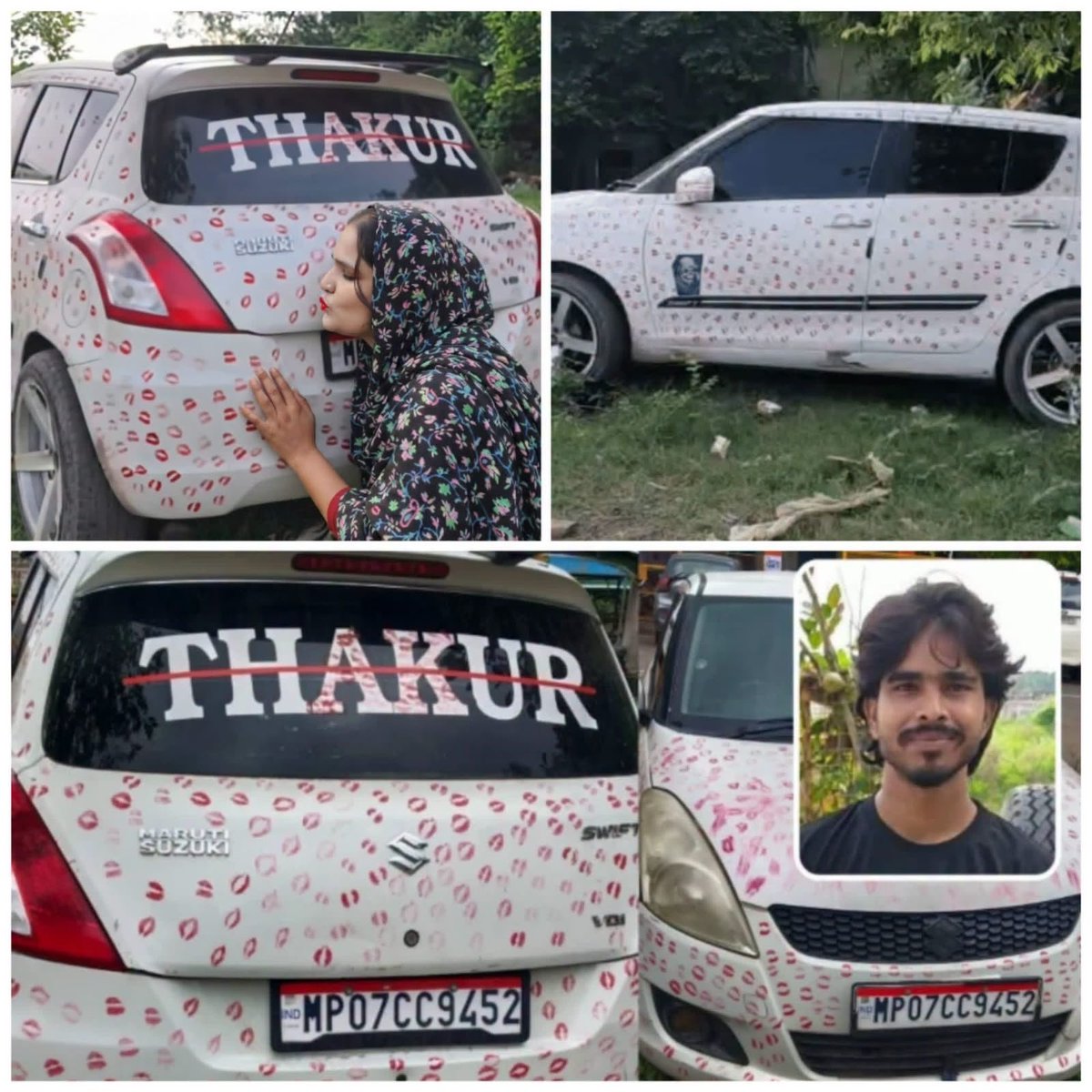
A bizarre social media stunt in Gwalior, Madhya Pradesh, has turned an unusual expression of affection into an unexpected traffic-police action. A car belonging to local resident Aditya Sikarwar was covered with around 3,400 lipstick kiss marks after his girlfriend decorated the vehicle as part of a social media trend. The stunt attracted widespread attention after a video of the car appeared online and subsequently led traffic police to trace the vehicle.
The incident highlights how attempts to create viral social media content can sometimes have consequences when they involve vehicles being altered or used in ways that attract the attention of authorities.
Car covered with thousands of lipstick marks
According to reports, Sikarwar’s girlfriend spent roughly three and a half hours decorating the exterior of the car. She reportedly placed approximately 3,400 lipstick marks across the vehicle, covering large portions of its body.
The unusual appearance quickly made the car stand out on the streets. The decoration was reportedly inspired by a trend seen on social media, with the couple hoping the distinctive vehicle would attract attention online.
Sikarwar later explained that the gesture was intended as an expression of affection and as a social media stunt. He said he had parked the vehicle while his female friend worked on the decoration and that a video was subsequently posted on Instagram.
The video rapidly gained attention, turning what began as a private and unconventional gesture into a widely viewed social media spectacle.
Viral video brings the car to police attention
The situation changed after the video circulated online. Traffic officials noticed footage showing the lipstick-covered vehicle moving through the City Centre area of Gwalior.
Traffic Police Inspector Abhishek Raghuvanshi said officials began looking into the vehicle after the video went viral. Investigators subsequently traced the car to the Thatipur area.
The police then contacted the vehicle’s owner and brought him to the police station for further action.
The incident demonstrates how social media posts can make it relatively easy for authorities to identify vehicles involved in unusual or potentially unlawful activities. In this case, the registration details visible in the circulating footage helped investigators locate the vehicle.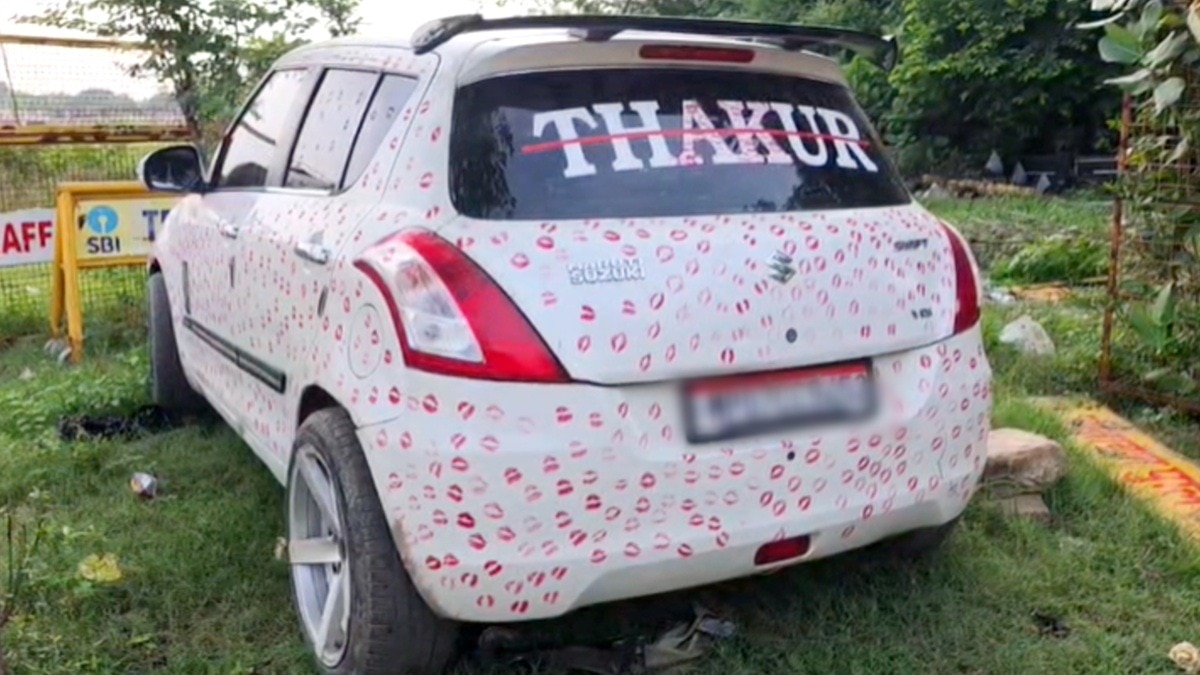
Owner fined ₹5,500 under motor vehicle rules
Police imposed a ₹5,500 challan on Sikarwar under provisions of the Motor Vehicles Act, citing the modification of the vehicle.
Officials also instructed him to remove the lipstick marks from the entire exterior. The owner complied with the direction and cleaned the vehicle after the police action.
The episode therefore ended very differently from what the couple had initially intended. What was designed as a creative and romantic social media post ultimately resulted in a financial penalty and the additional task of removing thousands of lipstick marks from the car.
Owner says he was unaware of the violation
Sikarwar said he had not realised that decorating the vehicle in such a manner could result in police action. He maintained that his girlfriend had been inspired by a trend from outside India and had spent several hours creating the elaborate design.
After being penalised, however, he accepted the action and removed the marks from the car.
Sikarwar said the experience had made him more conscious of the need to consider legal and traffic regulations before participating in social media trends. He also acknowledged that activities intended as entertainment can have consequences if they involve violations of the law.
Social media trends and real-world consequences
The Gwalior incident is another example of how social media challenges and viral trends can move quickly from online spaces into public places. Content creators and users often attempt unusual activities to attract views, followers and engagement, but such experiments can sometimes conflict with traffic regulations or other legal requirements.
In this case, the thousands of lipstick marks transformed an ordinary vehicle into an eye-catching attraction. While the decoration itself was intended as a romantic gesture, the vehicle’s appearance and its presence on public roads eventually drew the attention of traffic officials.
The incident also underlines the responsibility of vehicle owners to ensure that modifications or alterations do not violate applicable motor vehicle regulations. Even when an activity is intended purely for entertainment or social media engagement, public-road rules continue to apply.
For Sikarwar, the viral experiment came with a ₹5,500 price tag and a lengthy cleanup. The unusual episode has since become a talking point in Gwalior, while also serving as a reminder that chasing online virality can sometimes produce consequences that were never part of the original plan.