
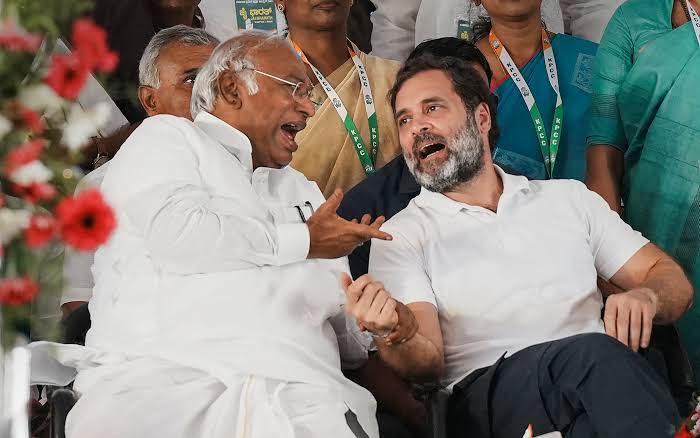
Congress leaders Rahul Gandhi and Mallikarjun Kharge have written to Prime Minister Narendra Modi, raising serious concerns over the proposed method of collecting caste-related information in the upcoming Census. The two senior opposition leaders have objected to the use of open-ended questions for recording caste identities, arguing that the approach could result in fragmented and unreliable data.
In their letter, Gandhi and Kharge said India’s caste structure is highly complex, with communities often known by different names, spellings and sub-caste identities in different parts of the country. They warned that allowing people to enter caste names freely could result in members of the same community being recorded under multiple names.
According to the Congress leaders, such fragmentation could make the final caste data difficult to interpret and could affect the government’s ability to accurately assess the population of various social groups.
Congress objects to open-ended caste questions
The central issue raised by Gandhi and Kharge is the proposed open-ended format for collecting caste information. Instead of selecting an identity from a predefined list, respondents would effectively be allowed to provide their caste name.
The Congress leaders argued that this method does not sufficiently account for regional variations in caste names. A community may have one name in one state and another name elsewhere, while differences in spelling and local terminology may create additional variations.
They warned that if these identities are entered separately, a single caste could appear as several different groups in the final database. The resulting figures could therefore fail to provide an accurate picture of India’s caste composition.
The leaders described this as a major concern because caste data is expected to play an important role in future discussions about social justice, representation, government planning and welfare policies.
Demand for a standardised caste list
Gandhi and Kharge have proposed that the government introduce a standardised list of castes, preferably through a drop-down style system.
Under such a system, people would select their caste from an approved list rather than entering the name manually. The Congress leaders believe this would reduce duplication and make it easier to consolidate different regional names belonging to the same community.
They suggested that existing government records could be used to prepare such a list. They also referred to caste surveys conducted in states such as Bihar and Telangana, where standardised caste lists were used as part of the enumeration process.
The Congress leaders argued that adopting a similar approach at the national level would improve consistency and make the resulting data more useful for policymakers.
Concerns over OBC population figures
The letter also raises concerns about the identification and measurement of the Other Backward Classes, or OBCs.
Gandhi and Kharge argued that the proposed questionnaire does not adequately address the issue of identifying the broader backward-class population. They expressed concern that the absence of an appropriate mechanism could make it difficult to determine the overall size of the OBC population accurately.
The issue is significant because caste-based population figures are closely connected to debates over reservations, representation in government institutions, educational opportunities and welfare programmes.
The Congress has maintained that reliable demographic information is necessary to determine whether government policies are adequately addressing the needs of disadvantaged communities.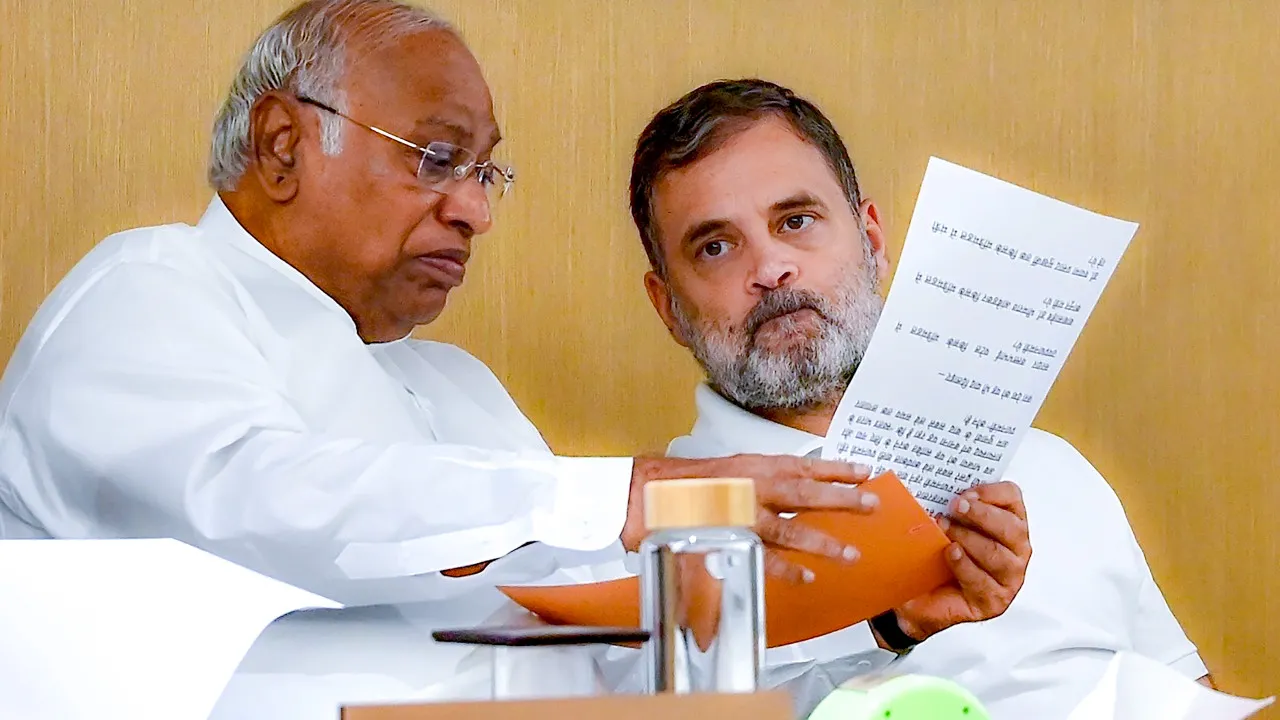
Why accurate caste data matters
Caste enumeration has become a major political and social issue in India. Supporters of a caste census argue that updated data is necessary to understand the country’s social and economic structure and to formulate policies based on contemporary population figures.
For the Congress, the exercise is also linked to its broader argument that representation and access to public resources should reflect the population composition of different communities.
Rahul Gandhi has repeatedly highlighted caste enumeration as an important political issue and has argued that comprehensive data would help identify inequalities in representation and access to opportunities.
The latest letter indicates that the Congress is now focusing not only on whether caste will be counted but also on how caste identities will be recorded and classified.
Congress seeks withdrawal of existing questionnaire
Gandhi and Kharge have called for the existing questionnaire to be withdrawn and redesigned.
They have suggested that the government consult political parties, experts and members of the public before finalising a revised format. Their argument is that the design of the questionnaire will have a direct impact on the quality of the information collected during the Census.
The leaders believe that decisions about classification should be made before enumeration begins so that inconsistencies do not emerge at the data-collection stage.
They also emphasised that caste data should be collected in a manner that allows different communities to be properly identified while avoiding unnecessary duplication.
Census and the wider political debate
The dispute over the questionnaire comes as preparations for the next nationwide Census continue. Caste enumeration has been included in the upcoming population exercise, making the methodology for collecting caste information an important issue for political parties and social organisations.
The Congress has long demanded a nationwide caste census and has argued that the exercise is necessary for social and economic justice. Rahul Gandhi has made the issue a recurring part of his political campaign, particularly in discussions surrounding representation of OBCs and other marginalised communities.
The government’s decision to include caste enumeration in the upcoming Census was therefore welcomed by opposition parties, but questions over the methodology have continued.
Possible impact on welfare and reservation policies
The quality of caste data could have consequences for several areas of public policy.
Accurate population figures are important when governments assess the reach of welfare programmes and examine the representation of different communities in education, employment and public institutions. If communities are divided into multiple entries because of variations in names, their actual population could potentially be underestimated or become difficult to assess.
The Congress leaders have therefore argued that the Census should produce data that is both comprehensive and statistically usable.
The debate also highlights the difficulty of conducting a nationwide caste enumeration in a country where caste identities vary significantly across regions and languages.
Political significance of the Congress demand
The intervention by Rahul Gandhi and Mallikarjun Kharge places additional political pressure on the Centre to address concerns about the caste Census questionnaire.
Their demand is not for the removal of caste enumeration but for changes in the methodology used to conduct it. The Congress wants the exercise to rely on a standardised classification system so that the data collected across different states can be consolidated and compared.
The issue is likely to remain politically sensitive because the findings of the caste Census could influence future discussions over reservations, representation and social welfare.
For the government, the challenge will be to design a system that captures India’s diverse caste identities while maintaining consistency and statistical accuracy.
Focus on data quality
At the heart of the disagreement is a broader question about the reliability of Census data. Gandhi and Kharge have argued that simply collecting caste names will not be sufficient if the information cannot later be accurately classified and analysed.
A standardised system, according to their argument, could help prevent multiple spellings and regional names from creating artificial divisions in the dataset.
As the Census process moves forward, the debate over the questionnaire is therefore expected to continue. The final methodology adopted by the government will determine how caste information is recorded and how effectively the resulting data can be used for future policy decisions.