
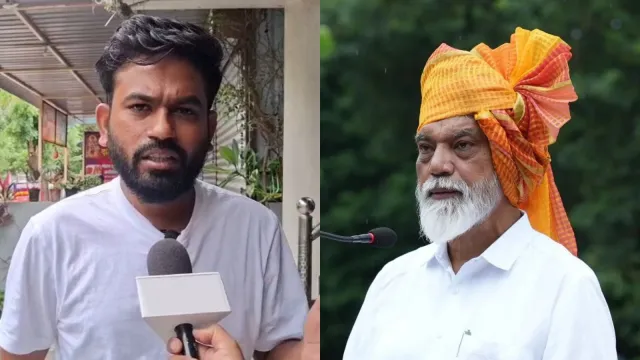
A campaign aimed at highlighting deficiencies in Maharashtra’s government schools has taken a contentious turn after an FIR was registered against Cockroach Janata Party (CJP) founder Abhijeet Dipke over his visit to a government school in Latur district. The development has brought renewed attention to the condition of public-school infrastructure as well as questions over how citizens and political activists can inspect and raise concerns about government institutions.
Dipke had launched what he described as the “School Thik Karo” campaign after Independence Day. Under the campaign, he called on people to visit schools, examine their facilities and document shortcomings in an effort to push authorities towards improving educational infrastructure.
The campaign gained visibility after Dipke visited a Zilla Parishad school in the Ausa area of Latur district. During the inspection, he raised allegations concerning the condition and functioning of the school and questioned the quality of facilities available to students.
The issue subsequently escalated when police registered a case against Dipke and another individual in connection with the school visit.
FIR Over Alleged Unauthorised Entry
According to the FIR, Dipke and his associate allegedly entered the school premises without authorisation, recorded what was taking place inside and subsequently circulated the material publicly. The complaint also alleged that the visit disrupted the functioning of the school and that teachers were subjected to pressure or threats.
The complaint further alleged that Dipke questioned the authenticity of the students present at the school. It stated that he claimed some children from another school had been brought in and seated there, an allegation that authorities considered defamatory to the institution.
The police case has therefore added a legal dimension to what had initially been presented as a campaign focused on public accountability and school improvement.
The allegations contained in the FIR remain allegations, and the registration of a case does not by itself establish criminal liability. The matter is subject to investigation and any further legal proceedings.
Bhuse Had Earlier Welcomed Concerns Raised by Campaign
The FIR has drawn particular attention because Maharashtra School Education Minister Dada Bhuse had spoken positively about the concerns raised through Dipke’s campaign shortly before the police action.
Bhuse indicated that the government was willing to take note of shortcomings identified during the school inspections. He said observations regarding problems in school administration and infrastructure could be considered and that suggestions aimed at improving the functioning of schools would be welcomed.
The minister’s response was significant because it suggested that at least some of the issues being raised by the campaign were being viewed as matters worthy of consideration by the education authorities.
The contrasting developments — the government’s stated willingness to consider the concerns and the subsequent FIR against the campaign’s founder — have intensified discussion around the manner in which school inspections and public criticism should be conducted.
Dipke’s Campaign Focuses on Government School Conditions
Dipke has used his campaign to draw attention to what he describes as persistent deficiencies in government schools. During his visits, he has questioned the availability of basic infrastructure, including classrooms, benches, toilets and safe access to school premises.
He has also argued that elected representatives and senior government officials should understand the difficulties faced by students by sending their own children to government schools.
His campaign has sought to make school infrastructure a public accountability issue rather than limiting the discussion to administrative reviews within the education department.
Dipke has also criticised the state government over what he considers inadequate progress in improving government schools. He has argued that political leaders and education officials should be directly accountable for the conditions in institutions under their supervision.
Allegations Raised During Latur Visit
The Latur school visit became one of the most prominent episodes in the campaign. Dipke alleged that the reality inside the school did not match what should ordinarily be expected from a functioning government educational institution.
Among the claims raised during the visit were allegations concerning the presence and identity of students and the condition of the school premises. The campaign also drew attention to materials that Dipke claimed indicated serious lapses in the management and upkeep of the institution.
These claims have not been independently established merely because they were made during the inspection. The FIR, however, records the authorities’ objections to the manner in which the inspection was conducted and to allegations made publicly about the school.
The dispute consequently involves two separate questions: whether the concerns about school conditions have merit and whether the manner in which those concerns were investigated and publicised complied with the law and school administration procedures.
Debate Over Public Accountability and School Access
The episode has raised broader questions about transparency in public education.
Government schools are publicly funded institutions, and their infrastructure and functioning are matters of legitimate public interest. At the same time, schools are also sensitive environments involving children, teachers and ongoing educational activities. Unauthorised entry, recording inside school premises and confrontation with staff can raise legal and administrative concerns.
The dispute highlights the challenge authorities face in balancing public oversight with institutional discipline.
For campaigners, school inspections can serve as a mechanism for bringing neglected problems into the public domain. For administrators, however, inspections conducted without permission can interfere with normal school operations and potentially create concerns relating to student privacy and staff security.
The controversy surrounding Dipke’s visit has therefore extended beyond the individual FIR and into a larger debate about how government institutions should be scrutinised.
Political Dimension of the Dispute
The controversy also carries a political dimension because Dipke has directly criticised the state’s education administration and demanded accountability from the political leadership.
His campaign has increased public scrutiny of Maharashtra’s government schools at a time when concerns over infrastructure, staffing and the quality of public education continue to attract attention.
Bhuse’s response to the campaign has been notable for its relatively receptive tone. By stating that the government would consider shortcomings highlighted by Dipke, the minister acknowledged that criticism and suggestions could contribute to identifying areas requiring improvement.
The subsequent police case, however, has shifted the focus from educational shortcomings alone to the methods used by campaigners to investigate and publicise those shortcomings.
What Happens Next
The FIR is now likely to become an important part of the ongoing dispute. Police will examine the circumstances surrounding the school visit, including the allegations of unauthorised entry, disruption of school activities and conduct towards teachers.
At the same time, the concerns raised by Dipke about government-school infrastructure are likely to remain part of the wider public debate.
The controversy ultimately puts the spotlight on two interconnected issues: the need for accountability in public education and the limits that apply when individuals attempt to independently inspect government institutions.
For Maharashtra’s education authorities, the episode presents an opportunity to address legitimate infrastructure concerns while also establishing clear procedures for public inspections and grievance reporting. For campaigners, it underlines the importance of ensuring that efforts to expose shortcomings are conducted within legal and administrative boundaries.
As the investigation progresses, the focus is expected to remain on both the allegations surrounding the school visit and the substantive questions raised about the condition of government schools in Maharashtra.