
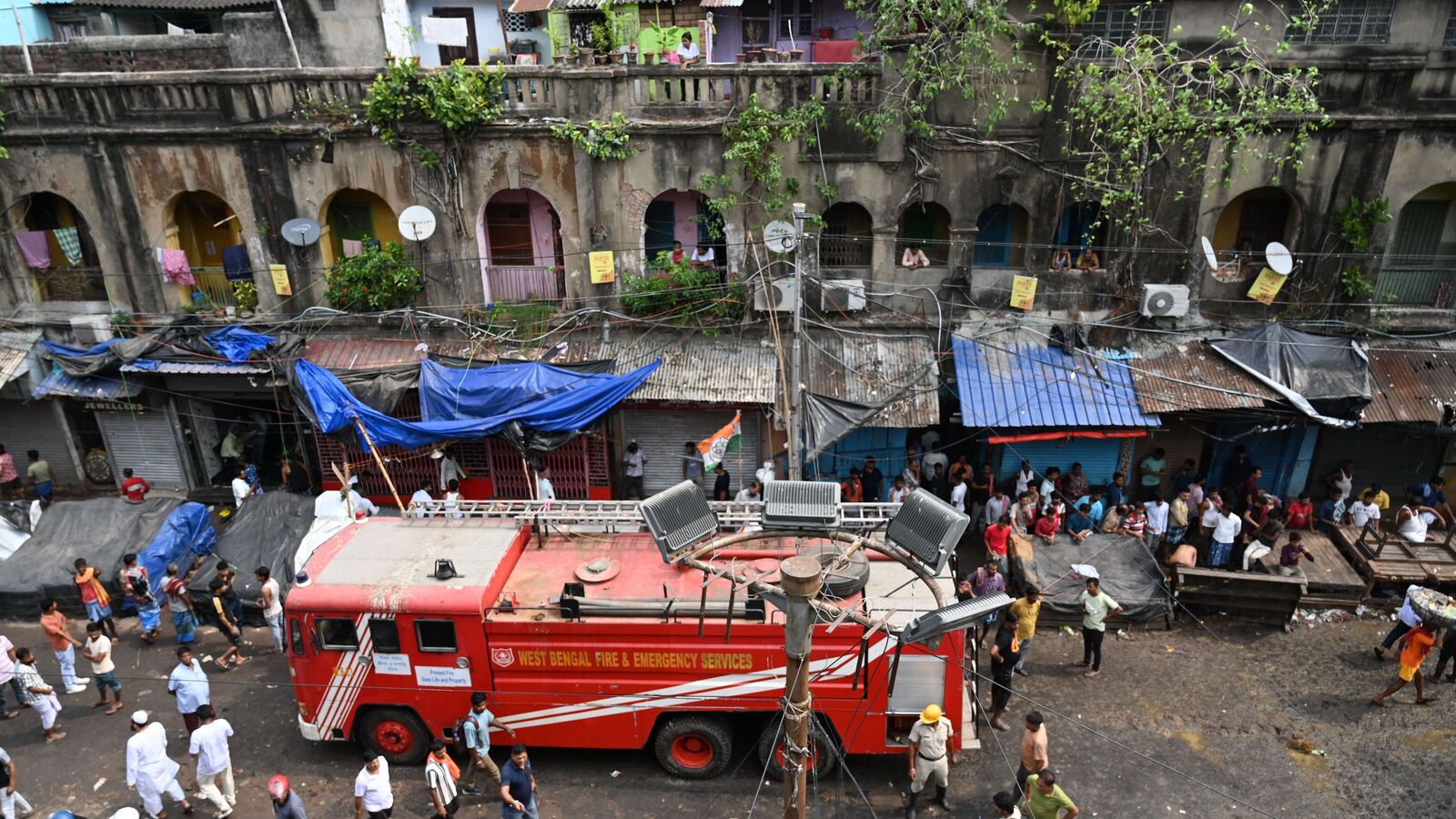
At least eight people were killed and several others injured after a massive fire broke out at a hotel in Tarapith, a major pilgrimage destination in Birbhum district of West Bengal, in the early hours of Monday.
The fire reportedly broke out around 4 am, when most guests were asleep inside the hotel. The blaze is believed to have started near the reception area and quickly spread through the building, filling parts of the hotel with thick smoke and leaving several occupants trapped.
Police said 43 people were rescued from the building during the emergency operation. The victims included five people from Meghalaya and three from Alipurduar in West Bengal.
Fire breaks out before dawn
The timing of the fire made the situation particularly dangerous. With most guests sleeping, many were initially unaware that a fire had started inside the building.
As smoke spread through the premises, panic broke out among those staying at the hotel. Guests reportedly attempted to find alternative ways to escape after the main entrance became difficult to access because of the flames and smoke.
Emergency personnel arrived at the scene and began evacuating people from the building. Firefighters and police teams worked together to rescue those who remained trapped inside.
Some survivors were forced to find unconventional ways to escape the burning building. According to accounts emerging from the incident, some guests climbed down a tree beside the hotel in an attempt to get away from the smoke and flames.
Locked emergency exits raise concerns
One of the most serious issues to emerge from the preliminary investigation concerns the condition of the hotel’s emergency exits.
Police said the emergency exit at the rear of the building was reportedly locked. The door leading towards the terrace was also allegedly blocked with plywood, while the keys required to open the locked exits were reportedly not readily available.
Authorities are examining whether these conditions prevented guests from escaping quickly when the fire spread.
The alleged obstruction of emergency routes has become a key focus of the investigation because alternative exits are particularly important when the primary entrance of a building becomes inaccessible during a fire.
If emergency exits are locked or blocked, occupants can become trapped even when an alternative escape route exists.
Survivors describe terrifying ordeal
Survivors have described a frightening struggle to escape the hotel as smoke filled the building.
One survivor, Tapanjyoti Mondal, said that he and his family took shelter inside a bathroom after the fire broke out. They reportedly opened the windows and used the shower while waiting for help.
The family was eventually rescued after spending around 45 minutes inside the building.
The incident highlights the extreme conditions faced by people trapped inside the hotel. Smoke inhalation can become a major threat during a building fire, particularly when occupants are unable to reach an open area quickly.
Several other guests also managed to escape despite the dangerous conditions.
Questions over fire alarm system
The incident has also raised questions about whether the hotel’s fire alarm system was functioning properly.
Some guests reportedly said they did not hear an alarm when the fire began. Instead, they became aware of the emergency after hearing people screaming and shouting.
An effective fire alarm can provide occupants with crucial additional time to evacuate, especially when a fire starts during sleeping hours.
Investigators are expected to examine the hotel’s fire-safety equipment, including its alarm system, fire extinguishers and other emergency arrangements.
They will also assess whether the hotel had complied with applicable fire-safety regulations and whether routine inspections had been carried out.
43 people rescued
According to police, rescue teams managed to evacuate 43 people from the hotel.
Several injured people were taken to nearby hospitals for medical treatment. One person was reported to remain admitted, while authorities continued to assess the condition of those affected by the incident.
The rescue operation continued as firefighters searched the building and ensured that no one remained trapped inside.
The death toll has made the incident one of the most serious recent fire tragedies in the pilgrimage town.
Pilgrimage rush adds to concerns
The fire occurred during a period when Tarapith was witnessing a significant influx of devotees.
Tarapith is one of West Bengal’s well-known religious destinations and attracts large numbers of visitors throughout the year. The town is particularly crowded during important religious occasions.
The incident took place on the final Monday of the Hindu month of Shravan, when a large number of pilgrims had gathered in the area.
The high number of visitors has renewed concerns about safety standards in hotels, lodges and guesthouses operating in pilgrimage centres.
Accommodation facilities in such areas often experience a sharp rise in occupancy during religious festivals and other important occasions. Authorities therefore face the challenge of ensuring that hotels can safely accommodate large numbers of visitors.
Probe into cause of fire
Police have begun an investigation into the circumstances surrounding the incident.
Investigators are examining where and how the fire started, how quickly it spread and whether the hotel’s fire-prevention and emergency-response systems were adequate.
A possible electrical fault has been mentioned in preliminary accounts, but the exact cause of the fire will be determined only after a detailed investigation.
Authorities are also expected to investigate whether negligence or violations of fire-safety regulations played any role in the deaths.
The condition of the emergency exits is likely to receive particular attention because the alleged locking and obstruction of escape routes could have affected the ability of guests to leave the building safely.
Fire safety under scrutiny
The Tarapith tragedy has once again highlighted the importance of fire-safety compliance in hotels and other accommodation facilities.
Functional fire alarms, accessible emergency exits, unobstructed stairways, proper firefighting equipment and clearly marked evacuation routes can make a significant difference during a building fire.
The incident also demonstrates the risks faced by people staying in unfamiliar buildings. Guests may not know the location of emergency exits or alternative escape routes, making clear safety instructions and visible signage particularly important.
As the investigation continues, authorities will have to establish whether the hotel had followed all required safety procedures and whether adequate arrangements were in place to protect its guests.
The loss of eight lives has left families and the local community grieving, while questions remain over whether better emergency preparedness could have prevented the tragedy or reduced its impact.