
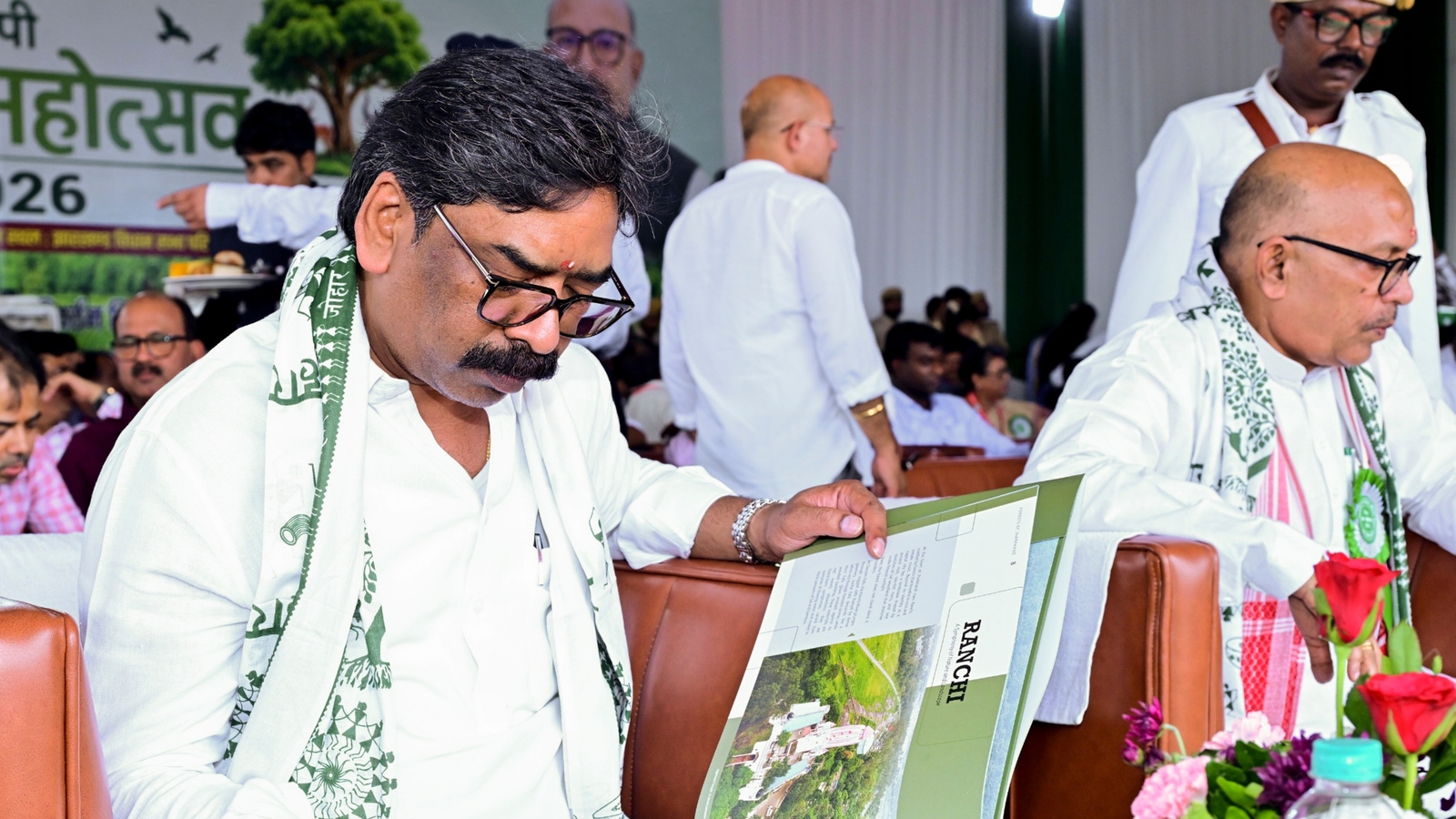
The agitation by students and government job aspirants in Jharkhand has intensified, with protesters demanding the resignation of Chief Minister Hemant Soren over alleged irregularities in state recruitment examinations.
The movement has increasingly developed into a direct confrontation with the state government. Protesters have accused the administration of failing to take sufficiently strong action over alleged problems in examinations conducted by the Jharkhand Public Service Commission (JPSC) and the Jharkhand Staff Selection Commission (JSSC).
The protesters have announced plans to gherao the chief minister’s official residence in Ranchi on August 20. They have also called on the Congress to withdraw its support from the JMM-led coalition government if Soren does not address their demands.
The latest escalation comes as students and job aspirants continue to demand greater transparency, accountability and reforms in the recruitment process.
Protesters Demand Soren’s Resignation
The JPSC-JSSC Reforms Manch has been among the groups leading the agitation. Its members have accused the state government of failing to adequately address concerns surrounding alleged examination irregularities.
As part of the next phase of the protest, demonstrators announced plans to burn effigies of Chief Minister Hemant Soren and Congress leader Rahul Gandhi.
The protesters have also appealed to Gandhi to reconsider Congress’s support for the JMM-led government. They have argued that if the chief minister fails to resolve the concerns of students, Congress should use its position within the ruling alliance to exert pressure on the state government.
The demand marks a significant expansion of the agitation. What began primarily as a dispute over recruitment examinations has now developed into a broader political challenge to the state government and its alliance partners.
Students Step Up Street Protests
The agitation has included demonstrations and marches in Ranchi, with students taking to the streets to highlight their grievances.
Protesters have argued that the recruitment system must be transparent and that candidates should not lose opportunities because of alleged malpractice or administrative failures.
The demonstrations have attracted attention because government employment remains highly competitive in Jharkhand. For many young people, clearing a state recruitment examination represents an important opportunity for stable employment.
Consequently, allegations involving examination irregularities have generated anger among candidates who have spent months or years preparing for competitive examinations.
Government Faces Growing Pressure
The protests have placed the Hemant Soren government under increasing pressure to demonstrate that it is taking the allegations seriously.
The chief minister has sought to reassure students by promising reforms aimed at making recruitment examinations more transparent. The government has indicated that changes will be introduced to strengthen the examination system and prevent deserving candidates from losing opportunities because of malpractice.
Soren has also stressed the importance of addressing concerns raised by students and has sought greater participation from young people in discussions about improvements to the education and examination system.
However, these assurances have not brought the agitation to an end.
Protesters continue to insist that concrete measures are required rather than assurances alone. Their demands include action concerning examinations already held, accountability for alleged irregularities and safeguards to prevent similar controversies in future recruitment exercises.
JPSC and JSSC Exams at the Centre of Dispute
The controversy surrounding JPSC and JSSC examinations has become the central issue driving the student movement.
The two institutions play an important role in recruitment for government positions in Jharkhand. Allegations of malpractice involving such examinations can affect large numbers of candidates and raise broader questions about the credibility of the recruitment system.
Students have demanded corrective action concerning examinations they believe were affected by irregularities. They have also called for a recruitment system in which candidates can be confident that selection is based on merit and conducted under transparent procedures.
The issue has consequently moved beyond individual complaints. Protesters are increasingly demanding structural changes in the organisation, monitoring and conduct of competitive examinations.
Political Dimension of the Protest
The demand for Congress to withdraw support from the JMM-led government has added a strong political dimension to the student agitation.
The protesters are holding the ruling alliance responsible for what they describe as an inadequate response to their concerns. By directly appealing to Congress leadership, the students are seeking to increase political pressure on Soren.
The planned burning of effigies of both Soren and Rahul Gandhi also reflects the protesters’ dissatisfaction with the ruling alliance as a whole.
Congress, meanwhile, has defended the government’s approach and maintained that the concerns of students should be addressed while ensuring that candidates who legitimately qualified are not unfairly affected.
This has created a difficult balancing act for the ruling alliance. While the government must respond to allegations and demands raised by protesters, it must also consider the interests of candidates who have already cleared recruitment examinations through the existing process.
Protest Enters a Critical Phase
The planned gherao of the chief minister’s residence on August 20 could become a significant moment in the ongoing agitation.
The announcement follows a series of demonstrations in Ranchi, with protesters demanding stronger action from the government. The administration now faces the challenge of managing the demonstrations while ensuring that the situation does not escalate further.
For the students, the proposed action is intended to demonstrate that they are prepared to intensify their movement unless their demands are addressed.
The government, meanwhile, is under pressure to establish a credible mechanism through which allegations concerning recruitment examinations can be examined and resolved.
Why the Recruitment Issue Matters
The controversy has struck a sensitive chord among Jharkhand’s young population because government jobs remain an important source of employment and economic security.
Competitive examinations can attract large numbers of applicants for a limited number of positions. Candidates often devote substantial time, effort and financial resources to preparation.
When allegations of irregularities emerge, students face uncertainty over whether their preparation will result in a fair opportunity.
This explains why protesters have repeatedly emphasised transparency and accountability. Their campaign is not limited to one examination but reflects wider concerns about the credibility of government recruitment procedures.
What Lies Ahead for the Soren Government
The Hemant Soren government now faces the difficult task of restoring confidence among students while preventing the controversy from developing into a larger political confrontation.
Promises of examination reforms will need to be followed by visible and credible action if the government hopes to convince protesters that their concerns are being addressed.
The administration must also balance the demands of protesting candidates with the interests of students who have already qualified through recruitment examinations. Decisions involving cancellation, re-examination or other corrective measures could have significant consequences for both groups.
The coming days are therefore likely to be crucial.
With protesters preparing to intensify their campaign, the dispute has moved from an examination-related grievance to a broader debate over governance, accountability and political responsibility.
The outcome will depend largely on whether the government can establish sufficient confidence in its recruitment system to bring the students back to dialogue.
For now, however, the agitation continues to put pressure on the Hemant Soren government. Demands for accountability, examination reform and political responsibility remain at the heart of the movement, making the recruitment controversy one of the significant challenges facing the Jharkhand administration.