
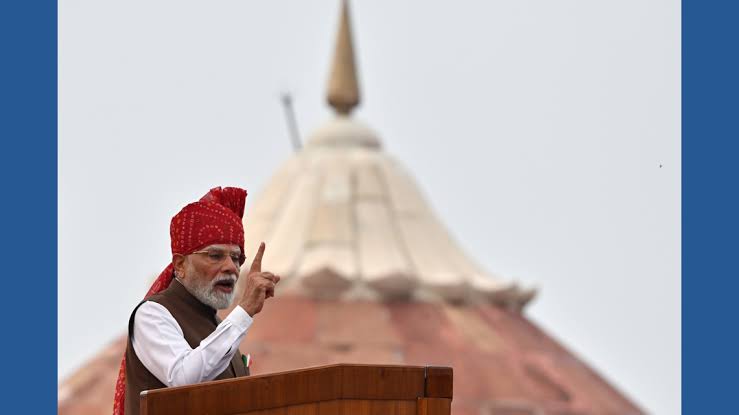
Prime Minister Narendra Modi’s warning about what he described as “dimaagi Naxals” during his Independence Day address from the Red Fort has triggered a sharp political controversy, with opposition leaders accusing the government of using the language of national security to target critics and dissenters.
Addressing the nation on August 15, Modi said India had made significant progress in combating armed Naxalism and that the militant movement was now approaching its end. At the same time, he warned that an ideological form of Naxalism remained a concern and could influence young people and encourage social unrest.
The Prime Minister argued that the country’s battle against Naxalism could not be viewed solely through the lens of armed insurgency. According to him, individuals influenced by what he termed a “dimaagi” or intellectual Naxal mindset could continue to pose a challenge by attempting to influence public opinion and push young Indians towards what he described as a destructive path.
Modi said such ideological influences had, in the past, found space within institutions of power, advisory bodies and policy-making structures. He maintained that the country needed to remain alert to this influence even as security forces succeeded in containing armed Maoist groups.
The Prime Minister called for such individuals to be identified and isolated while urging the younger generation to remain connected with the broader national development agenda. His remarks effectively expanded the scope of his warning from armed insurgency in affected regions to what he portrayed as an ideological challenge within wider society.
Armed Naxalism versus ideological influence
The Prime Minister’s comments came against the backdrop of the government’s repeated assertion that Left-wing extremism has declined substantially across India.
For years, Maoist insurgency posed a serious internal security challenge, particularly across parts of central and eastern India. Armed cadres operated in forested and remote areas, attacking security personnel and government installations and challenging the authority of the state.
Modi said the security forces had made considerable progress in dismantling this armed network. However, he argued that eliminating armed groups alone would not be sufficient if the ideology associated with Naxalism continued to influence sections of society.
It was in this context that he introduced the expression “dimaagi Naxals”, using it to describe what he considers an intellectual or ideological manifestation of the movement.
The terminology immediately became the centre of political debate.
Opposition accuses Modi of targeting dissent
Opposition parties reacted strongly to the Prime Minister’s remarks, arguing that the new terminology could be used to label people who criticise the government as extremists.
Congress general secretary Jairam Ramesh described the phrase as evidence of what he called desperation on the part of the Prime Minister. He also pointed to the evolution of political labels used by the ruling establishment against its critics, arguing that the latest terminology represented another attempt to portray opponents in an unfavourable light.
Ramesh further contended that the Prime Minister had, on several occasions, eventually adopted ideas or policies associated with people and groups whom he had criticised.
The criticism was not limited to the Congress.
Communist Party of India general secretary D Raja said the Prime Minister’s remarks reflected an effort to create another category for critics of the government. He argued that political dissent should not automatically be associated with Naxalism or anti-national activity.
According to Raja, issues such as education, employment and the concerns of young people required greater political attention. He questioned the appropriateness of using an Independence Day address to target those who disagree with the government.
Trinamool Congress MP Mahua Moitra also reacted sarcastically to the remarks, appearing to embrace the label used by the Prime Minister while challenging the logic behind applying it to critics.
The opposition’s central argument is that disagreement with government policy, criticism of political decisions and advocacy for social or economic reforms are legitimate aspects of democratic debate. From this perspective, attaching the Naxal label to critics could discourage open discussion and create an atmosphere in which dissent is viewed as suspicious.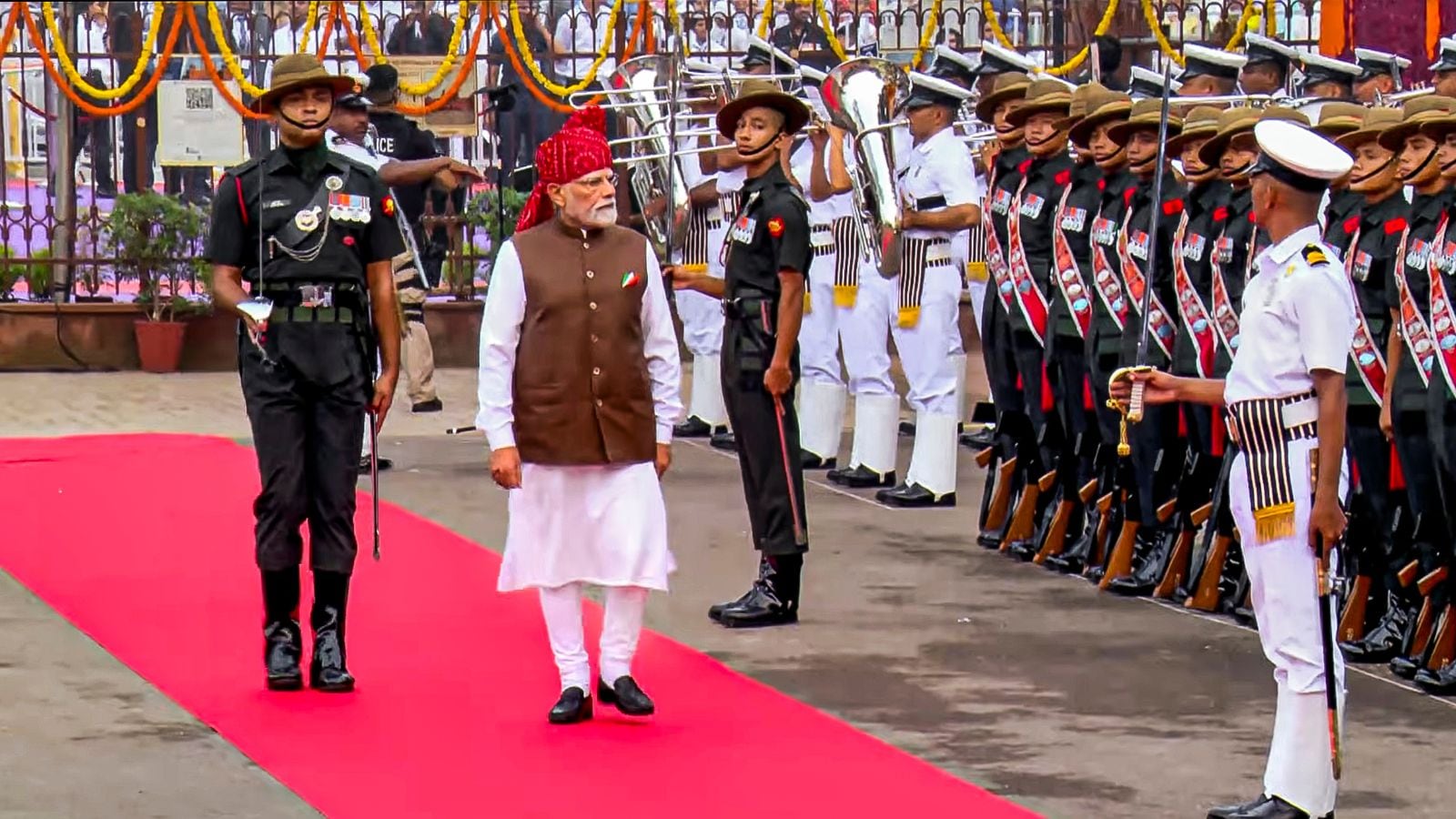
Why the phrase has triggered controversy
The controversy surrounding “dimaagi Naxals” goes beyond the choice of words. It touches on a long-running political argument in India over the distinction between violent extremism, ideological advocacy and democratic dissent.
Naxalism historically refers to a Maoist-inspired armed movement that has used violence against the state and security forces. Over the years, however, political debates have increasingly seen terms such as “urban Naxal” used to describe intellectuals, activists, academics and other individuals alleged to have links with or sympathy for Maoist ideology.
Critics of such terminology argue that broad labels can blur the distinction between people involved in violence and those exercising their constitutional right to express political disagreement.
The Prime Minister’s latest formulation has therefore attracted attention because it appears to place greater emphasis on the ideological dimension of the Naxal challenge.
Supporters of the government’s position, however, are likely to view the warning differently. From that perspective, armed insurgency cannot be defeated permanently unless the ideological ecosystem that sustains or legitimises extremist violence is also addressed.
Focus on India’s youth
A significant part of Modi’s warning was directed at the younger generation.
The Prime Minister argued that young Indians should not be misled by ideological forces that seek to create instability or pull the country away from its development goals. He called for youth to be connected with the broader national mission of transforming India into a developed country.
The emphasis on young people reflects the government’s broader concern that ideological movements can find support through political messaging, social networks and intellectual spaces even after their armed components have weakened.
At the same time, the opposition’s response suggests that the issue of youth and dissent could become an important political battleground. Critics argue that young people must be allowed to question governments and institutions without fear of being branded as supporters of extremist movements.
Independence Day speech becomes political flashpoint
The controversy is particularly significant because the remarks were made during the Prime Minister’s Independence Day address from the Red Fort, one of the country’s most prominent national platforms.
Independence Day speeches traditionally provide an opportunity for the government to outline its achievements, national priorities and vision for the future. Modi used this year’s address to highlight several aspects of national security and development, including the government’s assessment of the decline of armed Naxalism.
His reference to “dimaagi Naxals”, however, introduced a distinctly political dimension into the discussion.
Opposition parties interpreted the remarks as an attack on critics at a time when the country was observing a major national occasion. They argued that the Independence Day platform should be used to reinforce democratic values and national unity rather than to categorise political opponents.
The government’s broader argument is that national unity also requires vigilance against forces that could undermine social stability or encourage extremist thinking.
A wider debate over dissent and national security
At the heart of the controversy is a difficult question: where should the line be drawn between legitimate dissent and ideological support for violent extremism?
India’s democratic system allows citizens, political parties, academics, activists and civil society organisations to criticise government policies and demand changes. At the same time, the state has a responsibility to respond to organisations and individuals involved in violence or efforts to facilitate armed insurgency.
The disagreement emerges when political rhetoric uses terms associated with violent movements to describe ideological opponents or critics.
The “dimaagi Naxal” debate is therefore likely to continue beyond the Independence Day speech. Supporters of Modi’s position may argue that ideological extremism deserves the same attention as armed insurgency, while critics are expected to insist that political disagreement must not be equated with extremism.
The controversy also highlights the changing nature of the Naxalism debate in India. As armed Maoist activity declines, the government’s focus is increasingly shifting towards the ideological and political dimensions of the movement.
Whether that approach helps eliminate the remaining influence of Maoist ideology or instead deepens political divisions will remain a subject of debate.
For now, Modi’s warning has opened a fresh confrontation between the government and opposition over how India should define ideological extremism, political dissent and the limits of legitimate criticism in a democracy.