
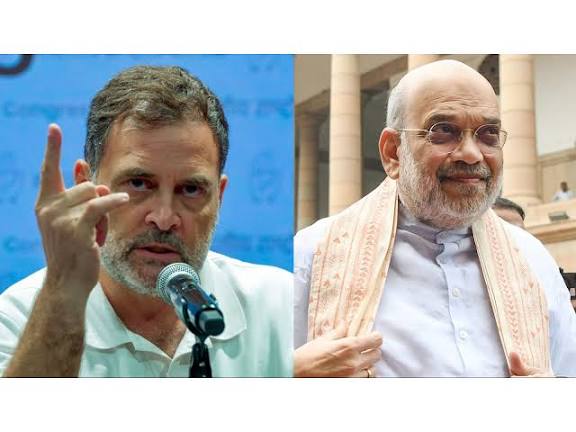
The political standoff in Parliament continued on Monday as the government offered to hold a detailed discussion on student and youth protests, including allegations of police action against demonstrators, with Union Home Minister Amit Shah expected to respond on behalf of the government.
The proposal was presented as an attempt to break the prolonged deadlock in the Lok Sabha, where proceedings have been repeatedly disrupted during the Monsoon Session. However, the Opposition rejected the government’s offer as insufficient, arguing that it wanted specific answers on the allegations surrounding police action against students rather than a broad discussion on education or youth-related issues.
The Opposition also maintained its demand for a separate discussion concerning allegations of irregularities involving donations and offerings made to the Ram temple in Ayodhya. With the session scheduled to conclude on August 13, both sides remained locked in negotiations over the issues that should be taken up before Parliament adjourns.
Government offers discussion on student and youth protests
Parliamentary Affairs Minister Kiren Rijiju conveyed the government’s willingness to hold a full-fledged debate on student and youth agitations taking place in different parts of the country. He said the discussion could also cover the police response to such protests.
According to the government, Amit Shah would respond to the debate point by point, addressing the issues raised by members during the discussion.
The proposal was made during a meeting of the Lok Sabha Business Advisory Committee chaired by Speaker Om Birla. The Speaker also appealed to Opposition parties to cooperate in restoring normal functioning of the House.
The government argued that it had accepted the Opposition’s central demand for the Home Minister to address the matter in Parliament. Rijiju said the next step depended on Opposition parties reaching an understanding among themselves over the format and scope of the discussion.
He also pointed to differences between the Congress and the Samajwadi Party, suggesting that the two parties needed to resolve their positions on the matter.
Both parties, however, continued to insist that their demands were essential.
Rahul Gandhi seeks specific answers on police action
Leader of the Opposition Rahul Gandhi said the Opposition’s demand was not simply for Amit Shah to speak in Parliament on a general subject.
Gandhi argued that the government needed to answer specific questions concerning the treatment of students during protests. He questioned who authorised the alleged use of force against demonstrators and demanded accountability for the police action.
The Congress leader alleged that young protesters were subjected to severe police measures, including lathi-charge and the use of other forms of force. He argued that responsibility for such action had to be established and said the Home Minister could not avoid directly addressing the allegations.
The dispute has its roots in protests held on July 20, when students and other young people demonstrated over issues including examination-related concerns and demanded the resignation of the then Education Minister Dharmendra Pradhan.
The Opposition has alleged that police used excessive force against protesters, including claims involving pellet guns and other weapons. The government and the Opposition have sharply differed over the circumstances and responsibility surrounding the incident.
The controversy has subsequently become one of the major flashpoints of the Monsoon Session.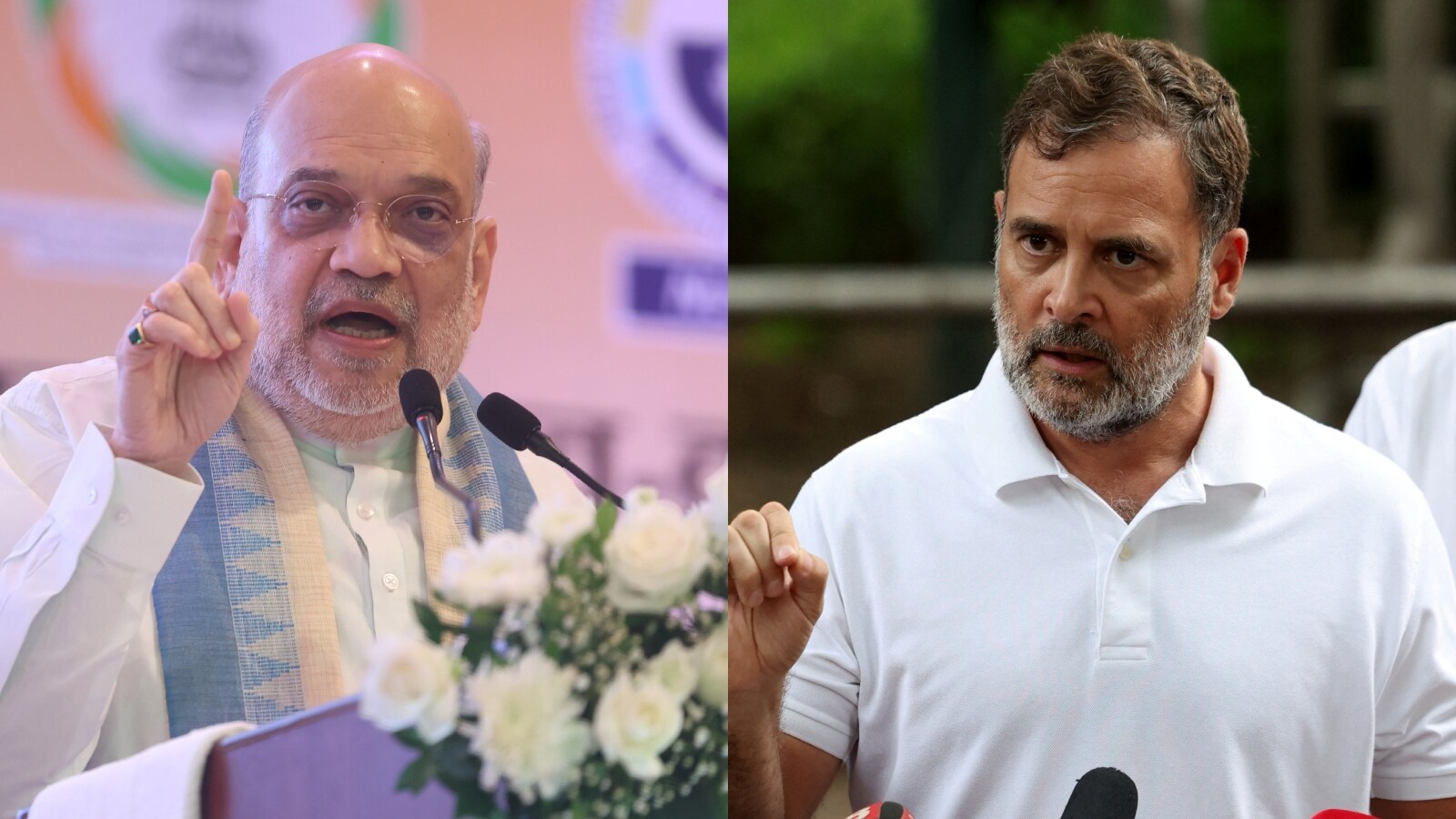
Two weeks of disruption in Parliament
The dispute over the student protests has contributed significantly to the repeated disruption of the Lok Sabha during the session.
For nearly two weeks, Opposition parties have pressed for a statement from Amit Shah regarding the allegations of police excesses. The government had previously resisted the demand in the form sought by the Opposition.
The latest proposal to permit a debate, followed by a response from the Home Minister, was therefore viewed as an attempt to find common ground and restore legislative business.
However, the Opposition maintained that simply agreeing to a debate did not resolve the central questions it had raised.
Congress leaders argued that the Home Minister’s response needed to address the allegations directly rather than provide a broad political statement.
Ram temple donation controversy becomes another flashpoint
Alongside the student protest issue, the Opposition has demanded a discussion in Parliament on allegations concerning donations and offerings associated with the Ram temple in Ayodhya.
The issue has particular political importance for the Samajwadi Party, which is preparing for the Uttar Pradesh Assembly elections expected early next year.
SP chief Akhilesh Yadav said the controversy involved the faith and contributions of millions of devotees. He questioned how allegations concerning the handling of temple offerings could be ignored and sought accountability from those responsible for managing the funds and donations.
Yadav also linked the issue with the broader dispute over student protests, arguing that Parliament should discuss both matters before the Monsoon Session concludes.
The SP has maintained that the allegations surrounding temple donations are serious because the money and offerings were made by devotees in the belief that they were contributing to a religious institution of major national significance.
Congress calls its demands non-negotiable
Congress president Mallikarjun Kharge and Rahul Gandhi reiterated that their party would not compromise on its principal demands.
According to the Congress position, the first demand is a statement from Amit Shah addressing allegations of excessive police action against students, including claims concerning the use of force during the July 20 protest.
The party has also demanded that the government clarify the allegations surrounding the Ram temple donations and take strict action if wrongdoing is established.
Congress leaders further called for an apology from the Prime Minister and the Home Minister over the issues raised by the Opposition.
Kharge argued that the government’s reluctance to allow the debate for an extended period had contributed to the continuing disruption of Parliament. He also questioned why the government had not provided what the Opposition described as satisfactory answers to allegations concerning the management of temple offerings.
Congress general secretary KC Venugopal separately wrote to the Lok Sabha Speaker seeking that Amit Shah address the allegations of police excesses against students on the floor of the House.
BJP accuses Opposition of changing its demands
The ruling BJP rejected the Opposition’s criticism and accused it of repeatedly changing its demands.
Union minister JP Nadda said Rahul Gandhi had initially demanded that Amit Shah make a statement regarding the student protests. According to Nadda, after the government agreed to allow the Home Minister to respond, the Opposition introduced the Ram temple donation issue as an additional condition.
Nadda accused the Congress of deliberately preventing Parliament from functioning and challenged Gandhi to participate in the proposed discussion.
The BJP’s position is that the government is prepared to debate the issues raised by the Opposition and that there is no reason for the House to remain stalled.
The exchange highlights the growing political divide between the ruling party and the Opposition over both the substance and procedure of parliamentary debate.
Government introduces bills amid political standoff
The political confrontation also affected the government’s legislative agenda.
Amit Shah had earlier been listed to introduce two bills in the Lok Sabha. One proposed to formally change the name of Kerala to Keralam, while another concerned amendments to the National Co-operative Development Corporation Act.
However, the bills were ultimately introduced by other ministers instead.
The development came amid the continuing uncertainty over whether the Home Minister would personally participate in the proceedings and respond to the Opposition’s demands.
What happens next?
With only a short period remaining before the Monsoon Session ends on August 13, pressure is mounting on both the government and Opposition parties to find a way forward.
The government’s offer of a detailed discussion, coupled with a point-by-point response from Amit Shah, could provide a possible route to ending the parliamentary deadlock. However, the Opposition’s insistence on specific answers means that the dispute is unlikely to disappear unless both sides agree on the scope and format of the debate.
At the heart of the confrontation are two politically sensitive issues: allegations of police excesses against protesting students and claims surrounding the handling of Ram temple donations.
The coming days will determine whether Parliament returns to normal legislative business or whether the remaining part of the session is dominated by further protests and political confrontation.
For the government, restoring the functioning of Parliament would allow it to advance its legislative agenda. For the Opposition, securing direct answers from senior government leaders remains a key political objective.
The disagreement therefore extends beyond a single debate. It reflects a wider confrontation over accountability, parliamentary scrutiny and the government’s response to allegations involving students, police action and religious donations.