
The Andhra Pradesh government has decided to withdraw the controversial Disha Bill, a legislation introduced by the previous YSR Congress Party government to accelerate the investigation and trial of crimes against women and children.
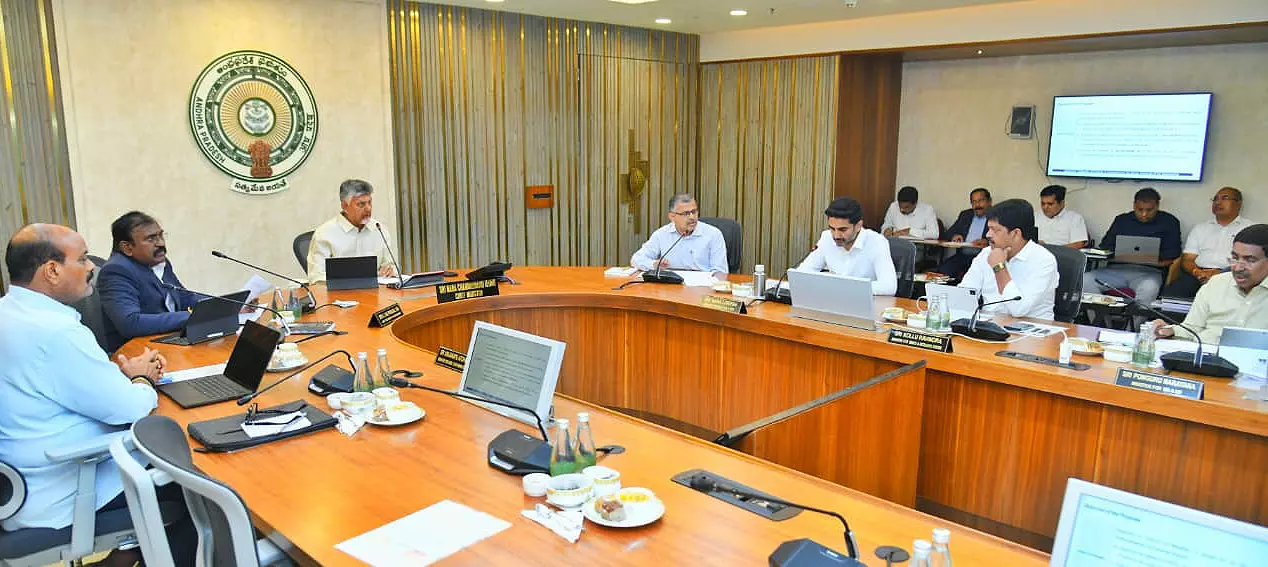
The decision was taken at a meeting of the Andhra Pradesh Cabinet chaired by Chief Minister N Chandrababu Naidu on Thursday. The government said the move followed advice from the Centre and recommendations from the state police leadership and law department.
The Disha Bill, formally known as the Andhra Pradesh Criminal Law (Amendment) Bill, 2019, was passed unanimously by the state Legislative Assembly on December 13, 2019. It was introduced with the stated objective of creating a faster legal mechanism for dealing with rape and other serious sexual offences.
One of the key provisions envisaged under the legislation was the completion of investigations and trials in rape and sexual offence cases within a maximum period of 21 days. The proposed law also included the death penalty for certain heinous crimes against women.
However, the legislation did not receive the required presidential assent and remained pending after being forwarded to the Centre.
Centre sought clarifications on Disha Bill
State Information and Public Relations Minister K Parthasarathy said after the Cabinet meeting that the Union Ministry of Home Affairs had sought clarifications regarding several provisions of the proposed legislation.
According to the minister, the Centre had advised the Andhra Pradesh government to withdraw the existing bill and introduce revised legislation after considering suggestions from different Union government departments.
The state Cabinet subsequently reviewed the issue in the context of changes made to India’s criminal justice framework.
The government noted that the Indian Penal Code and the Code of Criminal Procedure have since been replaced by the Bharatiya Nyaya Sanhita, 2023, and the Bharatiya Nagarik Suraksha Sanhita, 2023. The new criminal laws came into force across the country on July 1, 2024.
The Andhra Pradesh government has argued that several stronger provisions relating to crimes against women and children are already incorporated into the new criminal laws. As a result, it believes that the principal objectives for which the Disha Bill was proposed have substantially been addressed through the new central legislation.
Based on the recommendations of the Director General of Police and the state Law Department, along with the Centre’s advice, the Cabinet formally approved the withdrawal of the bill.
Disha Bill’s original objective
The Disha Bill was brought against the backdrop of growing public concern over crimes against women and the demand for faster investigation and prosecution of sexual offences.
The proposed legislation sought to establish a significantly shorter timeline for handling such cases. Its supporters had presented it as an attempt to strengthen the criminal justice response to serious crimes against women and children.
The 21-day target for investigation and trial became one of the most prominent features associated with the legislation. The proposed punishment for particularly grave offences also reflected the government’s stated intention of adopting a stringent approach to crimes against women.
However, the bill’s journey through the constitutional approval process remained incomplete. Since it was reserved for presidential consideration, its provisions could not become operational as a state law.
The Cabinet’s latest decision effectively brings the state government’s earlier legislative effort to an end, while the government maintains that the objectives behind the proposed legislation can now be pursued through the country’s updated criminal law framework. 
Cabinet approves pedestrian safety policy
Apart from the Disha Bill, the Andhra Pradesh Cabinet approved several other proposals during the meeting.
One of the major decisions was the approval of the Andhra Pradesh Pedestrian Safety and Universal Accessibility Policy-2026 and its operational guidelines.
The policy adopts a zero-tolerance approach towards pedestrian fatalities and focuses on improving the safety and accessibility of roads and public spaces.
Under the policy, the government plans to remove encroachments from footpaths and develop safer, obstruction-free pedestrian pathways in urban areas.
Scientific road safety audits will also be conducted on urban roads. Particular attention will be given to accident-prone locations, including 15 to 20 identified black spots, major junctions, school zones and areas with heavy pedestrian movement.
The government intends to identify these locations using accident data collected over the previous two to three years.
The policy also provides for improvements to footpaths, pedestrian crossings, subways, foot overbridges and street lighting in accordance with standards prescribed by the Indian Roads Congress.
Authorities will use technologies including geographic information system mapping and CCTV surveillance to monitor encroachments and support camera-based enforcement.
At least 20% of roads are expected to be surveyed every year in a phased manner. The surveys will be used to identify infrastructure deficiencies and initiate corrective measures.
The government has also proposed awareness campaigns aimed at encouraging safer road behaviour among motorists and pedestrians.
Another significant component is accountability for infrastructure-related failures. Officials said penalties could be imposed under Section 198-A, with fines of up to ₹1 lakh in applicable cases.
₹1,150 crore electricity subsidy for aquaculture sector
The Cabinet also approved the extension of an electricity tariff subsidy for aquaculture farms.
Under the decision, aquaculture farmers will continue to receive a subsidy of ₹1.50 per unit, with the extension taking effect from June 1, 2026.
The government estimates that the measure will provide subsidy benefits worth approximately ₹1,150 crore to aquaculture farmers across Andhra Pradesh.
The decision is expected to support the state’s aquaculture sector, which remains an important part of its rural and export-oriented economy.
Ease of Doing Business legislation
The Cabinet further approved the draft Andhra Pradesh Omnibus (Ease of Doing Business) Act, 2026.
The proposed legislation seeks to amend multiple laws through a single omnibus framework. The stated objective is to remove outdated regulatory requirements, reduce procedural difficulties and make it easier for businesses and investors to operate in the state.
The government said the reforms are intended to improve transparency, simplify approvals and create a more investment-friendly environment.
Officials expect the changes to help attract greater domestic and foreign investment while supporting industrial expansion and employment generation.
Fresh tender for Amaravati Eye project
The Cabinet also approved a proposal to invite fresh tenders for the Amaravati Eye project in the capital region.
The project will be pursued under the public-private partnership model through a Design, Build, Finance, Operate and Transfer framework.
The government has simultaneously approved the draft Andhra Pradesh Public-Private Partnership Policy, 2026, which aims to create a broader framework for private investment in infrastructure and public services.
The policy covers sectors including transport, logistics, ports, airports, urban infrastructure, healthcare, education, industrial development, renewable energy and tourism.
According to the government, Andhra Pradesh currently has a pipeline of public-private partnership projects estimated at ₹1.23 lakh crore.
To support implementation, the state has earmarked ₹1,500 crore under the State Viability Gap Funding scheme announced in the Budget.
The proposed PPP framework also includes a Bridge Fund that would provide interest-free loans to projects that may not be commercially viable during their initial phase but have the potential to generate sustainable revenue over the longer term.
The government said the new framework is intended to improve investor confidence through transparent procedures, strengthen governance, speed up project execution and improve the delivery of public services.
What the withdrawal means
The withdrawal of the Disha Bill marks a significant change in Andhra Pradesh’s approach to the legislation introduced in 2019.
Rather than proceeding with the earlier state-specific criminal law amendment, the government has chosen to rely on the country’s new criminal statutes, which came into effect in 2024.
The Cabinet’s decision also reflects the prolonged status of the Disha Bill, which remained pending for presidential approval after questions were raised about some of its provisions.
For Andhra Pradesh, the immediate focus will now be on implementing the existing criminal law framework and ensuring effective investigation and prosecution of offences against women and children.
The decision also comes alongside a wider set of policy measures approved by the Cabinet, covering road safety, aquaculture support, business regulation and public-private infrastructure development.