
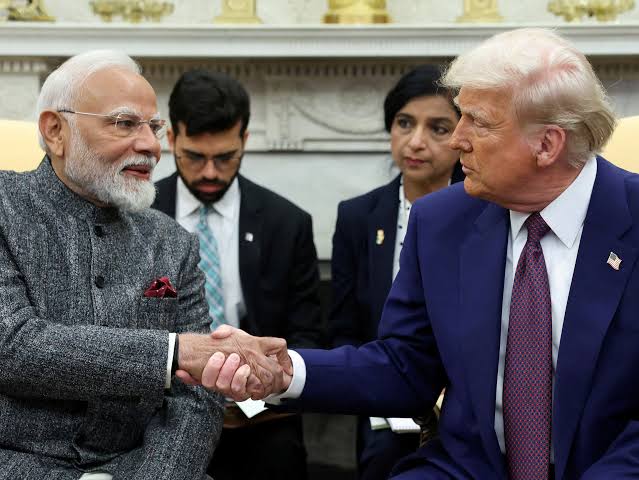
US President Donald Trump has said that a proposed bipartisan Russia sanctions bill may not be necessary, even as lawmakers continue to push legislation that could allow tariffs of up to 100% on countries purchasing significant quantities of Russian oil and natural gas. The proposal has attracted global attention because it could affect major Russian energy importers, including India.
The legislation is part of a broader effort by the United States to increase economic pressure on Russia over the ongoing war in Ukraine. Supporters believe stronger sanctions could reduce Russia’s energy revenues and increase pressure on Moscow. However, the proposal has also raised concerns about its potential impact on global trade, energy markets, and diplomatic relations with countries that continue importing Russian energy.
Trump Says Existing Powers May Be Enough
Responding to questions about the proposed legislation, Trump said he does not believe the bill is essential at this point. While acknowledging that members of Congress are advancing the proposal, he suggested that the US administration already has sufficient authority to take action against Russia without introducing additional legislation.
His comments indicate a preference for retaining executive flexibility rather than relying on new statutory powers. Although Trump did not rule out future action against Russia or countries trading with Moscow, he suggested that existing measures may already provide the necessary tools.
What the Proposed Bill Seeks to Achieve
The proposed sanctions bill aims to strengthen economic pressure on Russia by targeting countries that continue to purchase large volumes of Russian oil and natural gas.
If enacted, the legislation would give the US President the authority to impose tariffs of up to 100% on imports from countries identified as major buyers of Russian energy. The proposal also includes additional measures intended to tighten restrictions on Russia’s financial system, energy sector, and sanctions-evasion networks.
Supporters argue that limiting Russia’s energy income is one of the most effective ways to weaken its ability to finance the ongoing conflict in Ukraine. 
Why India Is in Focus
India has become one of the world’s largest buyers of Russian crude oil since Western sanctions reshaped global energy markets. Discounted Russian oil has helped Indian refiners secure affordable supplies while supporting the country’s growing energy needs.
Because of these imports, India is among the countries that could potentially be affected if the legislation is passed and the tariff provisions are enforced.
Experts note that any such move could have implications beyond the energy sector, potentially affecting wider trade relations between India and the United States at a time when both countries continue to explore stronger economic cooperation.
Strong Support in the US Senate
The sanctions proposal has received significant bipartisan support in the US Senate, with lawmakers arguing that stronger economic measures are necessary to reduce Russia’s financial resources.
Supporters contend that countries purchasing large quantities of Russian energy indirectly contribute to Moscow’s revenues and that increased economic pressure is needed to encourage a reduction in such trade.
However, the bill must still complete the legislative process before becoming law. It would also require approval from the House of Representatives before reaching the President for final consideration.
Possible Impact on India-US Trade
If the proposed legislation becomes law in its current form, it could introduce fresh uncertainty into trade relations between India and the United States.
Trade analysts believe that tariffs of up to 100% on imports from affected countries would represent a significant escalation in economic measures and could impact multiple industries beyond the energy sector.
At the same time, the legislation gives the US President discretion over whether and how such tariffs would ultimately be implemented. As a result, any future action would likely depend on diplomatic negotiations, geopolitical developments, and policy decisions by the US administration.
A Developing International Issue
The proposed sanctions legislation reflects continued efforts by the United States to increase economic pressure on Russia while encouraging countries to reduce their dependence on Russian energy.
India has consistently maintained that its oil imports are guided by national energy security requirements and economic considerations. As discussions over the bill continue in Washington, governments, businesses, and global energy markets will closely monitor whether the proposal becomes law and how it may influence international trade and geopolitical relations in the months ahead.