
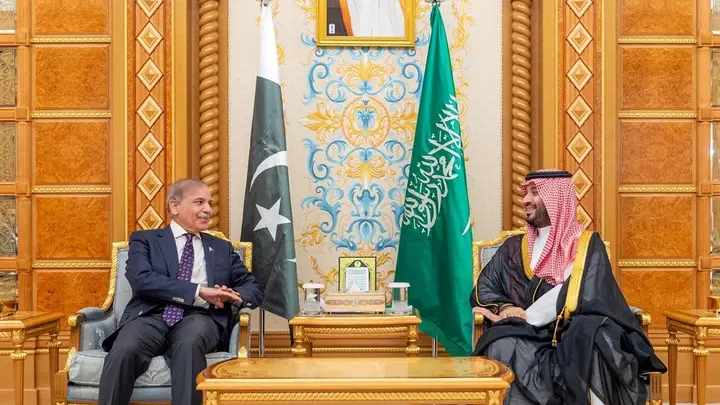
Pakistan has expressed strong support for Saudi Arabia following a series of Houthi attacks, with Prime Minister Shehbaz Sharif speaking by phone with Saudi Crown Prince Mohammed bin Salman and reaffirming Islamabad’s solidarity with the kingdom.
During the conversation, Sharif condemned attacks targeting Saudi civilian and economic infrastructure and warned that continued strikes could have wider consequences for regional stability, international trade and global energy supplies.
According to a statement from Pakistan’s Prime Minister’s Office, Sharif conveyed Pakistan’s “complete solidarity” with the Saudi leadership and people. He also stressed that attacks on Saudi territory could further increase instability across West Asia, a region already facing significant security and geopolitical tensions.
The telephone conversation came amid renewed attacks involving missiles and drones and growing concerns over the potential impact of the conflict on energy infrastructure. Saudi authorities have reported damage to buildings and injuries following recent attacks attributed to the Houthis.
Saudi oil infrastructure faces fresh pressure
The latest developments have also raised concerns about Saudi Arabia’s energy exports. The kingdom temporarily halted operations of its approximately 1,200-kilometre East-West oil pipeline after a drone attack launched from Iraq.
The pipeline is strategically important because it provides Saudi Arabia with an alternative route for transporting crude to the Red Sea. This allows oil exports to avoid the Strait of Hormuz, a critical global shipping corridor that has faced severe disruption amid the broader regional conflict.
Any prolonged disruption to Saudi energy infrastructure could have implications beyond the Middle East. Saudi Arabia is one of the world’s major oil producers, and interruptions to its production or export routes can contribute to uncertainty in global energy markets.
Sharif therefore warned that attacks on Saudi economic infrastructure could have consequences for the wider global economy, particularly if disruptions to energy supplies persist.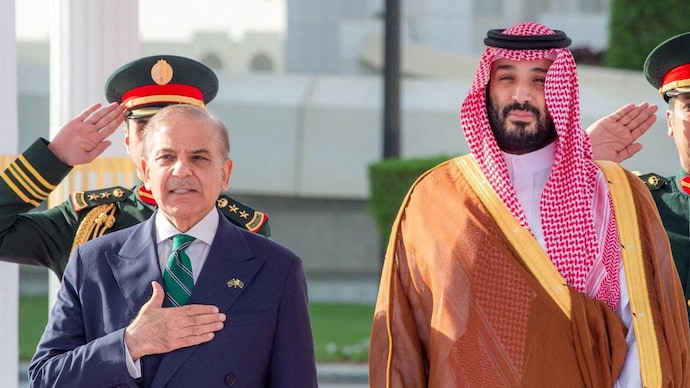
Saudi Arabia reports casualties and infrastructure damage
Saudi authorities have said a projectile fired by the Houthis injured two people and damaged several buildings, including a mosque. The incident formed part of a wider campaign involving missile and drone attacks against Saudi cities and energy-related facilities.
The attacks have increased concerns about the possibility of the Yemen conflict spreading further into neighbouring countries and affecting key economic and energy infrastructure.
Pakistan has sought to position itself as a supporter of regional stability amid the escalating tensions. Sharif said that he, Pakistan’s army chief Field Marshal Asim Munir and Deputy Prime Minister Ishaq Dar would continue efforts aimed at reducing tensions and encouraging peace in West Asia.
Crown Prince appreciates Pakistan’s peace efforts
During the telephone conversation, Crown Prince Mohammed bin Salman acknowledged Pakistan’s efforts to promote peace and stability in the region.
The two leaders also agreed to remain in close communication and expressed hope of meeting in person in the near future. Their discussion comes at a particularly significant time for Pakistan-Saudi relations, following the signing of a mutual-defence agreement involving Pakistan, Saudi Arabia and Türkiye on August 7.
The defence arrangement has assumed greater importance amid the latest attacks. Under the agreement, an armed attack against one of the participating countries would effectively be treated as an attack against all three, strengthening the security commitments among the partners.
Mutual-defence pact gains renewed attention
Pakistan’s Defence Minister Khawaja Asif had earlier said there should be no uncertainty about Islamabad’s commitment to the defence arrangement. He indicated that an unprovoked attack against a member, or the spread of fighting from Yemen into Saudi territory, could potentially trigger the pact’s collective-defence provisions.
His comments came after a series of Houthi missile and drone attacks reportedly injured at least 73 civilians in Saudi Arabia during the previous week.
The latest developments have therefore brought renewed attention to the practical implications of the trilateral security agreement. While Pakistan has emphasised diplomatic efforts to reduce tensions, the agreement creates a broader security framework involving three strategically important countries.
Wider regional and global implications
The latest confrontation comes against the backdrop of a wider deterioration in security conditions across West Asia. Continued attacks involving missiles and drones raise concerns about civilian safety, infrastructure security and the uninterrupted movement of energy supplies.
For Pakistan, the developments carry particular diplomatic and strategic significance because of its close relations with Saudi Arabia and its participation in the new mutual-defence framework.
Islamabad’s latest message indicates that it intends to support Saudi Arabia while simultaneously pursuing efforts to prevent the conflict from expanding further. Sharif’s conversation with the Saudi crown prince also highlights Pakistan’s stated interest in maintaining close coordination with Riyadh during a period of heightened regional uncertainty.
The potential impact on global energy markets remains a major concern. Any sustained disruption to Saudi oil infrastructure or alternative export routes could place additional pressure on international supplies and prices, particularly at a time when shipping through key regional waterways is already facing disruption.
With tensions continuing to develop, Pakistan and Saudi Arabia are expected to remain in close contact as both sides assess the security situation and the potential consequences of further attacks.