
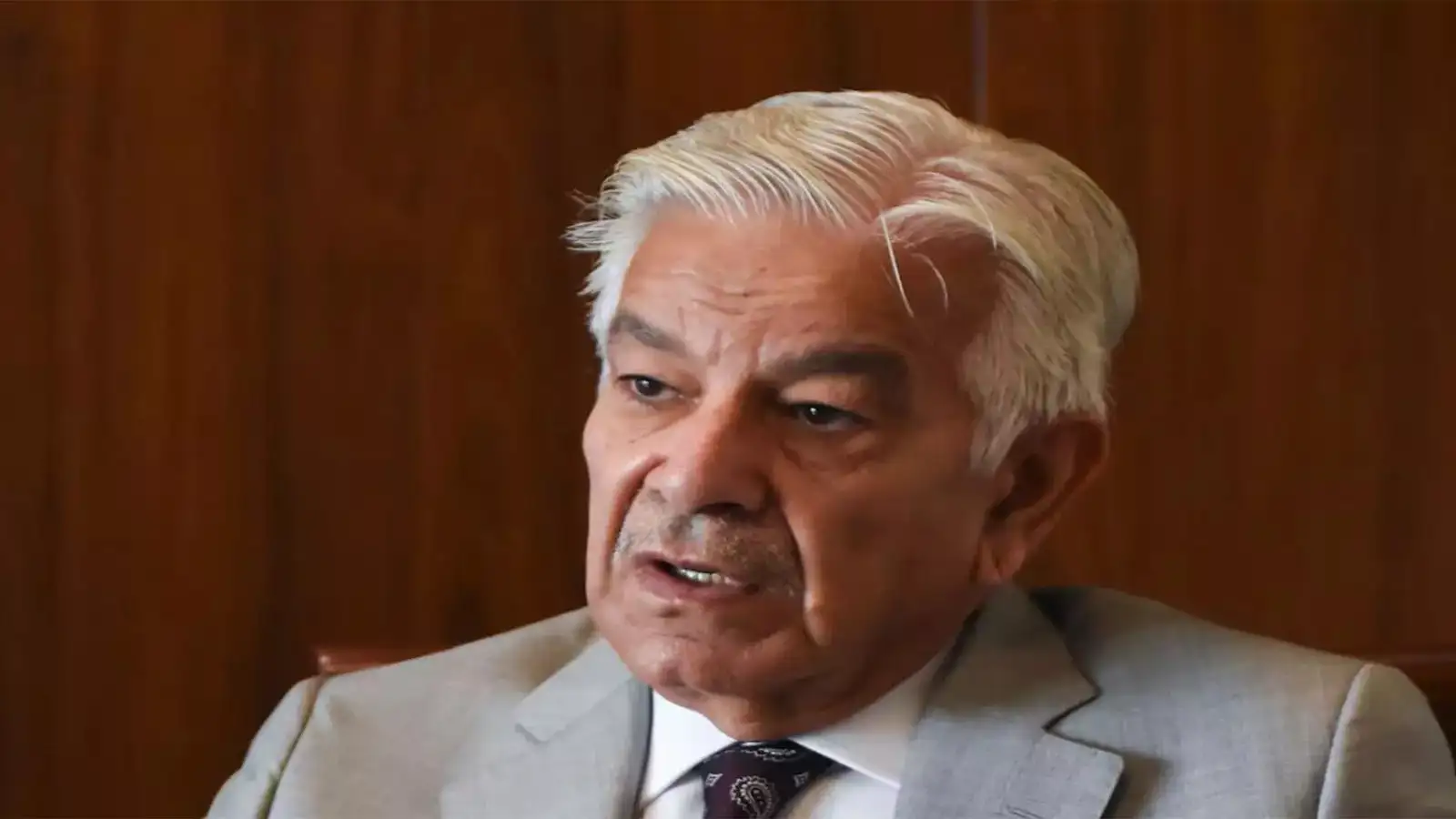
Pakistan Defence Minister Khawaja Asif has described India as an “enemy” while commenting on the latest unrest in Pakistan-occupied Kashmir (PoK), where protests have reportedly intensified amid allegations of excessive use of force by security personnel.
The remarks came as demonstrations in the region drew renewed attention to the political and security situation in PoK. The unrest has also prompted concerns from international human rights organisations over reports of deaths and injuries during clashes between protesters and authorities.
The situation has added another layer of tension to an already sensitive political environment in Pakistan, with questions being raised over the government’s handling of public demonstrations and the use of force to control unrest.
Khawaja Asif’s remarks on India
Speaking amid the ongoing developments, Pakistan’s Defence Minister Khawaja Asif referred to India as an enemy while discussing the country’s security environment. His comments reflect the longstanding tensions between the two nuclear-armed neighbours, which have remained at the centre of Pakistan’s foreign and defence policy for decades.
India and Pakistan have historically maintained strained relations, particularly over the Kashmir dispute. Both countries claim the wider Kashmir region, while each administers separate parts of it. The issue has repeatedly contributed to military confrontations, diplomatic disputes and political tensions between New Delhi and Islamabad.
Against this backdrop, references to India as an “enemy” carry particular political significance, especially when made during a period of internal unrest and heightened security concerns.
Protests in Pakistan-occupied Kashmir
The latest protests in PoK have reportedly been driven by a combination of public grievances and demands concerning governance, economic conditions and political rights. Demonstrations have placed pressure on authorities and highlighted growing dissatisfaction among sections of the population.
As the protests intensified, clashes were reported between demonstrators and security forces. The situation has raised concerns about the government’s response and the methods used by authorities to maintain public order.
Reports of casualties have further increased scrutiny of the security response. The deaths and injuries allegedly linked to the unrest have triggered calls for accountability and an independent examination of the circumstances surrounding the use of force.
The protests have also renewed debate over the relationship between the region’s residents and the authorities responsible for its administration. For many observers, the developments point to broader questions about political representation, civil liberties and the right to peaceful protest. 
Amnesty International raises alarm
Human rights organisation Amnesty International has expressed concern over the reported use of lethal force during the protests. The organisation’s response has placed the developments under an international human rights lens, particularly regarding the protection of civilians and the right to peaceful assembly.
The allegations surrounding the use of force have raised questions about whether security personnel followed the principles of necessity and proportionality while responding to demonstrations.
Human rights groups have consistently maintained that authorities must exercise restraint when dealing with peaceful protests. Where violence occurs, security forces are expected to respond in a manner that is proportionate to the threat and consistent with international human rights standards.
The reports of people being killed or injured have therefore intensified demands for a transparent investigation. Human rights advocates have called for authorities to establish the facts surrounding the incidents and ensure that any individuals responsible for unlawful actions are held accountable.
Rising political pressure on Pakistan
The unrest presents a challenge for Pakistan’s government, which must balance concerns over public order with demands for political and civil rights.
The authorities face pressure to address the grievances that have fuelled the demonstrations while preventing further escalation. A heavy-handed response could potentially deepen public resentment, while a failure to maintain order could create additional instability.
The situation also has broader implications for Pakistan’s political landscape. Protests in regions administered by Pakistan have the potential to attract domestic and international attention because of the wider Kashmir dispute and the long-standing rivalry between India and Pakistan.
The government’s handling of the crisis is therefore being closely watched, both within the country and beyond its borders.
Kashmir remains at the centre of India-Pakistan tensions
Kashmir has remained one of the most contentious issues between India and Pakistan since the partition of British India in 1947. The two countries have fought multiple wars and military conflicts over the disputed territory, while political and diplomatic tensions have continued for decades.
The Kashmir issue has also shaped national security policies and public discourse in both countries. Any major development in either the Indian-administered or Pakistan-administered parts of the region can quickly become a matter of wider geopolitical significance.
Khawaja Asif’s remarks about India come against this long-running backdrop. While his comments were made in the context of Pakistan’s security concerns, they also underline the extent to which India remains central to political and strategic discussions in Islamabad.
Questions over use of force
The reports of deaths and injuries during the PoK protests have brought renewed attention to the responsibilities of security forces during civil unrest.
International human rights standards generally recognise the right to peaceful assembly and expression. Authorities are expected to protect these rights while taking appropriate measures to prevent violence and protect public safety.
The use of lethal force is subject to strict legal and operational requirements. Human rights organisations have therefore called for investigations into incidents where protesters or civilians were reportedly killed or seriously injured.
The outcome of any credible investigation could play an important role in determining whether the security response was justified and whether any violations occurred.
A wider test for governance
The latest developments in PoK represent more than a law-and-order challenge for Pakistan. They also raise broader questions about governance, accountability and public trust.
When citizens take to the streets over political or economic grievances, governments face the difficult task of responding without allowing tensions to spiral into violence. Effective governance requires authorities to address underlying concerns while ensuring that security measures remain lawful and proportionate.
For Pakistan, the protests come at a time when the country is already dealing with a range of political, economic and security pressures. The government’s response could influence public confidence and determine whether the unrest is contained or develops into a broader movement.
The international scrutiny surrounding the alleged use of lethal force adds further pressure on authorities to provide clarity about what happened during the clashes.
What happens next
The immediate priority for authorities will be to restore calm while addressing the concerns raised by protesters. A sustainable resolution is likely to depend on meaningful political engagement and a credible response to allegations of excessive force.
The situation will also remain closely watched because of the broader geopolitical context. Any escalation in PoK could have consequences beyond the region, particularly given the historically tense relationship between India and Pakistan.
As calls for accountability grow, attention is likely to remain focused on the government’s handling of the protests, the circumstances surrounding reported casualties and the steps taken to address the grievances of residents.
The developments have once again highlighted the complex intersection of domestic politics, human rights and regional security in South Asia. Khawaja Asif’s comments about India, alongside the unrest in PoK and international concerns over the reported use of force, have placed Pakistan’s approach to both internal dissent and regional tensions under renewed scrutiny.