
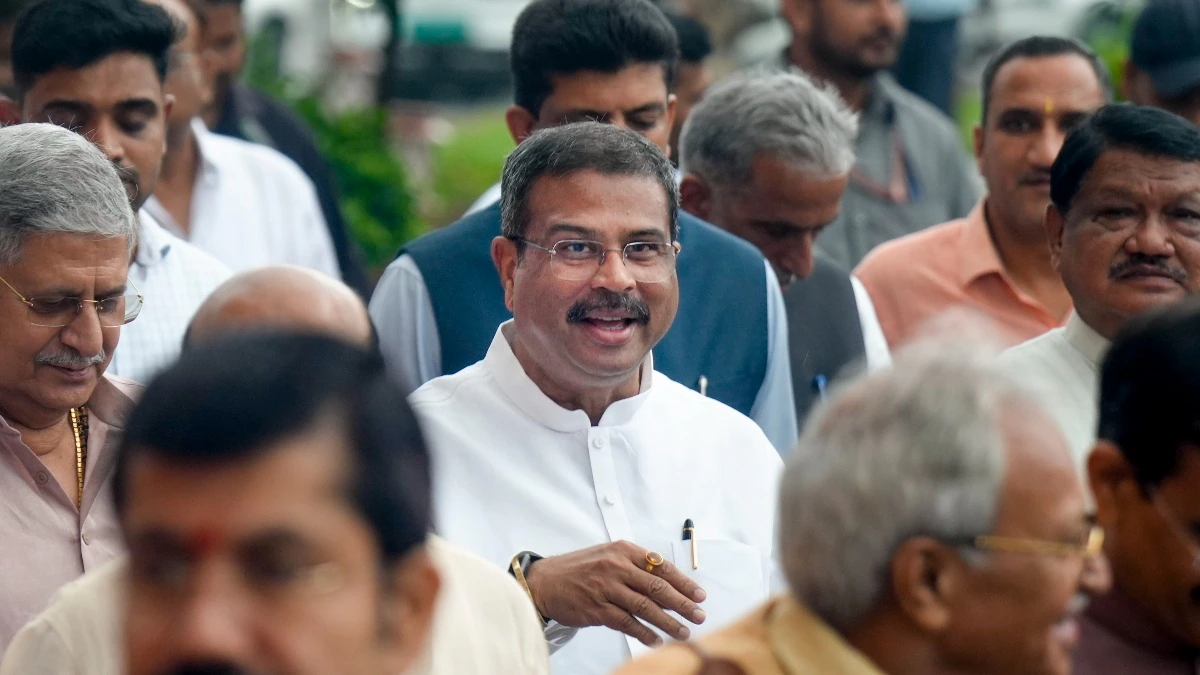
Former Union Education Minister Dharmendra Pradhan received a strong show of support from Bharatiya Janata Party (BJP) and National Democratic Alliance (NDA) leaders at Parliament, days after stepping down from the education ministry amid intense political pressure and protests linked to the NEET-UG examination controversy.
Pradhan made his first public appearance at the Parliament complex after resigning from the key cabinet portfolio. As he arrived for the ongoing Monsoon Session, several BJP and NDA MPs gathered around him and raised slogans in his support, including “Dharmendra Pradhan zindabad”. The reception reflected the continued backing he enjoys within the ruling alliance despite the political controversy surrounding the conduct of the medical entrance examination.
The former minister’s resignation came at a politically sensitive moment, with the NEET-UG paper leak controversy becoming a major issue of public and political debate. Questions surrounding examination irregularities, the future of affected students and demands for accountability had intensified pressure on the government.
Pradhan’s departure from the education ministry was therefore closely watched, particularly because the controversy had triggered widespread concern among students and their families. Opposition parties had repeatedly criticised the government’s handling of the issue and demanded greater accountability from those responsible for the examination system.
Despite the criticism, BJP leaders have sought to emphasise Pradhan’s wider contribution to the education sector during his tenure. Party leaders have highlighted his role in advancing the National Education Policy (NEP) 2020 and pursuing structural changes in India’s education system.
The welcome at Parliament appeared to underline the ruling party’s continued confidence in Pradhan’s political standing. The slogans raised by fellow MPs also indicated that his resignation has not resulted in any visible loss of support within the BJP’s parliamentary ranks.
In his resignation communication, Pradhan maintained that his decision was taken with the interests of students and their future in mind. He referred to the need to ensure that students remain focused on their education and careers and are not caught up in prolonged legal and political complications arising from the ongoing situation.
The resignation also came against the backdrop of protests and public anger surrounding the NEET-UG controversy. The issue has become particularly sensitive because of the large number of students affected by examination-related disputes and concerns over the integrity and credibility of competitive examinations.
Following Pradhan’s resignation, the education ministry was handed additional political leadership under Union minister Pralhad Joshi, who already holds other major portfolios in the central government. The change marked a significant shift in the management of the education ministry at a time when examination reforms and student concerns remain at the centre of national attention.
BJP leaders praise Pradhan’s tenure
Several senior BJP leaders publicly defended Pradhan following his resignation, pointing to his work in the education sector and his contribution to the government’s broader reform agenda.
Supporters within the BJP have credited him with helping advance the implementation of NEP 2020, which seeks to bring significant changes to India’s education structure, curriculum, higher education institutions and examination framework. The policy has been presented by the government as a major step towards modernising the country’s education system and improving access, flexibility and multidisciplinary learning.
BJP leaders also described Pradhan’s decision to step down as an example of responsibility in public life. Their statements suggested that the resignation should be viewed in the context of accountability rather than as an admission of personal wrongdoing.
The political messaging from the BJP was clear: while the government has faced criticism over the NEET-UG controversy, the party continues to regard Pradhan as an important senior leader whose contribution to education reforms should not be overlooked.
Union Home Minister Amit Shah was among those who praised Pradhan’s work, particularly his role in implementing reforms in the education sector. Other BJP leaders also expressed appreciation for his tenure and described his contribution as significant to the government’s long-term vision for education.
Assam Chief Minister Himanta Biswa Sarma also praised Pradhan’s efforts, pointing to his contribution to strengthening the education system and promoting India’s cultural identity. BJP president Nitin Nabin similarly described the resignation as reflecting a sense of responsibility and commitment to public service.
The support from senior leaders came as the opposition continued to question the circumstances surrounding Pradhan’s departure and the government’s handling of the examination controversy. 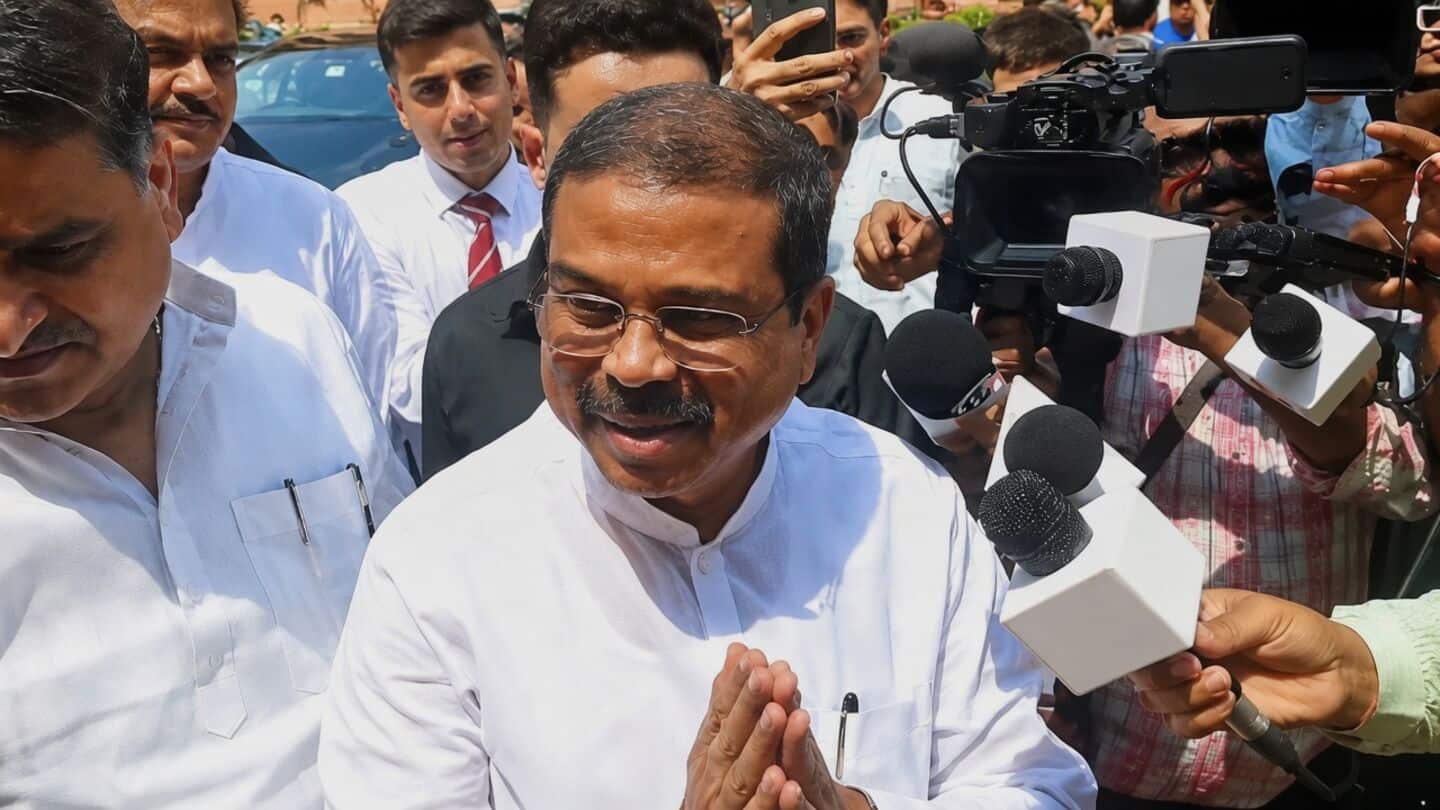
Debate over reasons behind resignation
While BJP leaders have maintained that Pradhan resigned voluntarily and took the decision independently, the political circumstances surrounding his departure have fuelled speculation.
BJP MP Nishikant Dubey rejected suggestions that Pradhan was forced to resign. He described Pradhan as a senior party leader who had risen through the ranks of the Akhil Bharatiya Vidyarthi Parishad (ABVP) and had worked extensively in the education sector.
According to Dubey, Pradhan’s political and administrative record included major initiatives involving education policy, universities and examination reforms. He argued that the former minister had made his decision independently and that his resignation should not be interpreted as a consequence of pressure within the government.
However, the timing of the resignation has led to a different political interpretation. The controversy surrounding NEET-UG had generated sustained public attention, with students and protest groups demanding answers over alleged irregularities and calling for stronger action.
The issue also carried wider political implications because young voters and students represent an important demographic. The government’s handling of the controversy has therefore been closely watched not only from an administrative perspective but also in terms of its possible political impact.
The resignation came after prolonged discussions within the government over the possible consequences of the protests and the growing public debate surrounding the examination system. While there has been no official confirmation that these considerations directly determined the decision, the timing has contributed to continuing speculation.
NEET-UG controversy remains a major political issue
The controversy over the National Eligibility cum Entrance Test for undergraduate medical admissions has emerged as one of the most prominent education-related political issues in recent years.
The examination is taken by a large number of students seeking admission to medical colleges across the country. Any allegation of paper leaks, irregularities or unfair practices can therefore have significant consequences for students who spend years preparing for the highly competitive test.
For many candidates, the examination represents a crucial step towards a career in medicine. Concerns about the integrity of the process can affect not only individual students but also public confidence in the country’s wider competitive examination system.
The controversy has consequently triggered demands for greater transparency, stronger safeguards and institutional accountability. Opposition parties have used the issue to challenge the government, while student groups and families have continued to seek clarity over the examination process.
The government, meanwhile, has faced the difficult task of balancing the need to protect the credibility of the examination system with the requirement to ensure that students are not unfairly penalised because of alleged irregularities.
A politically significant return to Parliament
Against this backdrop, Pradhan’s arrival at Parliament and the enthusiastic reception from BJP and NDA MPs carried considerable political significance.
The slogans raised by the MPs served as a visible demonstration of support for a leader who has recently left one of the government’s most important portfolios. The reception also indicated that the BJP leadership intends to maintain Pradhan’s political relevance despite his exit from the education ministry.
For the former minister, the Parliament appearance marked a return to the political arena after a period dominated by criticism and calls for accountability. The public welcome from fellow lawmakers provided a contrasting image to the protests and opposition attacks that had surrounded his tenure.
The episode also highlighted the political divide over the NEET-UG controversy. While opposition parties have focused on accountability and alleged failures in the examination system, the BJP has sought to underline Pradhan’s broader record in government and his contribution to education reforms.
As Parliament continues to debate issues related to education, examination reforms and student welfare, the controversy surrounding NEET-UG is likely to remain an important part of the political discourse.
For now, the BJP’s public show of support for Pradhan suggests that his resignation has not weakened his standing within the ruling alliance. At the same time, questions surrounding the examination controversy and the government’s response remain central to the broader debate over accountability, transparency and the future of India’s competitive examination system.