
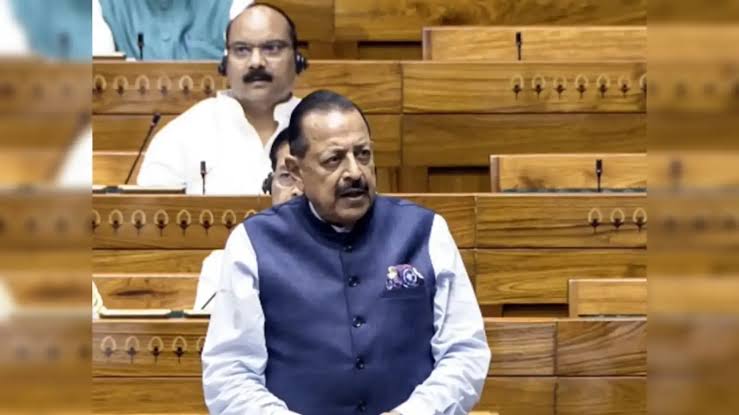
The government on Monday introduced a proposed legislation in the Lok Sabha aimed at strengthening action against question paper leaks and other irregularities linked to competitive and public examinations, even as Opposition members raised protests in the House.
The Bill seeks to establish stricter legal provisions to deter organised attempts to compromise the integrity of examinations conducted for recruitment and other public purposes. The move comes amid growing concern over paper leaks, cheating networks and other forms of malpractice that have affected the credibility of examinations and caused uncertainty for thousands of candidates.
The legislation is expected to provide a stronger framework for dealing with individuals and organised groups accused of facilitating examination-related fraud. Such activities can include the unauthorised disclosure of question papers, assistance in cheating, manipulation of examination processes and other offences intended to provide unfair advantages to candidates.
The introduction of the Bill took place amid disruptions and protests by Opposition members in the Lok Sabha. The political confrontation added to the tension surrounding the proceedings, with the Opposition raising various concerns while the government moved ahead with its legislative agenda.
The issue of examination paper leaks has emerged as a major concern across the country in recent years. Competitive examinations are considered an important pathway to government employment and higher education, making the integrity of the examination system particularly significant. Any leak or manipulation can affect the prospects of genuine candidates who spend months or years preparing for such tests.
For students and job aspirants, the cancellation or postponement of an examination following a leak can result in significant financial and emotional difficulties. Candidates often travel long distances to examination centres, spend considerable amounts on coaching and study materials, and dedicate substantial time to preparation. When an examination is compromised, these efforts can be disrupted, while uncertainty over the next examination date can further increase anxiety among aspirants.
The proposed legislation is therefore being viewed as part of efforts to create a stronger deterrent against organised examination malpractice. By introducing specific legal provisions and tougher penalties, the government aims to hold those responsible for compromising examinations accountable.
The issue has also become politically sensitive, with Opposition parties repeatedly raising concerns over alleged irregularities in major examinations. They have demanded greater accountability and stronger safeguards to ensure that examinations are conducted fairly and transparently.
The government, meanwhile, has maintained that strict action is necessary to protect the interests of honest candidates and preserve public confidence in recruitment and examination systems. The proposed law is expected to focus on preventing organised malpractice rather than penalising students who may have been affected by examination irregularities.
The debate over paper leaks has highlighted the broader challenges involved in conducting large-scale examinations in a country with millions of candidates competing for a limited number of opportunities. The increasing use of digital technology has created new possibilities for secure examination management, but it has also introduced additional risks related to data security, cybercrime and unauthorised access.
Experts have often stressed that legal action must be accompanied by stronger administrative and technological safeguards. Secure printing and transportation of question papers, controlled access to examination materials, improved monitoring systems and timely investigation of suspected leaks are among the measures that can help reduce the risk of malpractice.
The effectiveness of the proposed legislation will ultimately depend on how rigorously its provisions are implemented. A strong legal framework can act as a deterrent, but enforcement agencies will also need to investigate cases quickly and ensure that those responsible are brought to justice.
At the same time, examination authorities will need to strengthen preventive mechanisms to ensure that question papers remain secure from the time they are prepared until the examination is completed. Transparency in the handling of complaints and allegations will also be important in maintaining the confidence of candidates.
The introduction of the Bill in the Lok Sabha marks another step in the government’s efforts to address the problem of examination malpractice through legal measures. With paper leaks continuing to generate public concern, the proposed legislation could become an important part of the wider effort to protect the credibility of examinations and ensure a level playing field for students and job aspirants.
As the legislative process moves forward, attention is likely to remain focused on the details of the proposed penalties, the scope of offences covered and the mechanisms that will be used to investigate and prosecute violations. The broader objective remains to ensure that examinations are conducted in a fair, secure and transparent environment where candidates are judged on merit rather than being disadvantaged by organised malpractice.