
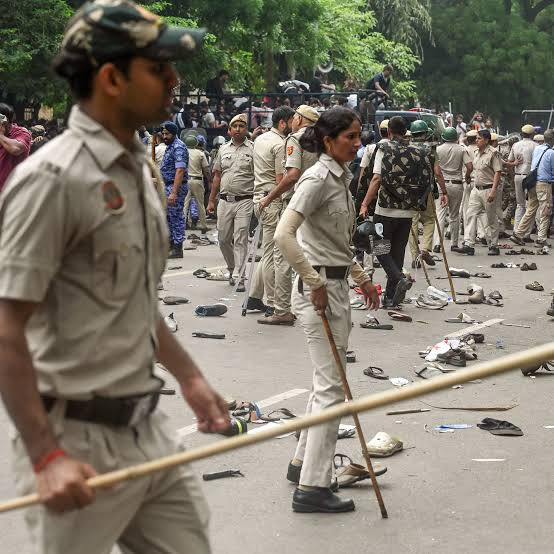
The Bharatiya Janata Party (BJP) has condemned alleged incidents of abuse involving journalists during protests over the NEET examination controversy, describing attacks on media professionals as unacceptable. The party has also questioned what it called “selective outrage” over incidents involving journalists, arguing that press freedom must be defended consistently, regardless of political affiliations.
The controversy comes amid widespread protests over allegations of irregularities surrounding the National Eligibility cum Entrance Test (NEET). The issue has triggered anger among students, parents and political groups, with protesters demanding accountability and stronger safeguards to protect the integrity of competitive examinations.
BJP leader Amit Malviya criticised the alleged mistreatment of journalists covering the demonstrations. He said journalists should be able to perform their professional duties without facing intimidation, harassment or abuse.
He also expressed concern over alleged verbal and sexual abuse directed towards women journalists during the protests. Such behaviour, he argued, cannot be justified under any circumstances, irrespective of the political context or the identity of those involved.
The BJP has further argued that attacks on journalists should receive the same level of condemnation regardless of the journalist’s political views or the perceived ideological position of the media organisation they represent.
The comments have added a new dimension to the ongoing debate surrounding the NEET protests. While students and political parties have focused largely on examination irregularities and the demand for accountability, concerns over the treatment of journalists have now brought the issue of media safety into the spotlight.
Journalists frequently work in difficult conditions while covering demonstrations, particularly when large gatherings become tense or confrontational. Reporters and camera crews may have to navigate crowded environments while attempting to gather information and document events.
The BJP’s remarks have therefore renewed calls for a safe working environment for journalists covering protests and other sensitive public events.
The NEET controversy itself has become one of the most significant education-related issues in the country. Millions of students appear for the examination each year in the hope of securing admission to medical colleges. As a result, allegations of malpractice or irregularities can have serious consequences for students who spend years preparing for the examination.
Protesters have demanded greater transparency and accountability from the authorities responsible for conducting the examination. They have also called for stronger systems to prevent paper leaks and other forms of malpractice.
The controversy has generated intense political debate, with opposition parties questioning the government’s handling of the matter and demanding corrective action. The government, meanwhile, has faced pressure to address concerns raised by students and restore confidence in the examination process.
The issue of journalist safety has emerged alongside these broader concerns. The BJP has argued that criticism of attacks against media professionals should not depend on political considerations.
The party’s position reflects a larger debate about press freedom and the treatment of journalists in India. Political groups have frequently accused one another of taking inconsistent positions on media freedom, while journalists have raised concerns about harassment and intimidation during sensitive assignments.
The latest controversy highlights the importance of allowing journalists to work independently, particularly during major public protests. A free and independent media plays a crucial role in informing citizens, documenting events and holding institutions accountable.
As the NEET controversy continues, the focus is likely to remain on examination reforms and the need to ensure a fair and transparent process for students. At the same time, the BJP’s criticism has placed journalist safety and press freedom firmly within the wider political debate.
The developments underline the intersection of several important public concerns, including education, examination integrity, political accountability and media freedom. While students continue to seek answers over the examination controversy, the debate over the treatment of journalists has added another layer to an already contentious national issue.