
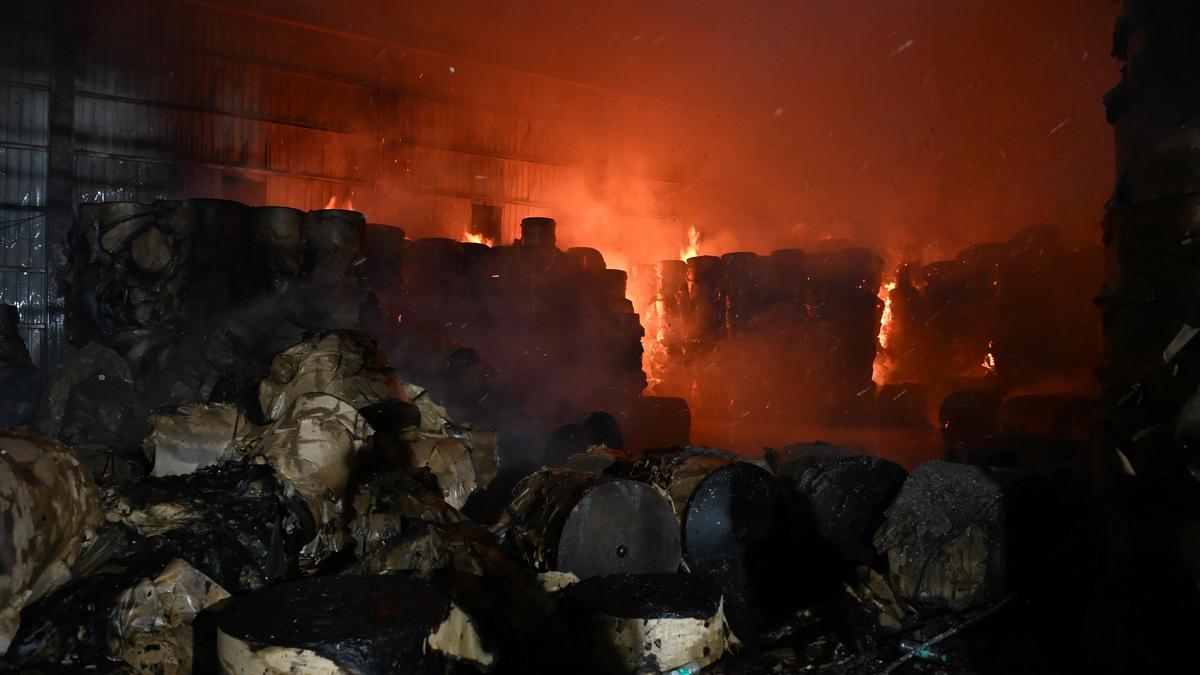
A major fire broke out at a coconut oil mill in the Beypore area of Kozhikode district in Kerala, leaving the industrial facility completely gutted and causing extensive damage to machinery, infrastructure and stored materials. Fire and Rescue Services personnel worked for several hours to contain the blaze, which was fuelled by large quantities of highly flammable coconut oil and oil cake stored inside the premises.
The fire reportedly broke out at the Renuka Oil Mill in the West Mahe area near Beypore at around 10.30 p.m. on Sunday. The flames are believed to have started in or around the section where coconut oil production and related processing activities were carried out. The intensity of the fire quickly increased, making it difficult for emergency personnel to bring the situation under control.
According to officials involved in the firefighting operation, the presence of substantial quantities of coconut oil, copra and oil cake inside the facility significantly contributed to the rapid spread of the flames. The materials acted as fuel, allowing the fire to intensify and making it challenging for firefighters to enter the affected sections and prevent the blaze from spreading further.
The emergency response continued through the night and into Monday morning, with multiple fire and rescue units deployed to the site. Firefighters from Kozhikode district, along with a unit from neighbouring Malappuram district, were involved in the operation. The scale of the blaze and the large size of the industrial premises required a sustained firefighting effort.
Officials said the fire took more than eight hours to bring under control. Even after the main flames were contained, firefighters continued cooling operations to ensure that hidden pockets of fire did not reignite, particularly in areas covered by collapsed roofing and debris.
The fire caused extensive destruction inside the mill. The factory’s major machinery was reportedly completely damaged, while the asbestos roofing sheets were severely affected by the intense heat and subsequently collapsed in several sections. The destruction of production equipment and the damage to the building are expected to result in significant financial losses for the owners.
Preliminary estimates from the mill owners have placed the total property loss at more than ₹7 crore. The final extent of the damage, however, is expected to be established only after a detailed assessment of the premises, machinery, raw materials and other assets affected by the fire.
One of the factors that helped prevent a potentially more serious tragedy was the absence of workers from the factory when the fire broke out. As the incident occurred on a Sunday night, regular production staff were reportedly not present at the facility. A security guard was on the premises and alerted others after noticing the fire, following which the authorities were informed and emergency services were mobilised.
The immediate priority for the Fire and Rescue Services was to prevent the flames from spreading beyond the main production and storage areas. The large quantity of combustible materials inside the mill posed an additional challenge, requiring firefighters to approach the affected sections carefully while dealing with the risk of renewed flames.
The precise cause of the fire has not yet been officially established. Officials are examining several possibilities as part of the preliminary assessment. One potential explanation being considered is spontaneous combustion involving stored oil cake. Such material can generate heat through chemical processes under certain conditions, potentially leading to ignition. A short circuit is another possibility being examined by authorities.
However, officials have stressed that the exact cause can be determined only after a thorough inspection of the site. Investigators are expected to examine the electrical systems, machinery, storage arrangements and the location where the fire is believed to have originated. A detailed assessment will also help determine whether any safety-related factors contributed to the incident.
The incident has once again highlighted the fire risks associated with industrial facilities that store large quantities of combustible agricultural products and processed oils. Coconut oil mills typically handle materials such as copra, oil cake and finished oil, all of which can present significant fire hazards if exposed to heat, electrical faults or other ignition sources.
The scale of the destruction at the Kozhikode facility also underlines the importance of effective fire-prevention systems, regular electrical inspections, safe storage practices and emergency preparedness in industrial units. While the fire did not result in reported casualties, the extensive damage to the mill has raised concerns about the economic impact on the owners and the possible disruption to business operations.
As firefighters continued cooling and monitoring the premises, authorities focused on ensuring that the remaining debris was made safe and that no further flare-ups occurred. A comprehensive investigation into the incident is expected to establish the cause of the blaze and provide a clearer picture of how the fire spread so rapidly through the facility.
The Kozhikode fire is among the latest industrial fire incidents to draw attention to the challenges faced by emergency responders when dealing with large-scale facilities containing flammable materials. The prolonged firefighting operation demonstrated the difficulties involved in controlling fires in oil-processing and storage environments, where combustible stocks can continue to sustain flames even after the initial fire has been brought under control.
With the mill reportedly suffering near-total destruction, the owners now face the task of assessing the financial consequences and determining the future of the business. The incident has also prompted renewed attention to safety measures that can help prevent similar fires in coconut oil production and storage facilities across Kerala.