
Mumbai-based model Rhiya Yadav Ahir has approached the Maharashtra Police cyber cell, alleging that she has faced sustained online harassment, bullying, abuse, slut-shaming and defamatory content following her intervention during a protest in the city last week.
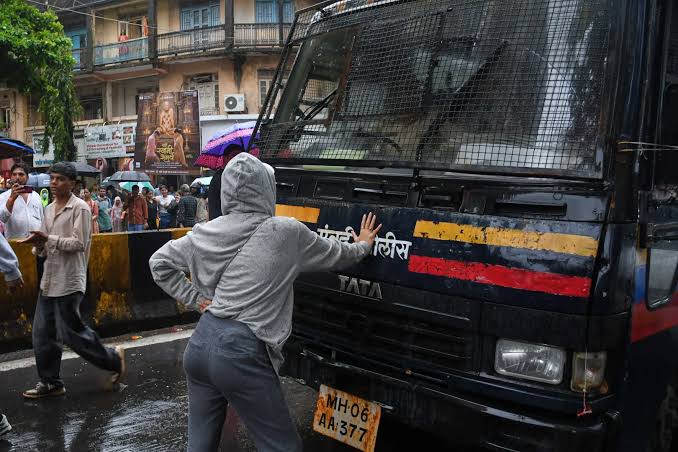
The 27-year-old model, who became widely known on social media after a photograph showed her standing in front of a police van carrying detained protesters at Shivaji Park on July 22, said she submitted an online complaint to the police on Saturday. She is expected to meet a senior cyber cell officer and has sought action against those allegedly targeting her through social media platforms.
According to Ahir, the online abuse began shortly after the protest incident and intensified as images and videos of the confrontation circulated widely online. She said that what initially appeared to be criticism of her actions had developed into a sustained campaign involving personal attacks, abusive comments and allegations about her professional life.
“There has been consistent harassment, bullying, abuse and slut-shaming since the July 22 incident,” Ahir said, expressing concern that the online targeting could potentially escalate into a more serious threat. She also said she was worried about the impact of the harassment on her family.
The model said she decided to approach the police because she believed that speaking out against what she considered wrong during the protest should not prevent her from defending herself against online abuse.
Ahir’s intervention at the protest had drawn considerable attention after she was photographed blocking a police vehicle that was carrying protesters who had been detained. The image subsequently spread across social media, where she was portrayed by some users as a symbol of resistance.
However, the increased visibility also brought a wave of criticism and hostile commentary. Ahir alleged that some social media users and content creators had circulated misleading claims about her and her work, including allegations that she was involved in producing or selling pornographic material through her Instagram account.
She strongly denied the claims, saying that the allegations were designed to create a false narrative about her. According to her, some creators with significant social media followings had posted videos featuring blurred photographs of her in swimwear and falsely suggested that she offered explicit content to paying subscribers.
Ahir said these claims were untrue and maintained that her social media account was not connected to any exclusive subscription-based service from which she had earned money. She argued that the allegations were being deliberately amplified to damage her reputation following her appearance at the protest.
The model also expressed concern that the situation could worsen if individuals involved in the alleged campaign resorted to manipulated or morphed images. She said she wanted authorities to intervene before the online harassment developed into a larger problem.
Her complaint has also raised broader concerns about the abuse faced by women in the public eye, particularly when they become the focus of intense online attention. Ahir said women should not be subjected to character attacks because of their clothing, profession or decision to participate in a public event.
Defending her profession, she said modelling and wearing outfits selected for professional assignments were part of her work and should not be used to question her personal beliefs or patriotism. She argued that a person’s professional appearance should not determine whether their views or civic participation are taken seriously.
Ahir also appealed to other people facing similar online abuse to report such incidents rather than remain silent. She said that individuals who participate in public causes or express their opinions should have the confidence to seek legal protection when online attacks cross the line into harassment or defamation.
Her father, Rajkumar Yadav, said the family had expected some degree of backlash after his daughter’s intervention during the protest. However, he said the scale of the alleged harassment had gone beyond what could be considered ordinary criticism.
He maintained that while the family was not intimidated by the situation, the targeting of his daughter was unacceptable and should not be normalised.
The police have acknowledged receiving the complaint and said the allegations were being examined. Deputy Commissioner of Police (Zone X) Datta Nalawade said the complaint was under scrutiny and that an FIR had not yet been registered in the matter.
The case highlights the growing difficulties faced by individuals who suddenly become viral figures on social media. A single photograph or video can rapidly attract widespread attention, but the resulting online exposure can also lead to abuse, misinformation and reputational attacks.
For Ahir, the dispute is now moving beyond the original protest incident. While the photograph that brought her into the spotlight was linked to her decision to intervene during a public demonstration, her complaint focuses on what she describes as a sustained campaign of cyberbullying and personal attacks that followed.
The police’s examination of her complaint will determine whether the allegations disclose offences warranting further investigation and registration of a formal case. Until then, the matter remains under scrutiny, with Ahir seeking action against those she alleges have used social media to harass and defame her.
The incident also underlines the challenges of maintaining accountability in the digital space, where misleading claims and personal attacks can spread rapidly across platforms. As social media increasingly shapes public discourse, the case has renewed attention on the need to distinguish legitimate criticism from targeted harassment and defamatory campaigns.