
Assam’s flood crisis has intensified, with the death toll rising to 47 and Chief Minister Himanta Biswa Sarma warning that around 70 to 80 people may still be missing. The situation remains particularly serious in parts of Upper Assam, where widespread flooding, swollen rivers and relentless rescue operations have disrupted normal life and affected hundreds of thousands of residents.
The latest fatalities were reported from Sivasagar and Charaideo districts, taking the overall number of deaths in the ongoing flood disaster to 47. According to disaster management authorities, four of the latest deaths occurred in Nazira in Sivasagar district, while two were reported from Mohmara in Charaideo.
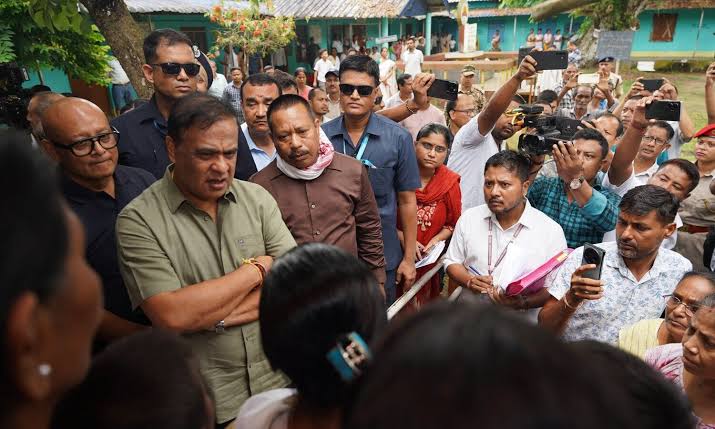
During a visit to the flood-affected areas, Chief Minister Sarma said the number of missing people could be significantly higher than the figures officially recorded by the state disaster management authorities. He indicated that nearly 70 people were believed to be missing in Sivasagar alone, while the total number across the affected areas could be at least 80.
The chief minister cautioned that the death toll could increase in the coming days as rescue teams continue to search for missing residents and assess the full extent of the devastation. The discrepancy between the official disaster management data and the figures cited by the chief minister also underlines the challenges authorities are facing in establishing an accurate account of casualties amid difficult flood conditions.
The Assam State Disaster Management Authority reported that more than 721,000 people across 37 revenue circles in 13 districts have been affected by the floods. Thousands of displaced residents have been moved to relief camps, with more than 24,000 people currently taking shelter in designated facilities.
The disaster has also caused extensive damage to agriculture and livestock. More than 25,000 hectares of agricultural land have been submerged, threatening crops and the livelihoods of farming communities. Around 3.71 lakh domestic animals have reportedly been affected, with several animals believed to have been swept away by rapidly moving floodwaters.
The physical damage to homes and infrastructure has added to the scale of the crisis. More than 400 concrete structures have been damaged, while nearly 1,850 houses have suffered partial damage. With several areas still experiencing severe flooding, authorities are continuing to assess damage and determine the requirements for rehabilitation and relief.
Rescue Operations Continue Across Flood-Hit Districts
Large-scale rescue and relief operations are underway in several parts of Assam. The Indian Army has been conducting operations under Operation Jal Rahat, rescuing more than 1,000 people stranded by the floods. Many of those rescued have also received medical assistance, while essential relief materials have been delivered to communities cut off or severely affected by rising waters.
Army teams have been operating in Sivasagar, Charaideo and Jorhat, where difficult flood conditions have created major challenges for rescue personnel. Apart from evacuating residents, relief teams are also working to restore critical connectivity and assist with the revival of essential services.
The rescue effort involves multiple agencies, including the National Disaster Response Force, State Disaster Response Force, Assam Rifles and Fire and Emergency Services. Security forces have so far evacuated more than 24,000 people from vulnerable areas, while helicopters have also been deployed to support rescue and evacuation efforts in locations that are difficult to reach by road.
The ongoing operations are focused not only on saving people trapped by floodwaters but also on providing emergency medical care, food and other essential supplies to displaced families. 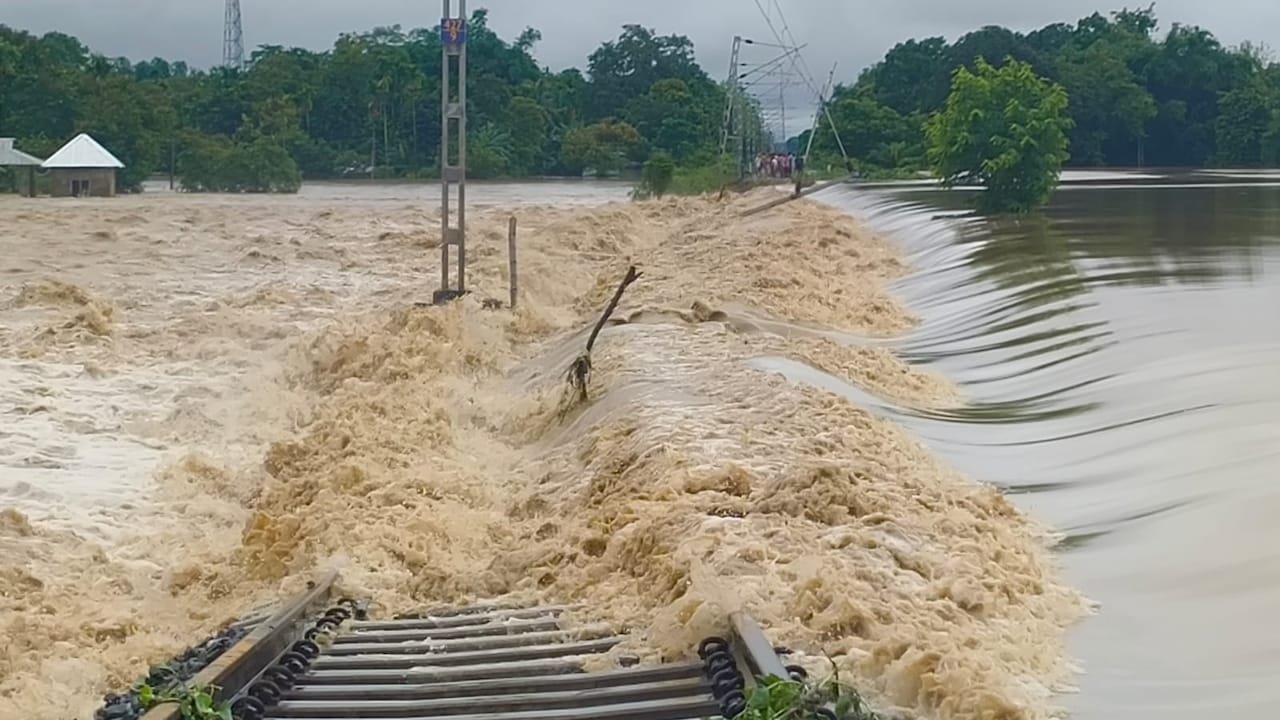
Heavy Rainfall in Assam and Nagaland Blamed for Severe Flooding
Chief Minister Sarma attributed the severe flooding in Upper Assam to heavy rainfall in Assam as well as neighbouring Nagaland. He also highlighted Assam’s geographical vulnerability, explaining that the state’s largely flat terrain receives large volumes of water flowing down from surrounding hill states during periods of intense rainfall.
According to the chief minister, rivers and water channels originating or passing through neighbouring states can quickly swell following heavy rain, sending large quantities of water into the plains of Assam. This geographical pattern can significantly worsen flood conditions and leave communities with limited time to prepare for rapidly rising water levels.
Sarma said that once the immediate emergency is brought under control, the state government intends to hold structured discussions with neighbouring states. The objective, he said, would be to improve coordination and develop a stronger mechanism for dealing with upstream rainfall events, cloudbursts and other natural disasters that can have a major impact on Assam.
The need for greater coordination between states has become increasingly important as extreme rainfall events continue to pose a recurring threat to communities in the northeastern region.
Several Major Rivers Above Danger Level
The flood situation has been further aggravated by rising water levels in several major rivers. The Buridihing, Dikhou, Disang, Dhansiri and Kushiyara rivers are among those reported to be flowing above danger levels.
The overflowing rivers have inundated residential areas, agricultural fields and roads, making transportation and communication increasingly difficult in several locations. The continuing rise in water levels has also complicated rescue operations, forcing teams to work in hazardous conditions while attempting to reach isolated communities.
For residents in the worst-affected districts, the immediate concerns remain access to safe shelter, food, drinking water and medical assistance. Authorities are maintaining relief camps and evacuation operations while continuing to monitor river levels and weather conditions.
Compensation Announced for Families of Victims
In response to the loss of life, the Assam government has announced financial assistance for the families of those who have died in the floods. The relatives of each deceased person will receive an ex gratia payment of ₹4 lakh.
The compensation is intended to provide immediate financial support to families dealing with the loss of a loved one during the disaster. However, the scale of the damage means that the state’s relief efforts will also need to address longer-term concerns, including the restoration of homes, agricultural land, infrastructure and livelihoods.
As rescue operations continue, authorities remain focused on locating missing people and evacuating those living in vulnerable areas. With the flood situation still evolving and several rivers continuing to flow above danger levels, officials have warned that the crisis could worsen before conditions begin to improve.
The rising death toll, reports of missing residents and the extensive impact on homes, farmland and livestock have highlighted the severity of the latest flood emergency in Assam. Rescue agencies and security forces are continuing their efforts on the ground, while the state government is preparing for both immediate relief and longer-term rehabilitation in the affected districts.